Pope Leo XIV immigration remarks featured prominently when he delivered a virtual Liberty Medal address to the National Constitution Center, telling Americans to recall the country’s founding ideals and to respond to people fleeing danger with compassion. In accepting the 2026 Liberty Medal, the Pope framed immigration as both a moral and civic challenge tied to the Declaration of Independence and the nation’s 250th anniversary.
In the address, the Pope asked Americans to place the country’s founding principles at the center of immigration policy. The Pope said the United States’ history of successive waves of newcomers has shaped its character and called on citizens and leaders to “support, protect and cherish the lives of all, especially the most vulnerable.” He urged remembrance of freedom and justice as guiding touchstones for public life during America 250 events.
Pope Leo XIV immigration remarks in Liberty Medal address
Accepting the Liberty Medal virtually, Pope Leo XIV repeatedly connected the speech to the Declaration of Independence and to a broader moral argument for treating migrants humanely. He told the audience that nations face a test of conscience when confronted with people escaping war, persecution or extreme deprivation.
Observers noted the Pope framed the appeal as an ethical duty rather than a narrow policy prescription, urging that humanitarian concern be balanced with effective, rights-respecting administration of asylum and reception systems. The remarks were delivered as part of a program that ties the Pope’s moral voice to America 250 commemorations.
Trip to Lampedusa and migrant hotspot appeal
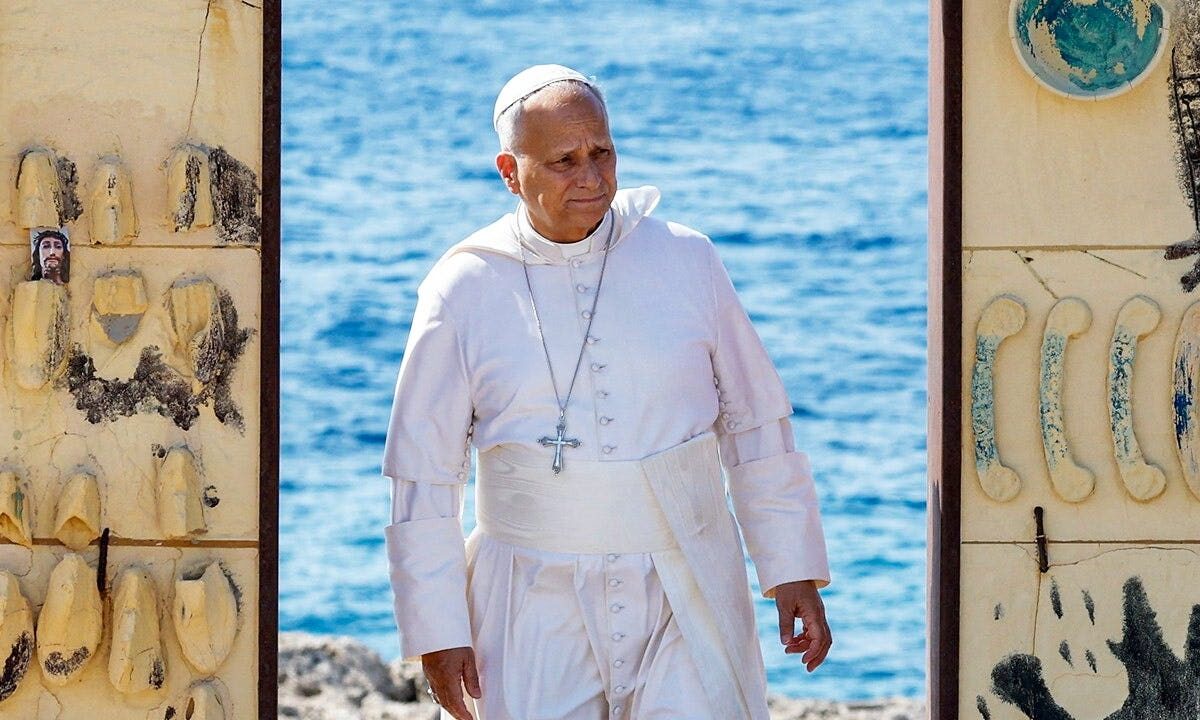
Shortly after the virtual ceremony, the Pope traveled to Lampedusa, the Italian island that has come to symbolize the Europe migration crisis. There he described scenes of migrants arriving after perilous sea journeys and said some had been robbed or had died at sea, remarks he used to underscore the urgent human consequences of maritime migration.
At Lampedusa the Pope urged European governments to combine immediate relief with long-term strategic planning to receive, protect, support and integrate migrants. He framed such responses as both humanitarian necessities and measures that test the solidarity and policy coherence of countries across the region.
Political reactions in the United States
The Pope’s public focus on migrants drew sharp reactions from U.S. political leaders. President Donald Trump criticized the Pope’s intervention, calling his stance “terrible for foreign policy” and labeling it “weak,” comments that signal how migration has become a partisan prism for evaluating international moral appeals.
Senator J.D. Vance, described in reporting as a converted Catholic, also pushed back on the Pope’s public comments. Those responses illustrate how the Pope’s statements on migration are being absorbed into domestic political debate over border enforcement, asylum and international cooperation.
Republican criticism underscores the political stakes as lawmakers and administration officials weigh immigration enforcement, humanitarian obligations and foreign policy coordination. The Pope’s intervention comes amid heightened public attention to border backlogs, asylum processing and the role of international aid in addressing migration drivers.
Context: Pope Leo XIV since 2025
Since his election in 2025, Pope Leo XIV has been a prominent voice on migrants, refugees and the humanitarian costs of war. He has repeatedly traveled to crisis sites and used public addresses to press leaders and publics to prioritize protection for vulnerable people.
Those positions have at times put him at odds with Western leaders and contributed to tense diplomatic exchanges, as some governments balance domestic political pressures with international commitments. Church officials and analysts say the Pope’s approach is meant to keep migration and the protection of human dignity high on international agendas rather than confined to internal politics.
What comes next
The Pope’s Liberty Medal address and Lampedusa visit are likely to prompt a mix of diplomatic, legislative and humanitarian responses. In Europe, governments may face renewed pressure to coordinate reception and integration plans, expand search-and-rescue capacity, and strengthen legal pathways for protection.
In the United States, expect the remarks to sharpen debate over asylum policy, border management and international cooperation. Advocacy groups may press for increased funding for resettlement and humanitarian assistance, while lawmakers and agencies consider how to balance enforcement with protection obligations.
Diplomatically, the Pope’s interventions often lead to more high-level exchanges among governments, international organizations and faith-based groups. Near-term items to watch include statements from the European Commission and national capitals, potential donor appeals, and any follow-up visits or Vatican-led initiatives tied to humanitarian aid.
Key takeaways
- Pope Leo XIV used the Liberty Medal platform to urge the U.S. to welcome immigrants and to frame migration as a moral issue linked to founding principles.
- He then traveled to Lampedusa to call on Europe to blend immediate relief for migrants with longer-term integration strategies.
- His stance has drawn criticism from some U.S. leaders, highlighting how migration appeals can become focal points in domestic political debate.
FAQ
What happened with Pope Leo XIV immigration remarks?
The Pope accepted the 2026 Liberty Medal in a virtual address at the National Constitution Center and urged Americans to remember the country’s history of welcoming immigrants. He then visited Lampedusa and appealed to European leaders to take stronger humanitarian and policy steps to receive and integrate migrants.
Why does Pope Leo XIV immigration remarks matter?
The remarks matter because they come from a globally recognized moral leader whose calls for humanitarian treatment and coordinated policy can influence international debate, donor priorities and diplomatic relations amid the Europe migration crisis.
What happens next?
Expect calls for greater European coordination on migrant reception and integration, renewed appeals to donors and agencies for humanitarian aid, and intensified domestic debate in the United States over immigration policy and international cooperation.
Source: Fox News