Morocco beat Canada to reach the World Cup last-8, a result that both sealed progression in the tournament and underlined a stretch of results widely reported as an unbeaten run of 34 matches. The win sharpened attention on Morocco’s defensive organisation, tactical cohesion and squad depth—elements that turn an underdog story into a credible title challenge.
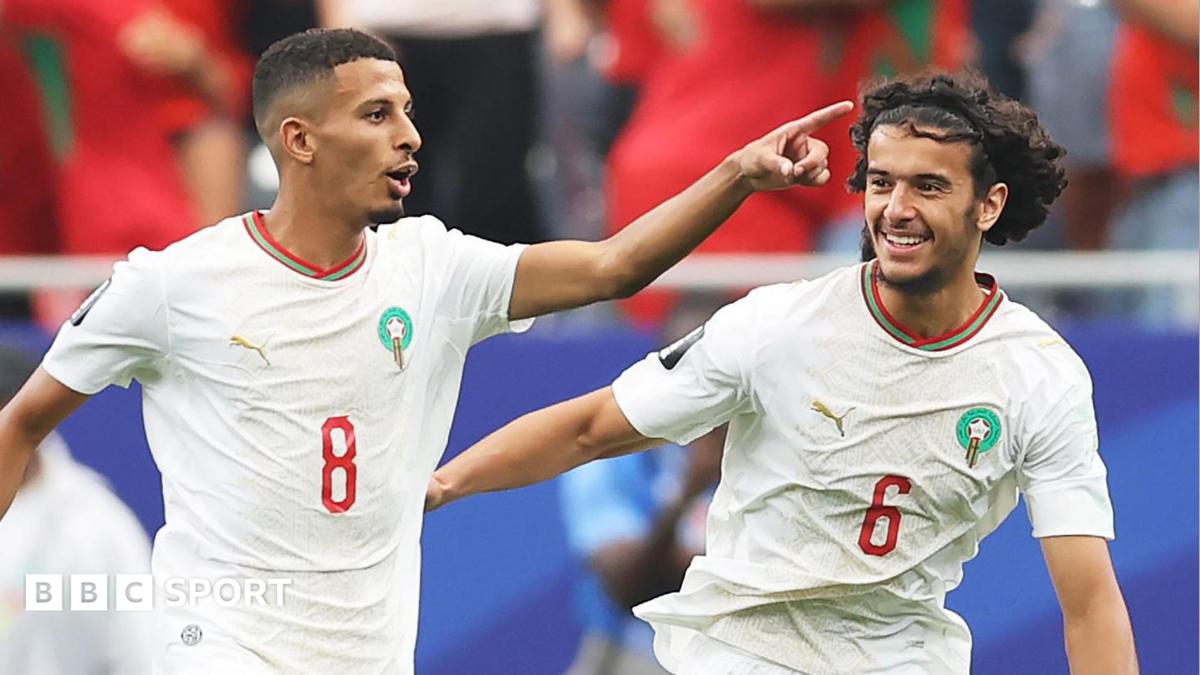
Morocco celebrate after beating Canada to reach the World Cup last-8. Photo: BBC/Getty Images
Match recap: Morocco beat Canada to reach last-8
Morocco eliminated Canada to secure a place among the tournament’s final eight. The match was tight and contested, but Morocco’s defensive discipline and ability to control key phases of play allowed them to see the game out and advance. Across the 90 minutes (and any added time), Morocco limited Canada’s most dangerous opportunities and managed possession in ways that prevented extended Canadian pressure.

The win was decisive for Morocco’s tournament trajectory: it formally moves them into the quarterfinals and forces rivals to treat their World Cup campaign as sustained form, not a short-lived surprise.
Form check: the unbeaten in 34 matches claim
News outlets have reported Morocco are unbeaten in 34 matches, a headline that captures their recent run of results across qualifiers, friendlies and competitive fixtures. That figure has been cited by major media reporting on the Canada game and has become part of the narrative around Morocco’s rise.
Verification risk: this 34-match count should be treated as a summary rather than a definitive ledger until cross-checked with official records. Different compilers count different sets of matches—some include all FIFA-sanctioned friendlies and qualifiers, others exclude non-FIFA or training matches, and certain domestic-organised fixtures may be omitted. For precise accounting, consult the Royal Moroccan Football Federation match listings and the FIFA match centre to reconcile which matches are included in any unbeaten streak.
In other words: the “unbeaten in 34 matches” claim reflects widely reported form, but exact totals can vary by source and require checking federation or FIFA match records for confirmation.
Why this shifts Morocco into World Cup contender status
Morocco’s progress to the last-8—and the broader unbeaten narrative—changes how their campaign is perceived. What began as a fairytale underdog story now carries the hallmarks of sustained tournament-grade quality: consistent defensive performances, tactical discipline across multiple opponents, and meaningful squad depth that lets the coach rotate without big drop-offs in performance.
Those traits matter in knockout football. A single good defensive display can be the difference between a surprise run and a realistic title challenge. Morocco have combined structure with efficient attacking transitions, forcing opponents to plan specifically for them rather than treating them as a one-off story.
Calling Morocco “contenders” is therefore grounded in pattern rather than a single match: repeated clean sheets, the ability to control tempo against varied styles, and personnel depth that sustains performance levels under pressure. The true test of that label will come against the highest-ranked sides they could meet in the closing stages.
Key strengths and potential weaknesses
Strengths — Morocco’s organised defensive structure is the clearest asset. The team preserves compactness between lines, limits high-quality chances for opponents and uses low-risk transitions to create opportunities. Their tactical discipline means they rarely lose shape, even when pressed.
Depth appears to be a practical advantage: rotation has kept players fresh without dulling the team’s core identity. When substitutions are introduced they tend to maintain defensive balance and offer alternative attacking angles.
Potential weaknesses — sustained pressure in wide areas or prolonged possession by an opponent could expose Morocco if turnovers accumulate. Set-piece defending and quick switches of play remain areas opponents will test. There is also a psychological factor: an extended unbeaten run can introduce expectation pressure, and managing that in tight knockout moments is as important as any tactical tweak.
What comes next: path through the last-8
Morocco’s immediate focus is the quarterfinal. The last-8 pairs them against one of the remaining teams, each of which presents distinct tactical challenges. Key questions for the next match are whether Morocco can maintain defensive cohesion under intensified attacking pressure, how well rotation options perform against rested opponents, and whether the coaching staff can adapt tactics to opponents that aim to dominate possession or stretch them wide.
If Morocco sustain the combination of defensive solidity and efficient attacking transitions that has marked recent matches, they will present a significant threat in the quarterfinal and beyond.
By the numbers
The unbeaten-in-34 figure has become central to discussions of Morocco’s rise. Analysts will want to break that down by match type—competitive fixtures versus friendlies, FIFA-approved games versus other matches—to assess its robustness. Complementary metrics to watch in coming rounds include shots allowed per match, expected goals conceded, and turnover rates in midfield; these will help determine whether Morocco’s defensive reputation is supported by underlying performance data.
FAQ
Is Morocco really unbeaten in 34 matches?
That number has been widely reported and summarises an extended period of positive results. However, exact counts can vary depending on which matches are included; check official match records from the Royal Moroccan Football Federation and the FIFA match centre for definitive accounting.
Who did Morocco beat to reach the World Cup last-8?
They beat Canada to secure a place in the quarterfinals.
Does this make Morocco a serious World Cup contender?
Yes — their consistency, defensive discipline and squad depth elevate them into contender conversation. Yet the label will be most convincing if they can reproduce these qualities against higher-ranked opposition in the remaining rounds.
Sources: BBC Sport, Royal Moroccan Football Federation (https://www.frmf.ma/), and the FIFA match centre (https://www.fifa.com/) — readers should consult official federation or FIFA records to reconcile exact match counts for the unbeaten-run claim.