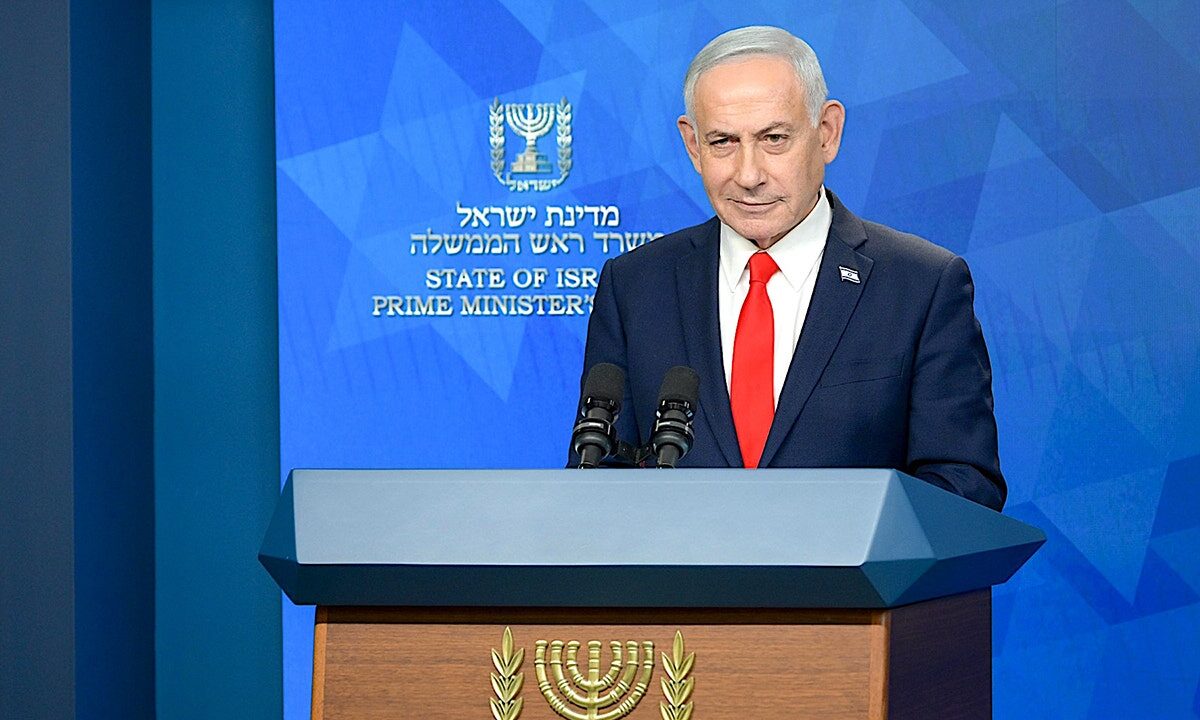
“For a regime infected by the Muslim Brotherhood… I don’t think they should be given F-35s or the engines for their fighter jets,” Israeli Prime Minister Benjamin Netanyahu said Monday, arguing that Turkey F-35 sales would “upset the power balance in the Middle East.” Netanyahu made the remarks as he pressed President Donald Trump not to restore Ankara’s full access to the F-35 program ahead of a NATO summit in Turkey.
Netanyahu delivered his appeal publicly and directly, framing it as a request that Washington preserve the restrictions imposed after Turkey bought Russia’s S-400 air-defense system. The prime minister repeatedly characterized the risk in security terms and attributed specific hostile rhetoric and actions to President Recep Tayyip Erdoğan’s government as the basis for his warning.
Netanyahu warning on Turkey F-35 sales
Netanyahu said Erdoğan’s hostility toward Israel and comments by Turkish officials made Ankara an unsuitable custodian for U.S. stealth technology. “Given the rhetoric and behavior we have seen,” he said, “allowing Turkey F-35 sales would be dangerous and would upset the power balance in the Middle East.” Those assertions are presented here as Netanyahu’s statements and assessments.
He addressed his remarks to President Trump and U.S. policymakers, urging them to weigh Israel’s security and the broader regional balance before taking steps that could reintegrate Turkey into parts of the F-35 program. Netanyahu framed the U.S. decision as a clear choice between reopening the path for Ankara or preserving current restrictions that limit Turkey’s access to the aircraft and some program elements.
Why Turkey lost F-35 access
Turkey was removed from the F-35 program after it acquired the Russian-made S-400 missile defense system, a move that U.S. and NATO officials said created compatibility and security concerns for the aircraft. That purchase led Washington to bar Ankara from receiving further F-35 jets and from certain program activities tied to the fighter.
The exclusion remains the baseline policy Netanyahu urged the United States to uphold. He described the S-400 purchase as a decisive point that justified continued restrictions, saying the presence of a Russian system in close proximity to U.S. technology raised risks he considered unacceptable.
Netanyahu’s security concerns
Netanyahu attributed several charged claims to Erdogan and his government, saying comments he cited showed hostility toward Israel and elsewhere in the region. He referenced what he described as public statements and rhetoric by Turkish leaders that, in his view, reflected alignment with groups hostile to Israel and broader regional instability.
He also invoked Iranian threats as part of his case, saying chants and rhetoric from Iran and its proxies underline the regional dangers that, he argues, would be compounded if Ankara regained access to advanced Western fighters. Those points are Netanyahu’s characterizations and are reported here as his perspective rather than independently verified facts.
U.S. decision and NATO context
President Trump has signaled he may revisit Turkey’s role in the F-35 program, and Netanyahu referenced that timing as NATO prepares for a leaders’ summit in Ankara. The prospect of any U.S. policy shift comes as NATO allies weigh alliance cohesion against concerns about interoperability and security when one member operates equipment purchased from a strategic rival.
Some NATO members have been wary of restoring advanced U.S. technology to Ankara without strong safeguards. Netanyahu emphasized that the NATO summit’s timing made it a consequential moment for U.S. leaders to consider the wider political and security implications of reopening the path for Turkey to receive F-35s or related components.
Any move by Washington would carry diplomatic freight: restoring access could be presented as a step toward rapprochement with a key NATO partner, while maintaining restrictions would signal continued concern about Ankara’s defense choices and regional posture. Netanyahu urged the U.S. to prioritize Israeli security assessments in that calculus.
What comes next for policy and allies
Netanyahu’s intervention increases public attention on several near-term developments to watch. First, the administration could announce a formal review process or conditions under which Turkey might be allowed partial or limited re-entry to aspects of the program. Netanyahu suggested that inspections, strict limitations on certain subsystems, or new security guarantees would be necessary prerequisites.
Second, the NATO leaders’ meeting in Ankara may produce diplomatic discussion but is unlikely to yield a rapid technical fix. Allies will discuss political signaling and the potential consequences for intelligence-sharing and joint operations if restrictions are relaxed.
Third, U.S. lawmakers and defense committees could influence the outcome. Congressional review, hearings, or legislation have in the past shaped policy toward Turkey after its S-400 purchase, and lawmakers remain a force that could reaffirm or contest an executive-branch decision.
Netanyahu framed the decision as one with direct implications for Israel’s qualitative military edge and for regional stability. He urged Washington to consider those factors before taking steps that would “reopen the path” for Ankara, stressing that any change should include binding safeguards to mitigate the risks he described.
Frequently asked questions
Why is the Turkey F-35 sales issue controversial?
The issue is controversial because critics argue that returning F-35 access to Turkey could expose sensitive technology and alter military balances; supporters counter that reintegration could repair ties with a NATO ally. These are the competing assessments shaping debate.
What role did the S-400 purchase play in Turkey losing F-35 access?
Turkey’s acquisition of the Russian S-400 system prompted the United States to remove Ankara from the F-35 program on security and compatibility grounds, effectively barring it from receiving additional F-35 aircraft and certain program benefits.
Could the US reverse the ban and what would it mean for NATO?
A reversal is possible but would likely be contingent on strict conditions. It could ease bilateral tensions with Turkey but would raise concerns among allies about interoperability, intelligence protection and the precedent of a NATO member operating Russian air-defense hardware alongside Western systems.
For source reporting on Netanyahu’s remarks and the U.S. context, see the original Fox News report: Netanyahu warns Turkey should not get F-35s.