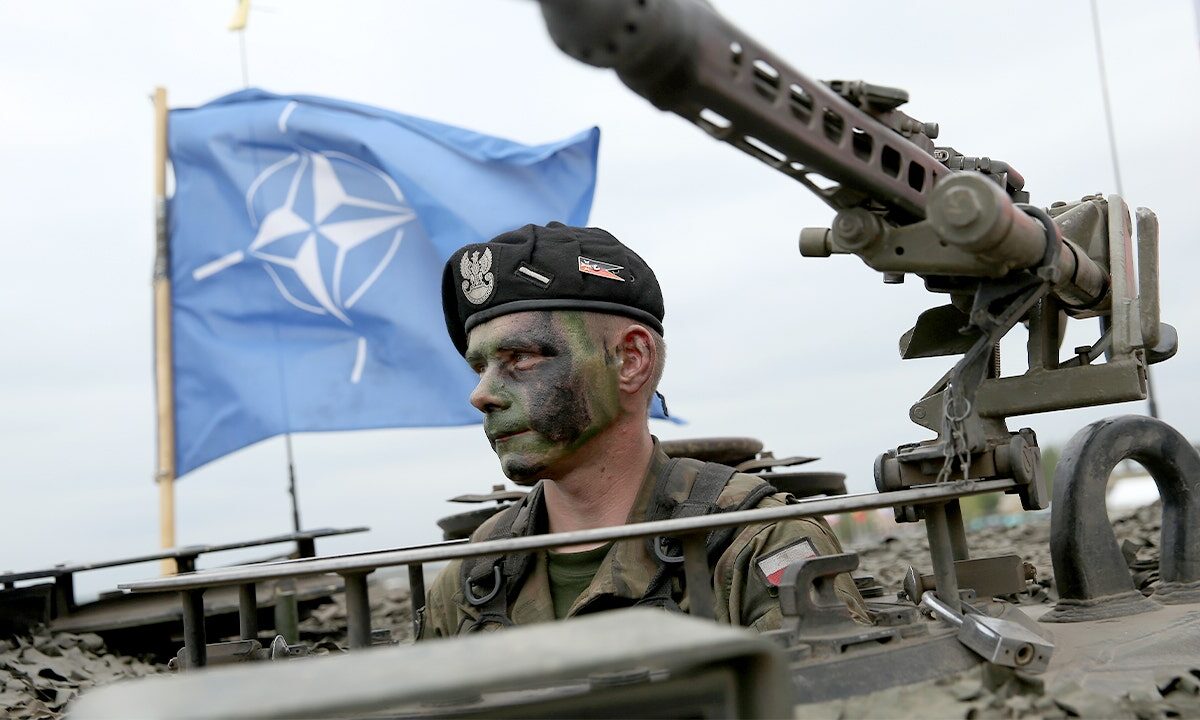
Allies pledged major increases, but cash alone does not produce deterrence. NATO defense spending is now a central test of Alliance credibility. At The Hague last year, NATO Allies agreed to target five percent of GDP annually on core defense and security-related capabilities. Since 2017, European Allies and Canada have increased defense investment by more than $1.2 trillion (reported in the source; this figure, like others cited below, should be independently verified).
Key figures called out in the source: The Hague pledge (5% of GDP); €1.2 trillion-plus in added investment since 2017; nearly $139 billion committed since The Hague; and over $60 billion in Allied orders with U.S. defense firms. (Figures reported by the source and flagged for independent verification.)
NATO defense spending and where the money flowed
Reported figures show a rapid rise in demand for military equipment across the Alliance. The article cites that, since The Hague, Allies have committed nearly $139 billion in new spending (source claim) and that roughly half of that demand has favored American-made gear. It also reports Allies currently hold more than $60 billion in orders with American defense companies (source claim). Both numbers are significant drivers for current procurement patterns but should be cross-checked against independent procurement tallies.
Why the flow matters: procurement pathways determine what units can deploy and sustain. Heavy orders with U.S. suppliers can expand production lines and speed delivery of munitions, air defenses, sensors and ISR equipment. They can also create industrial dependencies where European units rely on U.S. logistics, sustainment, or unique components — increasing operational risk if political or supply-chain problems arise.
Expanding the defense industrial base on both sides of the Atlantic is therefore a strategic priority. The source calls for deeper partnerships between American defense companies and European industry, more flexible contracting, and routes for smaller innovators to scale so demand signals produce durable capacity rather than one-off buys.
Capability gaps: why more spending is not the same as more deterrence
Money buys potential but not necessarily combat power. As the article puts it: “Declarations are not deterrence. Commitments are not capabilities.” Budgets must translate into integrated, interoperable systems that can counter current and emerging threats.
Key capability shortfalls identified in the source include layered air and missile defense able to defeat drone swarms, cruise missiles and increasingly sophisticated ballistic and hypersonic threats. Other shortfalls are rapid logistics and sustainment stocks, interoperable command-and-control, and sustained high-intensity training that allows multinational forces to fight together effectively.
Burden-sharing remains uneven. Some Allies have accelerated modernization and procurement; others lag. Even with higher aggregate spending, uneven modernization creates weak links that adversaries might exploit.
Industrial ties and U.S. orders: the production reality
The article documents concrete industrial links: the reported $60 billion-plus in orders with American defense firms and U.S.-backed contracts intended to stabilize munitions and air-defense production lines. Those orders can underpin a rapid expansion of sensors, munitions, and integrated air defenses if contracted and delivered efficiently.
But heavy reliance on a single partner market has trade-offs. Strengthening European production, joint transatlantic supply chains, and co-production agreements reduces operational risk and supports the political aim of shifting more conventional defense responsibilities to Europeans while the United States retains critical deterrent capabilities.
What Ankara must deliver
The upcoming Ankara summit should be a moment of measurable progress, not just rhetoric. The source urges concrete milestones: defined capability targets, timelines for delivery, and mechanisms to hold Allies accountable for implementation.
- Agree measurable targets for deployable air and missile defenses, with fielding timelines and validation steps.
- Commit to interoperable logistics and sustainment arrangements that ensure stocks and spares are available in crises.
- Create verification mechanisms — regular reporting, common exercises, procurement transparency — that turn pledges into monitorable progress.
Those steps would let Allies demonstrate that higher spending produces identifiable enhancements in deterrence rather than just larger spreadsheets.
By the numbers
Key figures cited in the source article (reported here as presented by the source and requiring verification): the five-percent-of-GDP pledge at The Hague; more than $1.2 trillion in added European and Canadian defense investment since 2017; nearly $139 billion committed since The Hague; and over $60 billion in orders with American defense companies. These figures form the factual basis for the analysis but should be cross-checked with independent procurement and defense-budget databases before use in policy decisions or reporting.
What comes next
Translated into policy, the argument points to three priorities: fast, predictable procurement; expanded industrial cooperation across the Atlantic; and enforceable summit-level milestones that make capability delivery visible. If Ankara produces well-specified commitments and verification steps, the Alliance can lock recent spending into long-term deterrent effect. If it does not, higher budgets risk remaining politically useful but militarily inadequate.
Source attribution and policy caveats
Source: Opinion piece titled “Trump pushed NATO to pay up. Now allies must turn pledges into power.” Figures and attributions in this article are reported from that source and flagged for independent verification before being treated as definitive. The article’s headline attribution to former U.S. presidential policy is the source author’s framing and should be weighed alongside broader trend analyses and official NATO budget and procurement records.
Primary source URL: https://www.foxnews.com/opinion/trump-pushed-nato-pay-now-allies-must-turn-pledges-power