Updated July 8, 2026, 17:00 UTC — This is breaking news and will be updated as new verified information becomes available.
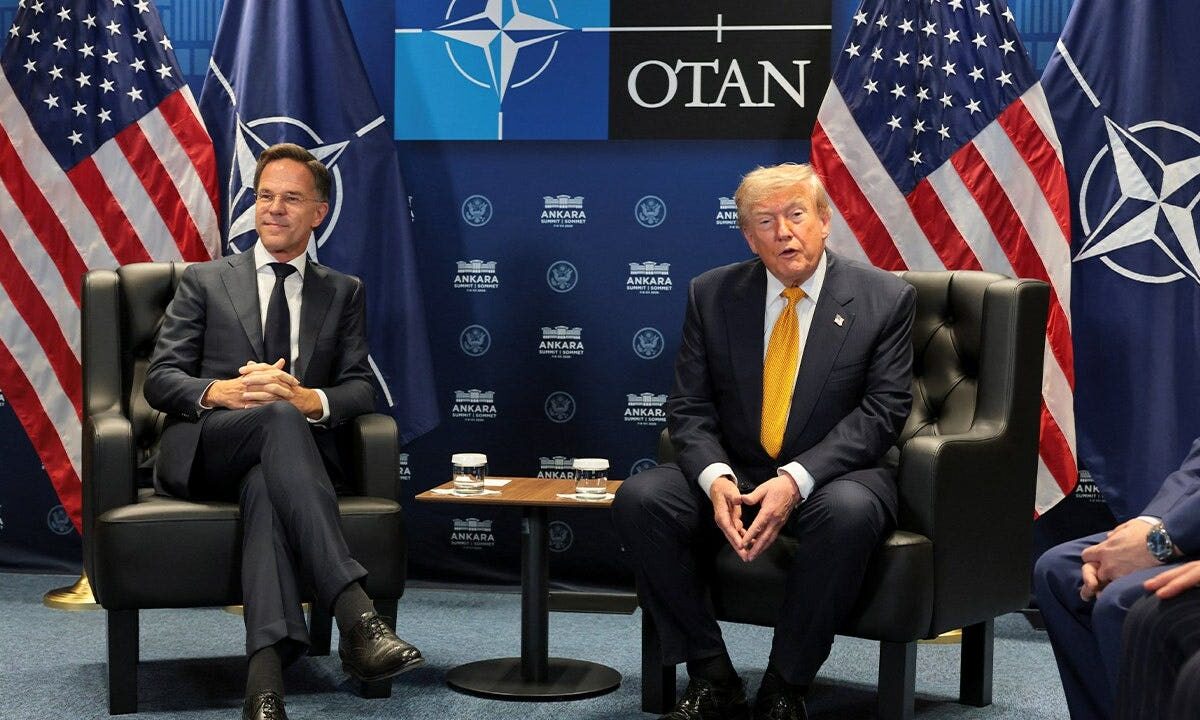
President Donald Trump told reporters at the NATO summit in Ankara that the Iran ceasefire is over, saying recent reported attacks on commercial shipping and a large U.S. military response have ended the tentative pause between Tehran and Washington. The comment came during a bilateral encounter with Dutch Prime Minister Mark Rutte as allied leaders met to discuss regional security and broader NATO priorities (Fox News; Reuters).
Trump says Iran ceasefire over at NATO summit
Speaking on the sidelines of the NATO meeting, Trump was asked whether the temporary arrangement to ease tensions in the Strait of Hormuz remained in effect. He replied that, in his view, the ceasefire was finished: “For me? I think it’s over,” he said, adding that he was skeptical of further engagement with Iranian leadership. Reporters pressed him for details; Trump framed the move as a response to recent attacks and the U.S. counteraction (Fox News).
“For me? I think it’s over,” — President Donald Trump, on the tentative Iran ceasefire.
The comments were delivered as NATO officials continued consultations on maritime security and allied responses to threats to commercial navigation. Trump’s statement may shape allied discussions in Ankara about what follow-on diplomatic or defensive steps NATO members might consider.
Reported attacks on commercial vessels in the Strait of Hormuz
Multiple news outlets reported that at least three commercial vessels were struck while transiting the Strait of Hormuz earlier this week; those reports have circulated amid rapidly evolving coverage and are not independently verified here (Fox News; Reuters; AP). Officials and shipping industry sources have warned that the corridor is highly sensitive: even localized incidents can force rerouting, raise insurance premiums and slow deliveries of energy and other cargoes that transit the route.
Maritime security experts note the Strait’s strategic role as a chokepoint for oil and commerce, meaning disruptions reverberate quickly through energy markets and global supply chains. Commercial operators often adopt defensive measures — including convoying, route changes and increased onboard security — when the risk environment spikes.
U.S. military response and reported strikes
News accounts alongside official briefings indicate that U.S. forces carried out strikes targeting scores of sites in Iran in what has been described as a broad military response (Fox News; Pentagon statements cited in reporting). Some sources report the number of targets exceeded 80; those figures are preliminary and have not yet been fully corroborated by independent battlefield assessment. The Pentagon has acknowledged military action in statements to the press but has not released a complete, public damage assessment as of this update.
Officials warn that casualty and damage tallies can take time to verify, and that early figures reported by news outlets and unnamed sources may be revised. This account flags reported numbers as provisional and not independently verified by this newsroom.
Impact on shipping, diplomacy and regional security
The practical consequences are immediate for commercial vessels and the companies that insure and operate them. Shipping firms may divert traffic away from the Strait of Hormuz or delay sailings, leading to longer transit times and higher freight and insurance costs. Energy markets can react quickly to perceived supply risks tied to the waterway.
Diplomatically, Trump’s statement and the reported U.S. strikes complicate any ongoing efforts to lower tensions. Parties had previously moved toward a memorandum of understanding intended to allow traffic to resume under agreed safeguards; that diplomacy may be paused or reassessed in light of military developments. NATO allies in Ankara are expected to weigh whether to coordinate patrols or other measures to protect freedom of navigation, and whether to press for emergency diplomatic channels to prevent further escalation.
Short verified facts (provisional)
- President Donald Trump said the Iran ceasefire is over while at the NATO summit in Ankara (Fox News).
- Reporting indicates at least three commercial vessels were struck in the Strait of Hormuz; those reports are not independently verified in this article (Fox News; Reuters; AP).
- Accounts cite U.S. strikes targeting more than 80 sites in Iran; official assessments remain incomplete and provisional (Fox News; Pentagon statements).
- Both sides had been engaged with a memorandum of understanding intended to resume traffic through the Strait of Hormuz prior to the recent incidents.
What comes next and how this will be updated
In the near term, expect more official statements from the U.S. Defense Department, NATO, and regional capitals. Possible developments include: additional military actions, emergency consultations among NATO partners, changes in commercial shipping patterns, and renewed diplomatic outreach — potentially via intermediaries — aimed at de-escalation.
We will update this story as new, verified information becomes available from primary sources such as official Pentagon releases, NATO briefings, and independent reporting from established outlets. Numbers and assessments cited in early reports are provisional; this article will mark corrections or confirmations as those official updates arrive.
Source attribution: This article synthesizes reporting and official statements from Fox News, Reuters, The Associated Press, and U.S. Defense Department briefings as available. For the initial report, see: Fox News. Additional coverage and official releases are being monitored and will be linked in subsequent updates as they are published.