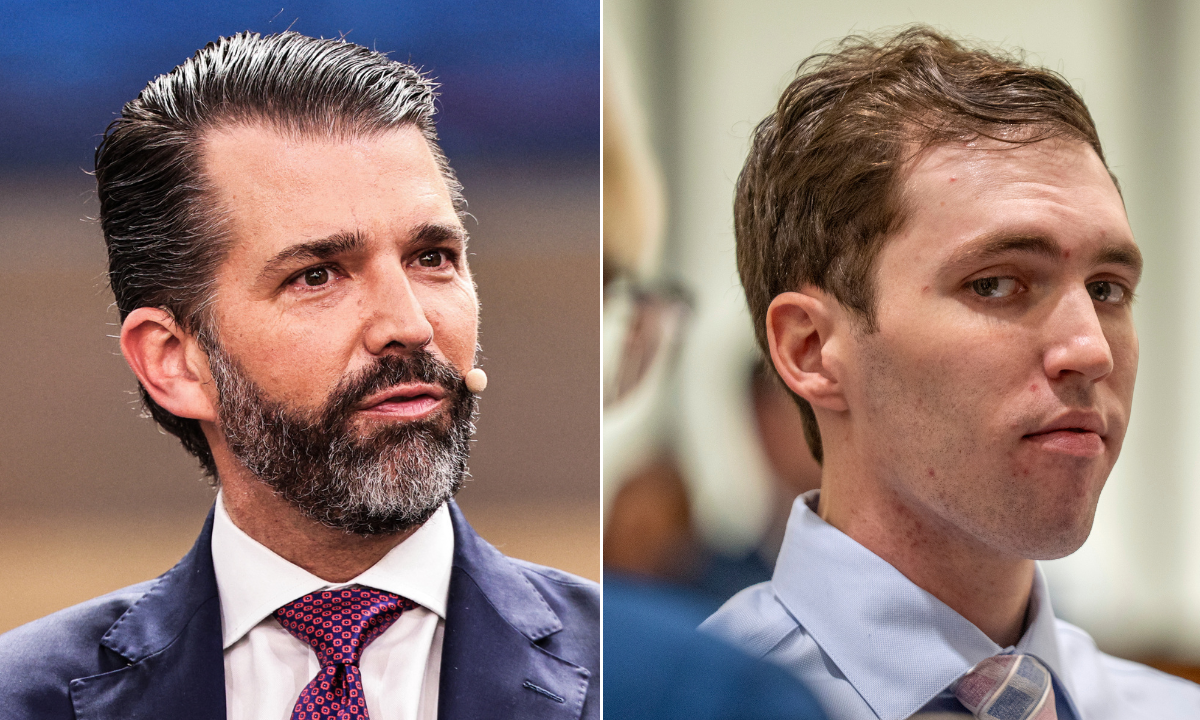
Donald Trump Jr. attended a preliminary hearing in Provo and told reporters that unsealed materials shown in court made it “very clear” that Tyler Robinson killed Charlie Kirk. Trump Jr. spoke outside the courthouse after a session focused on whether prosecutors have probable cause to move the case forward.
“Based on everything that I saw in that courtroom, it’s very clear to me that Tyler Robinson did this,” Trump Jr. said after the hearing.
Charlie Kirk murder: lead — hearing highlights and Trump Jr.’s reaction
The preliminary hearing in Provo drew attention from national figures and media. Trump Jr. emphasized three elements he said were persuasive: alleged text exchanges, references to DNA testing discussed in court, and Robinson’s decision to turn himself in. He framed those items as pointing to Robinson’s guilt while acknowledging the proceeding was the probable-cause phase, not a trial.
Trump Jr.’s comments came immediately after the court session and reflect his interpretation of testimony and materials that were unsealed for the hearing. Outside the courtroom he reiterated that, in his view, the mix of evidence presented in that forum left little doubt.
What the unsealed evidence reportedly shows
Prosecutors in the preliminary hearing described and entered into the record certain unsealed materials they said support probable cause. Reporting from the hearing identifies two categories emphasized by prosecutors and witnesses: alleged text messages and references to DNA testing tied to items in the investigation.
According to court testimony reported from the hearing, some witnesses described text messages Robinson allegedly sent to a roommate after the Sept. 10, 2025, shooting. Prosecutors presented those messages in testimony as part of their effort to link the accused to the shooting.
Defense attorneys and other participants at the hearing questioned the weight and context of those communications. The hearing itself focused on whether the materials and testimony meet the lower legal threshold of probable cause to proceed toward trial, not on proving guilt beyond a reasonable doubt.
On DNA, witnesses discussed forensic testing that prosecutors said was relevant to their case. Public reporting has described the DNA references as part of the prosecution’s probable-cause presentation; those items remain subject to further testing, analysis and legal argument. Courtroom testimony and unsealed filings are part of an evolving record and do not constitute final forensic determinations.
Questions about campus security at Utah Valley University
Trump Jr. used his post-hearing remarks to raise separate concerns about event security at the Utah Valley University campus where the Turning Point USA event was held. He questioned why, he said, only six police officers were active at the event, arguing larger law-enforcement details are common at comparable campus gatherings.
His comments framed the staffing question as a matter of public safety rather than evidence directly tying anyone to the shooting. That perspective reflects Trump Jr.’s experience speaking at college events and his view of typical security arrangements; it has not been independently verified in the courtroom record presented at the preliminary hearing.
Officials from Utah Valley University and local law enforcement have not released a comprehensive public accounting tied to the hearing remarks; any official assessment of security staffing or protocols would come from campus or police spokespeople and further reporting.
Legal next steps and courtroom timeline
Preliminary hearings are intended to determine whether sufficient probable cause exists to bind a case over for trial. Prosecutors told the court they planned to present additional evidence at a follow-up hearing scheduled for Friday, according to reporting from the Provo proceedings.
What prosecutors may offer at the next session — whether additional witness testimony, forensic reports or documentary evidence — will be subject to the judge’s rulings on admissibility and relevance in the probable-cause context. Any items admitted at future hearings will likewise remain part of the pretrial record until trial, if the case advances that far.
No trial date has been set. The timeline for trial will depend on pretrial motions, discovery, evidentiary rulings and court scheduling. Defense counsel can contest the prosecution’s account and present contrary evidence during pretrial proceedings.
Background: the shooting and the accused
Charlie Kirk, 31, founder of Turning Point USA, was shot Sept. 10, 2025, at an event on the Utah Valley University campus and later died from his injuries. Authorities arrested 23-year-old Tyler Robinson in connection with the fatal shooting; Robinson has been charged in public filings and has appeared in preliminary hearings.
Media reporting and court filings indicate prosecutors are pursuing evidence they say supports criminal charges, while defense attorneys have signaled they will challenge aspects of the prosecution’s case. Preliminary hearings and media accounts describe evidence offered for probable cause but do not amount to a conviction.
“The DNA evidence, the fact that… he turned himself in… to me, it puts so much of this at rest,” Trump Jr. said outside the courtroom, summarizing his impression of the material presented.
Source: Fox News reporting on the Provo preliminary hearing; Associated Press reporting corroborated aspects of the courtroom accounts.