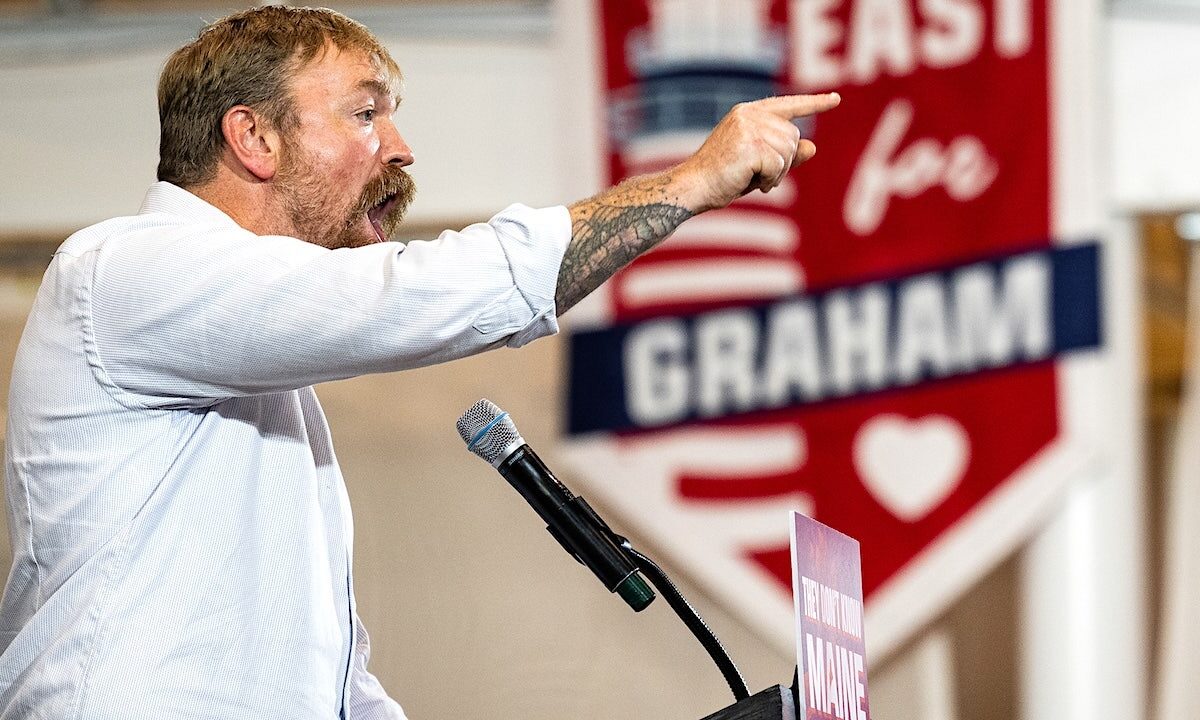
AdImpact reported July 2 that Democratic-aligned groups removed more than $6.2 million in ad reservations (AdImpact) roughly one week before a rape allegation involving Graham Platner became public (Politico). The close timing of the ad shifts and the allegation has prompted questions about vetting and strategy, though available records do not establish causation.
This article tracks the AdImpact figures (AdImpact), lays out the publicly reported timeline around the Politico allegation (Politico) and earlier coverage (The New York Times), summarizes statements from groups involved (Fox News Digital), and explains the immediate implications for Democrats in Maine.
What AdImpact reported about the ad shifts
AdImpact’s July 2 report said WinSenate removed more than $6.2 million in ad reservations tied to the Maine Senate contest (AdImpact).
The firm broke the total down as $5.9 million in broadcast reservations scheduled for July 7 through Aug. 31 (AdImpact) and $330,000 in cable reservations set to begin June 30 (AdImpact). AdImpact also reported a separate shift of about $240,000 in digital spending attributed to Majority Forward (AdImpact).
AdImpact’s accounting shows the reservations were rerouted to another Democratic committee that maintained the ability to reserve media space in Maine for the July–August window (AdImpact). The data document the reservations and destinations; AdImpact does not report motive for the transfers (AdImpact).
Graham Platner allegation timeline and denials
The reported ad pull occurred roughly a week before a Politico story published a rape allegation by an ex‑girlfriend against Graham Platner (Politico). Platner has denied the allegation (Politico; Fox News Digital).
Platner’s campaign had faced earlier scrutiny. Coverage intensified on June 4 when The New York Times reported multiple ex‑girlfriends described him as emotionally abusive; Platner denied those descriptions (The New York Times). Reporting dating back to October 2025 also flagged controversy over a deleted Reddit account and a tattoo linked to his military service (The New York Times; other reporting cited in later coverage).
Following the Politico report, Senate Minority Leader Chuck Schumer said he was “disturbed” and called for Platner to “immediately withdraw,” according to press coverage (Politico; Fox News Digital). Platner later announced his withdrawal and alleged insiders had undercut his campaign; party officials disputed that characterization (Fox News Digital).
Who moved the money and what they say
WinSenate, Majority Forward and Senate Majority PAC have overlapping personnel, fundraising and vendor relationships that have been documented in public reporting and filings (Fox News Digital; AdImpact reporting identifies the transactions but not internal accounting decisions).
Majority Forward told Fox News Digital the digital shift reflected routine movement of (c)(4) spending to another entity and said the change “was not connected to recent campaign events” (Fox News Digital). WinSenate and Platner’s campaign did not respond to requests for comment, per reporting (Fox News Digital).
Political committees sometimes reassign reservations or transfer spending among related entities to preserve media buying flexibility or to conform with legal and accounting structures (AdImpact; industry practice described in reporting). AdImpact’s data documents the transfers themselves but does not provide evidence of coordination tied to the allegation (AdImpact).
Implications for the Maine Senate race and party vetting
The ad shifts and the allegation occurred before Maine Democrats’ nominating convention to select a replacement candidate for the November ballot, compressing the timeline for delegates and party leaders to choose a new nominee (Politico; Fox News Digital).
The Wall Street Journal reported Platner’s vetting before his nomination lasted three days and cost just over $6,000, a shorter and lower‑cost review than is typical for high‑profile Senate contenders (Wall Street Journal). That reporting has been cited in assessments that brief vetting windows can leave issues undiscovered until late in a campaign (Wall Street Journal; political analysts quoted in subsequent coverage).
For national and state Democratic operatives, rerouting ad reservations can signal a reallocation of limited resources — either to protect competitive seats or to limit exposure to a campaign that has become politically risky. Whether the moves reflected preexisting concerns about Platner or routine reallocation remains an open question pending statements or internal records from the committees involved (AdImpact; Fox News Digital).
Next steps and what to watch
Near term, Maine Democrats will hold a nominating convention to select a new nominee to appear on the November ballot; the convention’s delegate dynamics will shape the speed and profile of any replacement pick (Politico; Fox News Digital).
Observers should watch for: statements from national Democratic committees about funding and ad strategy in Maine (Fox News Digital; AdImpact reporting), any additional reporting or corroboration regarding the allegation (Politico; The New York Times), whether outside groups re‑commit ad dollars to Maine under a new nominee, and reactions from Senate leaders such as Chuck Schumer that could affect national committee posture (Politico; Fox News Digital).
Reporting on the ad reservations and timing raises questions about party vetting processes and strategic decision‑making rather than proving coordination or intent. Confirming motive will depend on statements from the organizations involved or internal documents that are not publicly available (AdImpact; Fox News Digital).
Source attribution: Reporting in this article draws on Fox News Digital reporting and public data from AdImpact. For original reporting, see the Fox News article: Millions in Dem ad money vanished from Platner race days before rape allegation doomed Senate bid (Fox News Digital).
Additional context and data sources cited in this piece include AdImpact (https://adimpact.com), Politico (https://www.politico.com), The New York Times (https://www.nytimes.com) and The Wall Street Journal (https://www.wsj.com).