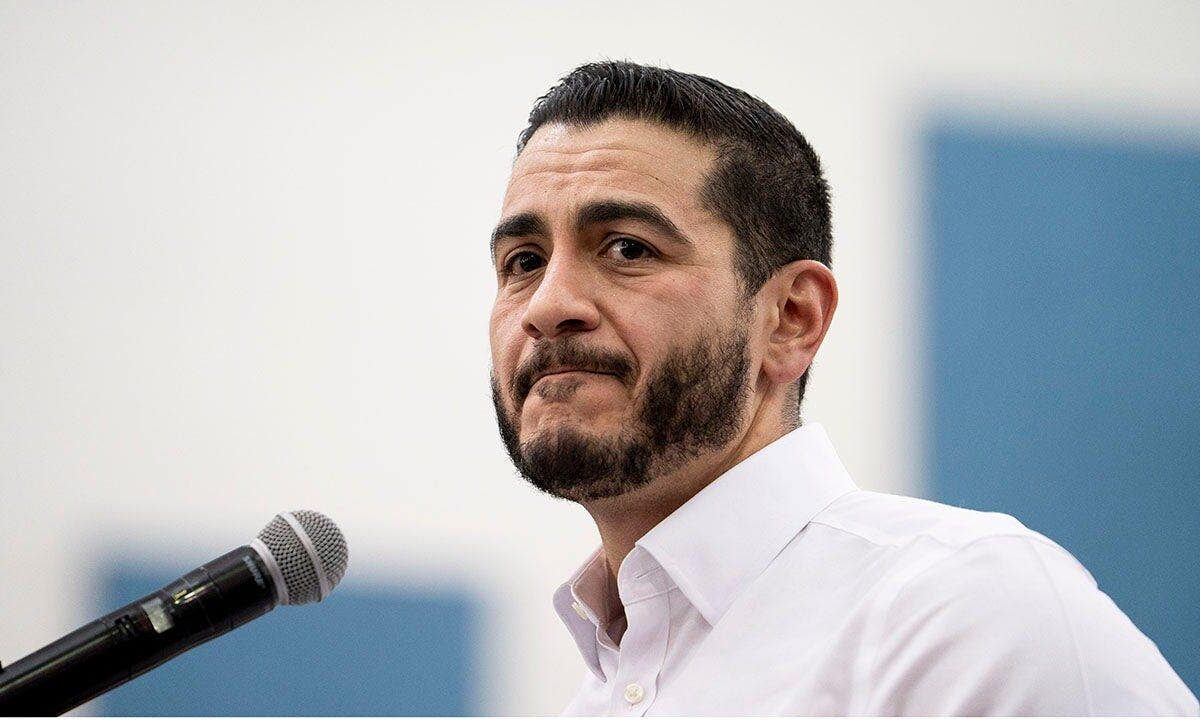
AIPAC donations were front and center in a sharp new charge from Michigan Senate hopeful Abdul El-Sayed, who wrote on X that “Next week, AIPAC is set to spend at least $3,847,990 against me,” calling the money “legalized bribery.” That dollar figure and the phrase “legalized bribery” come from El-Sayed’s own post and are presented here as his allegation, which has not been independently verified.
What El-Sayed said about AIPAC donations
In his X post, El-Sayed tied the planned $3,847,990 to what he described as outsized outside influence in the Michigan Senate primary. He accused the American Israel Public Affairs Committee of directing large sums into the race to back candidates aligned with its priorities, and wrote that the spending represents “legalized bribery at its worst.”
El-Sayed’s message framed the spending as more than advertising: he portrayed it as evidence that national lobby groups can shape outcomes in statewide contests. He argued that such outside spending diverts attention from local priorities like public schools and healthcare.
Reporters and readers should note the dollar amount and the characterization of motives are El-Sayed’s claims. The number cited has not been independently verified by this report and is described throughout as an allegation from the candidate.
Outside spending and other PACs in the race
Outside groups and PACs have already become a major flashpoint in the primary. El-Sayed singled out AIPAC-related activity; others have pointed to pro‑Palestine groups and Arab‑American organizations that are also active in Michigan and nationally.
Conservative reporter Chuck Ross questioned whether El-Sayed’s critique should be applied evenly to other outside actors, naming PAL PAC and Arab American PAC in commentary. Ross’s point was that outside spending can flow from multiple political directions, not solely from pro‑Israel organizations.
Representative Haley Stevens, the other leading Democrat in the race, has emphasized her pro‑Israel credentials and has pushed back on El‑Sayed’s language. Stevens’ allies point to endorsements and relationships in Washington — including backing from Senate Democratic leadership — as part of her campaign’s explanation for why national groups have an interest in the contest.
In tight primaries, independent expenditures from well‑funded national groups can shift turnout and message penetration. That potential influence is what has driven the public sparring this week and why both campaigns are emphasizing different narratives about outside money.
Financial disclosures and tax return delay
El‑Sayed’s campaign filings, reflected in candidate report disclosures submitted in June 2025, list a Wayne County salary of $278,900 and report a net worth range between $580,000 and $1.7 million. Those figures were included in the candidate’s public filings and are presented here as the information shown in that report.
The filings also indicate that El‑Sayed’s wife reported limited real estate holdings abroad — described in the disclosure as up to $15,000 in property in India. El‑Sayed has said delays in providing tax returns were tied to the complexity of foreign property and obtaining the proper paperwork, commenting that “Taxes get complicated” when international assets are involved.
Campaign finance reports and candidate disclosures are self‑reported by campaigns and provide a snapshot of reported income, assets and liabilities; they are subject to later audits or updates and do not constitute independent verification of every listed figure.
What comes next in the Michigan Senate primary
The immediate outlook is for heightened scrutiny of independent expenditures. Journalists, watchdog groups and state election authorities typically monitor required independent‑expenditure filings; those reports will show whether third‑party spending aligns with the amounts alleged by candidates.
Voters and reporters may press both campaigns and any active PACs on who is funding ads, what messages are being amplified, and why national groups are focusing on this particular Senate contest. Calls for greater transparency in outside spending often follow such disputes, though changes in law or regulation are rare and usually slow.
How the electorate reacts — whether the charges depress turnout, energize base voters, or shift undecided Democrats — will play out over the coming weeks. If additional outside money materializes, it could reshape early polling and the ground campaign strategies for both El‑Sayed and Stevens.
Source attribution: Reporting here is based on a Fox News account of El‑Sayed’s X post and the campaign’s June 2025 candidate report disclosures. See the Fox News story for the original coverage: Fox News: Michigan Senate hopeful calls AIPAC donations ‘legalized bribery’. For the candidate report disclosures referenced in this piece, see the Michigan campaign finance filing resource: Michigan Department of State — Campaign Finance. El‑Sayed’s original X post is available here: X post by Abdul El‑Sayed.
Editor’s note: Dollar amounts quoted from the candidate’s post, including the $3,847,990 figure, are reported here as the candidate’s allegation and have not been independently confirmed by this outlet.