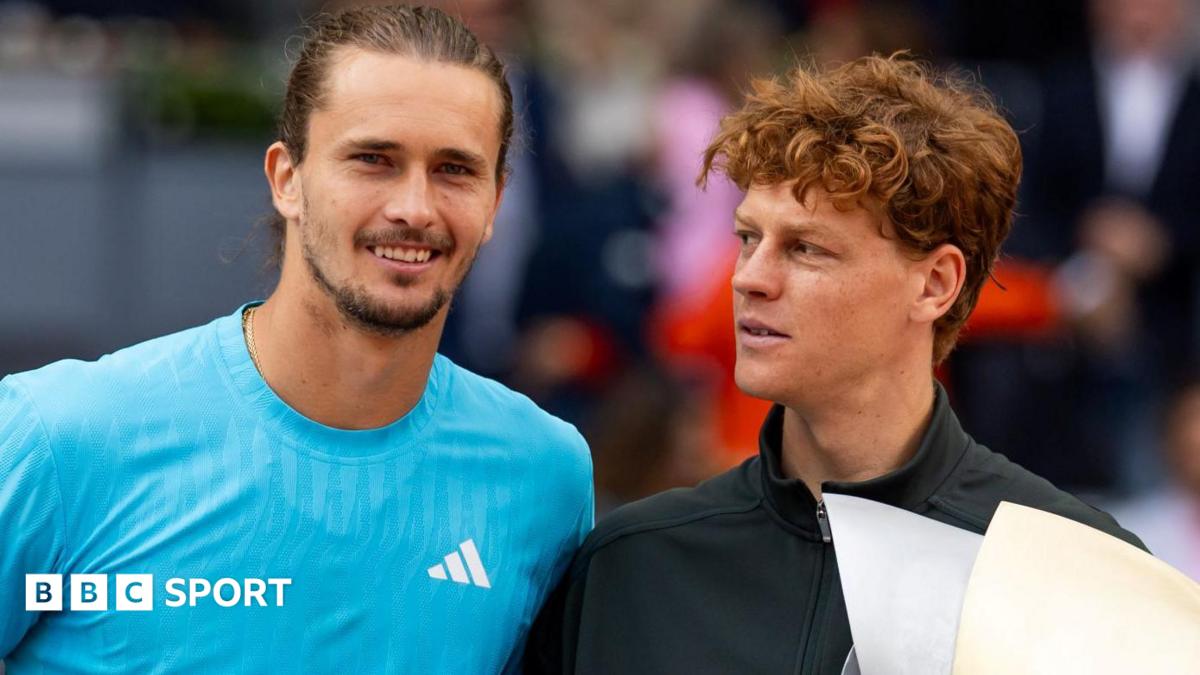
Jannik Sinner arrives at the Wimbledon final as the defending champion and has made plain he will not underestimate Alexander Zverev. BBC Sport coverage of the build-up highlights why Sinner’s camp views Zverev as a live threat and why tactical clarity will be essential in the title match. The contrast is straightforward: Sinner carries the weight of a title defence, while Zverev brings recent high-level results and the kind of match temperament that can change a final on a few key points.
Both players enter the match with clear strengths and vulnerabilities. Sinner’s baseline control and improving serve give him the tools to impose patterns of play, while Zverev’s ability to shift pace and seize momentum can turn tight exchanges into decisive opportunities. BBC Sport notes these themes while underlining that form, adjustments and handling pressure will decide the outcome.
Why Alexander Zverev is a threat
Alexander Zverev’s recent run of results on the tour has reinforced his status as a leading contender at major events. BBC Sport points to his capacity to win extended, high-pressure matches — a quality that translates well into finals against top-ranked opponents.
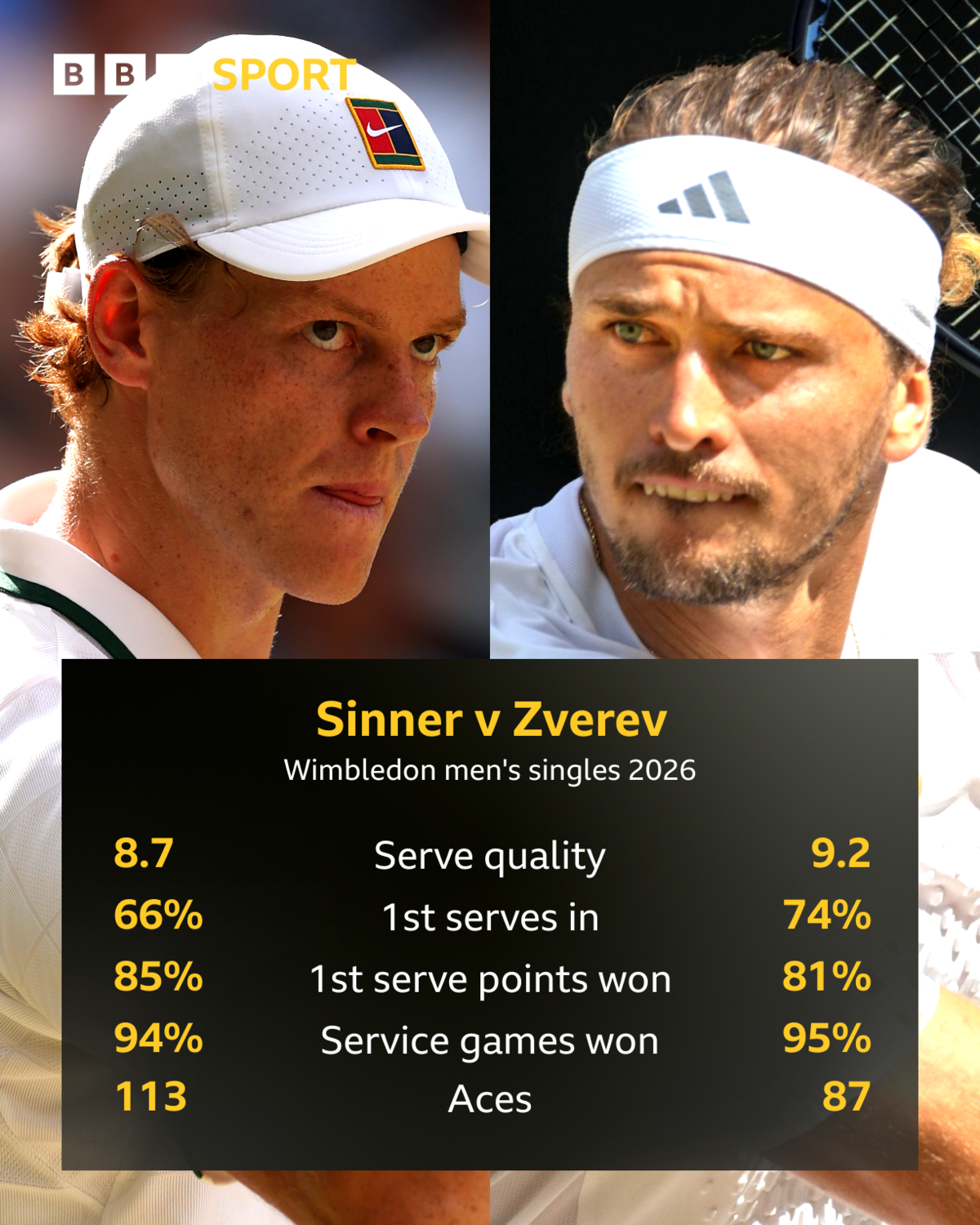
Zverev combines a powerful, well-placed serve with heavy groundstrokes and an ability to vary tempo. On grass, where quick points and sharp angles matter, his court positioning and willingness to mix short, punchy strokes with heavier drives make him unpredictable.
Beyond shot-making, Zverev brings experience from deep runs at Grand Slams and from handling the media and expectation that come with big-match success. That recent momentum can change the tone of a final: a few successful returns or a confident tiebreak display can swing both scoreboard momentum and belief.
Jannik Sinner’s mindset and recent form
Jannik Sinner has already shown at Wimbledon that he can manage the unique pressures of defending a title. BBC Sport has highlighted Sinner’s measured approach in press conferences and his preference for focusing on one match at a time, a mentality that helps in long tournaments when expectation grows with each round.
Technically, Sinner pairs a consistent, repeatable serve with very clean ball-striking from the baseline. His growth in tactical variety — including better use of slice, selective net approaches and targeted returns — has made him harder to game-plan against. Those improvements have underpinned his run back to the final and give him tangible tools to counter Zverev’s strengths.
Mental composure will be central. Retaining a title is as much about managing nerves and expectation as it is about executing shots. Sinner’s recent history shows he can stay composed through swing points; sustaining that calm against an opponent coming off high-level results will be a key test.
How the final may play out
The decisive factors are likely to be serve and return, first-serve percentage, and the ability to win short, high-value points. On grass, quick starts and tactical clarity often determine who controls the match’s rhythm.
If Sinner can maintain a high first-serve win rate, he will reduce the number of extended baseline exchanges where Zverev’s experience and variation can dominate. That means prioritising depth and direction on serve, then stepping in on returns to keep Zverev on the move.
Conversely, if Zverev finds a strong returning rhythm and converts early break chances, he can unsettle Sinner and force him into riskier patterns. Zverev’s capacity to change pace — flattening out drives or using sudden angles — can make rallies short and punishing.
Tactically, expect both players to test movement early, probe backhands and use net approaches selectively. Coaching input between sets and mid-match adjustments will matter: recognising when to change plan, for example by shortening points or targeting a weaker wing, may decide tight sets and tiebreaks.
Finally, pressure moments — break points, late-set tiebreakers, and key service holds — will be the clearest indicators of who adapts better on the day. The player who manages those swings with clearer tactics and steadier execution will likely lift the trophy.
Source and further reading
Source: BBC Sport
Key takeaways
- Jannik Sinner is the defending Wimbledon champion and has signalled caution about Alexander Zverev’s recent form, as reported by BBC Sport.
- Zverev’s recent high-level results and match temperament make him a clear threat on any surface.
- Serve and return efficiency, handling of pressure points and timely tactical shifts are likely to decide the final.