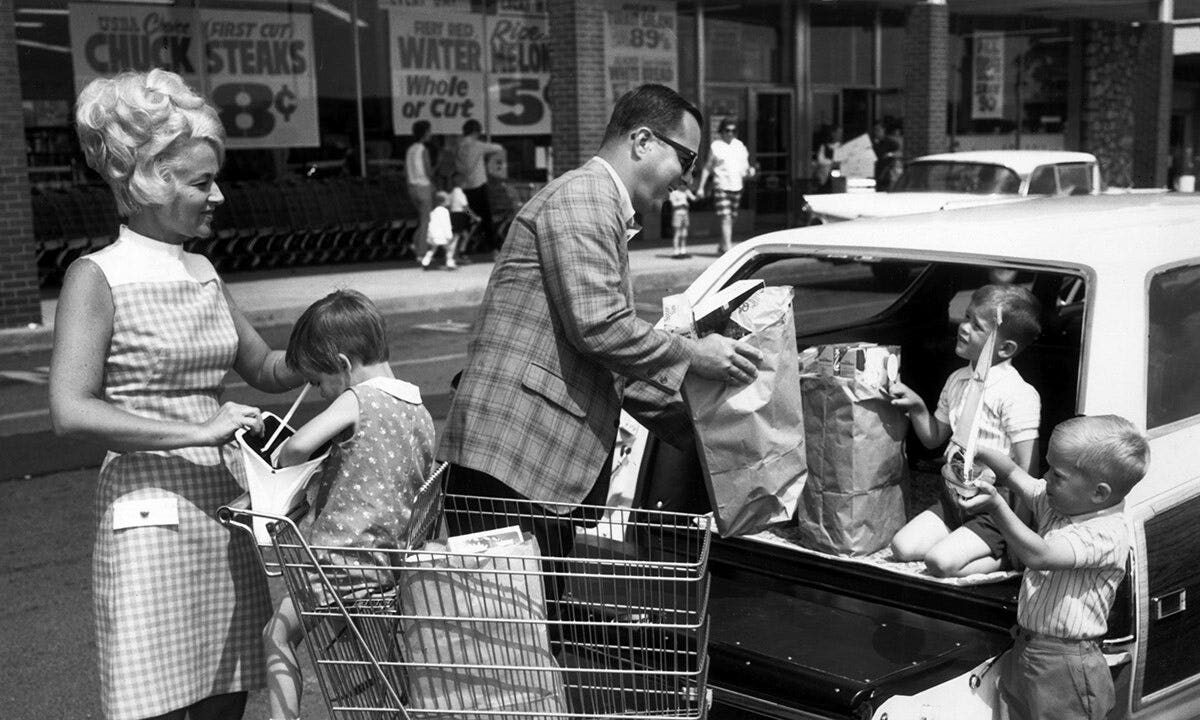
Vintage grocery ads 1960s are resurfacing online and stopping readers in their tracks: sirloin for 78 cents a pound, five pounds of sugar for 49 cents and a dozen eggs for 55 cents. Those figures, shown in decades-old newspaper inserts and shared across social platforms, look like time-travel bargains until you factor in inflation, wages and how families shopped then.
These scans and photos — reported by Tasting Table and highlighted in a Fox News roundup — have prompted a burst of nostalgia and debate. Below is a clear, non-technical guide to the most eye-catching prices, how to read inflation-adjusted comparisons properly, and quick takeaways that put the nostalgia into context.
What the vintage grocery ads show
The ads display everyday staples and frequent sale items: various beef cuts (sirloin, chuck), sugar sold in five-pound bags, eggs by the dozen, canned hams and large sacks of potatoes. Tasting Table singled out a 1966 sirloin price — 78 cents per pound — and used standard inflation measures to translate that to about $7.95 in today’s dollars. Fox News collected several of the scanned images and shared them with readers, which helped the clippings spread on social feeds.
Beyond prices, the pages capture midcentury retail culture: S&H Green Stamps and other loyalty rewards, larger household package sizes aimed at families that prepared most meals at home, and brands or products that are less common now (oleo, large canned hams). Social posts and Reddit threads amplify specific clippings and personal memories, reviving both the numeric and cultural details of shopping then.
Vintage grocery ads 1960s: prices at a glance
Here are several of the most-circulated line items, using the inflation context reported by Tasting Table and summarized in the Fox News overview:
- Sirloin steak: 78 cents per pound in 1966 — about $7.95 in today’s dollars (Tasting Table). By contrast, modern retail sirloin often runs around $17.99 per pound at many stores, though that varies by cut and region.
- Five-pound bag of sugar: 49 cents in the ads — an example of a bulk staple that appears inexpensive even after simple inflation adjustment compared with some current bulk prices.
- A dozen medium eggs: 55 cents in 1966 — roughly $5.60 after a straightforward inflation adjustment; shoppers today frequently see sale prices near $1.50–$2.50 in many places, reflecting retail promotions and category shifts.
These comparisons highlight two patterns: some staples (notably some dairy and staple pantry items) are relatively less expensive today in practical shopping scenarios because of scale, production and retail competition; others, especially fresh meat cuts like sirloin, were comparatively better bargains in the 1960s when adjusted simply by CPI.
Why simple price comparisons can mislead
Converting a 1960s price to today’s dollars is a useful starting point, but it leaves out several crucial factors. Inflation calculations typically use an index such as the Consumer Price Index to get a general sense of price-level change, but they don’t capture changes in real wages, benefits, household budgets, product quality, or regional differences in cost.
Wages matter. A widely circulated Reddit recollection cited hourly pay of roughly $2–$3 in midcentury eras; that Reddit comment is user-generated and has not been independently verified for this article. To illustrate why wages matter: if someone earned $2.00 an hour and sirloin cost $0.78 a pound then, that purchase represented about 0.39 hours of work — roughly 23–24 minutes. At $3.00 an hour, the same item would have been about 0.26 hours of work, or roughly 15–16 minutes. Because that wage detail comes from an unverified social post, treat it as illustrative rather than definitive.
Other caveats: newspaper inserts reflect local store promotions, not nationwide averages; package sizes and product formulations changed (a pound of a generic product then may not equal the same product today); and modern retail strategies like loss-leader pricing, private-label brands and nationwide distribution affect sale pricing in ways ad clippings don’t show.
How shopping habits and products differed
The ads reveal behavioral and structural differences. Midcentury shoppers often bought larger bulk sizes, used stamp-based loyalty programs and relied on home cooking more heavily. This influenced what units of measure shoppers cared about; a 25-pound bag of potatoes or a large canned ham makes sense for a household preparing more meals from scratch.
Retail operations also evolved: improved refrigeration, centralized distribution, and category management changed what end-product choices and prices looked like. Some products that were staples in the 1960s grew scarce on modern lists, while private-label items and value brands now shift many price comparisons toward lower per-unit costs at the shelf.
By the numbers: quick takeaways
These compact takeaways summarize why the vintage grocery ads spark both nostalgia and careful scrutiny:
- Main keyword: vintage grocery ads 1960s — the images show striking nominal prices but need context for fair comparisons.
- Tasting Table’s inflation check: 78 cents per pound for sirloin in 1966 equals about $7.95 today; many modern retail sirloin prices are higher, often near $17.99 per pound depending on cut and market.
- Some staples can be cheaper now after adjusting for inflation because of production scale, supply-chain changes and retail pricing strategies; others were relatively less expensive in the past.
- Social reaction includes memories of S&H Green Stamps, bulk buys and wage-based reflections; remember that user posts on Reddit are user-generated and should be treated as anecdotal unless corroborated by primary sources.
Why this matters: quick inflation-adjusted numbers make for viral content, but understanding living standards and purchasing power requires looking beyond raw price tags to wages, household size, availability and retail practices. The vintage grocery ads are valuable cultural artifacts that show how shopping — and what shoppers value — has changed as much as prices themselves.
Sources
This article is based on a Fox News photo collection of vintage grocery images and a Tasting Table story that performed inflation-adjusted comparisons. For the original image roundup, see Fox News: Vintage photos reveal what grocery shopping looked like in the 1960s. For the price calculations cited here, see Tasting Table’s coverage: Tasting Table inflation comparisons.
Note on social mentions: the Reddit wage recollection referenced in conversations about these ads is user-generated and unverified; it is presented here to show how readers are interpreting the clippings, not as a verified historical wage figure.