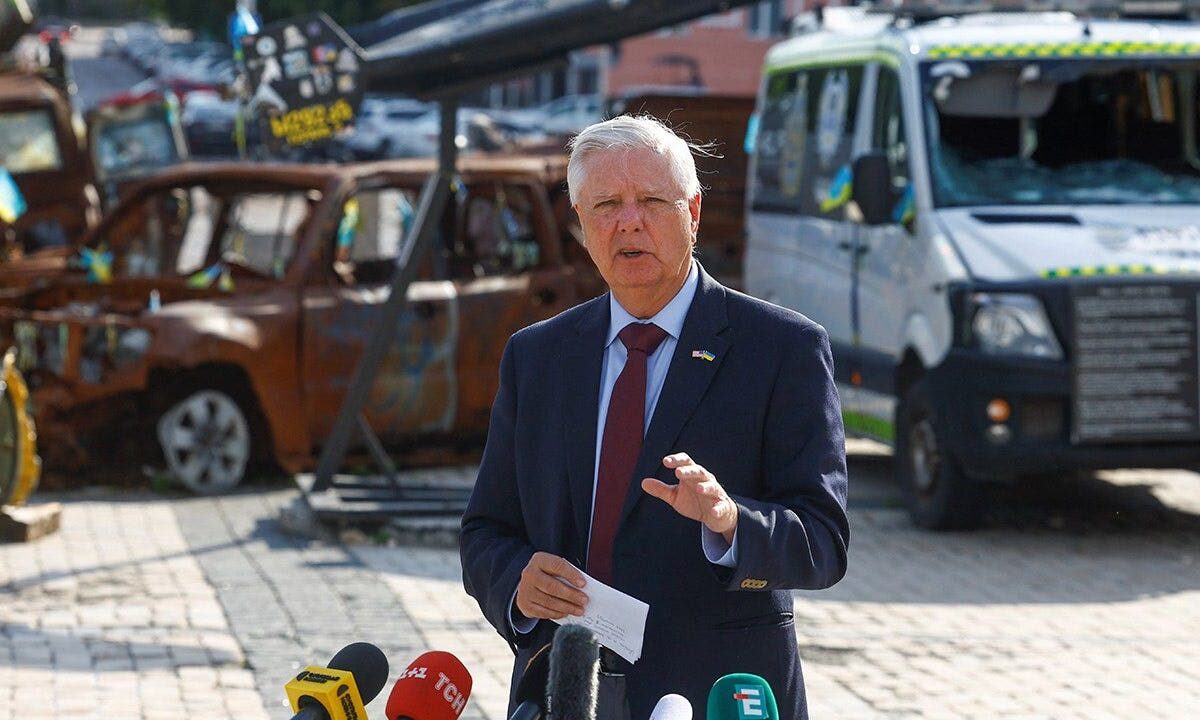
Sen. Lindsey Graham had become one of the few lawmakers with regular access to President Donald Trump on national security matters, and his sudden death raises immediate questions about the fate of a long-stalled Russia sanctions bill and U.S. advocacy for Ukraine and Israel (Fox News).
Lindsey Graham’s role in brief
Graham transformed from an early critic of Trump into a trusted interlocutor on questions of war and peace. Fox News reported colleagues and aides described him as an unofficial conduit to the president — a characterization drawn from interviews with Graham’s staff and associates — and that proximity made him a practical force in White House deliberations.
At the time of his death he was preparing to push a bipartisan Russia sanctions bill through the Senate, a measure whose near-term prospects were closely tied to his access to both the White House and Senate colleagues (Fox News).
How Graham built influence
Graham’s influence grew from relentless engagement. He averaged frequent trips overseas, including what Fox News described as a reported 10th trip to Ukraine, and cultivated ties with leaders in Kyiv and Jerusalem as well as U.S. allies in Europe and the Gulf.
Retired Gen. Jack Keane told Fox News that Graham “wasn’t interested in writing op-ed pieces or making speeches, he wanted firsthand contact with leaders of the world.” That conduit-style approach — more calls and shuttle diplomacy than public grandstanding — became a hallmark of his foreign-policy work.
He often aligned with a muscular posture abroad, in the tradition of the so-called “Three Amigos,” and he was a consistent advocate for NATO, tougher measures on Iran and firm action to counter Russian aggression.
Graham, Trump and access that shaped policy
Graham was one of the few senators who could reach the president regularly. Trump told Fox News, “He would call me all the time. I’d say, ‘Stop calling me, Lindsey.’ It was amazing. He just never stopped. He was a worker — a total workaholic politician.”
That pattern of frequent, direct contact mattered across several flashpoints. According to Fox News reporting, Graham pressed for strong backing for Ukraine, cultivated ties with President Volodymyr Zelenskyy, and repeatedly urged a hard line on Iran while maintaining close lines to Israeli leaders.
Those interventions did not always mean sweeping policy reversals; often they reinforced presidential instincts or nudged outcomes through private persuasion, the sort of informal influence that is hard to quantify but visible in repeated diplomatic shuttles and phone calls (Fox News).
Who will shepherd the Russia sanctions bill now?
Graham had spent more than a year revising his Russia sanctions legislation and negotiating with the White House as Trump pursued outreach to Moscow. Days before his death he announced an agreement with the administration to move the bill forward, Fox News reported.
Practically, the Senate must now identify a new steward: someone with relationships across party lines, established ties to allied capitals and sufficient White House access to protect the administration signoff Graham helped secure. No clear successor has been named; Senate leaders and committee staffs are expected to consult bipartisan colleagues to rebuild the coalition Graham had assembled.
Without Graham’s particular combination of access and dealcraft, the bill’s route to passage becomes less certain. Staff-level negotiations are likely to intensify as lawmakers and the White House seek a new sponsor and floor manager for the measure.
Reaction and what comes next
Allies and officials underscored how pivotal Graham had become. Oleksandr Merezhko of President Zelenskyy’s party called the loss “huge and absolutely unexpected,” and said Graham had been “truly indispensable,” a remark reported by Fox News that reflects the sense in Kyiv of a diminished direct channel into Trump’s circle.
Domestically, colleagues noted his energy and institutional commitment. Sen. Amy Klobuchar described a “kid-like exuberance about his job,” and other remembrances highlighted the practical tasks — persuasion, shuttle diplomacy and legislative craftsmanship — that will need to be redistributed.
Near term, Senate leaders and the White House will need to clarify sponsors and marshals for the sanctions bill and for other initiatives Graham led. Observers expect staff-level negotiations to accelerate and for potential new floor managers to emerge from both parties, but outcomes remain uncertain (Fox News).
FAQ
Who will lead Lindsey Graham’s Russia sanctions bill in the Senate?
There is no clear successor named yet. The bill’s progress relied on Graham’s personal access to the White House and allied capitals. Senate leaders will consult bipartisan colleagues and committee staff to identify a sponsor who can rebuild the support coalition.
How did Lindsey Graham influence Trump on Ukraine and Israel?
Graham used frequent, direct contact and repeated travel to press his views. He cultivated relationships with leaders in Kyiv and Jerusalem and kept up constant calls and meetings with the president, sometimes reinforcing and sometimes nudging policy in a more interventionist direction (Fox News).
What were Graham’s main foreign policy priorities?
Graham championed a muscular U.S. role abroad: strong support for Ukraine and Israel, tougher measures on Iran and Russia, and a continued commitment to alliances like NATO. He prioritized personal diplomacy and direct engagement with foreign leaders.
Source: Fox News — Trump’s fiercest GOP critic became his most influential voice on war and peace.