
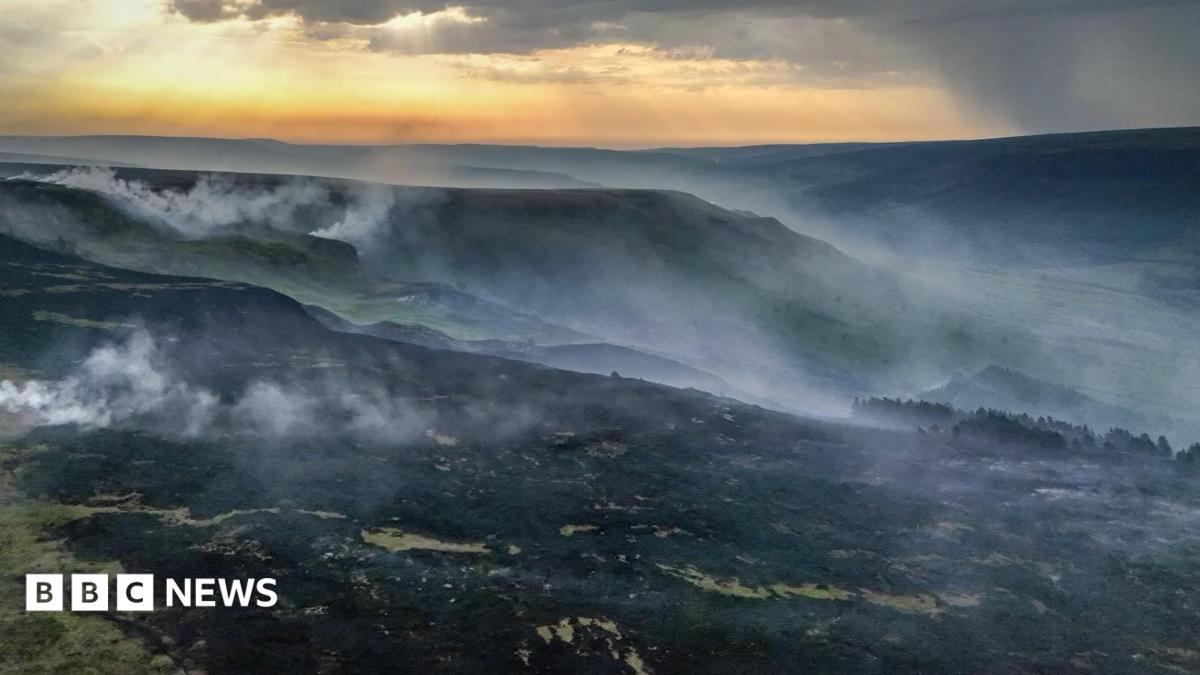
Wildfires UK: Major incidents were declared on Sunday in parts of North Wales and in Glossop, Derbyshire, after wildfires burned across moorland and open countryside. Fire chiefs described the unfolding situation as placing “extreme pressure” on crews and resources, with multiple blazes requiring a sustained coordinated response across different regions.
Wildfires UK: where incidents were declared
Emergency services confirmed that major incident status was declared for locations in North Wales and for areas around Glossop in the Peak District, Derbyshire. The declarations were made as multiple fires emerged on open moorland and heathland, producing widespread smoke and drawing significant firefighting resources.
Local fire authorities reported the primary operational focus was protecting properties, infrastructure and access routes while preventing the fires from spreading to more populated areas. Crews worked to establish containment lines and to protect livestock and sensitive environmental sites where necessary.
Fire service response and strain on services
Fire chiefs said the scale and number of concurrent incidents placed “extreme pressure” on services, a phrase used in reporting by BBC News. Multiple appliances and specialist teams were deployed where terrain and safety allowed, and crews worked to coordinate water supplies, aerial or off-road support where available, and liaison with police and local authorities.
The strain on resources was reported as significant because crews were required at several separate locations at the same time. Fire services prioritised life safety and immediate protection of property, and worked with neighbouring brigades to shift resources as incidents evolved.
National-level bodies and guidance officers, including organisations that represent fire services, routinely plan for multi-site wildfire responses; those coordinating on the ground have to balance rapid suppression with sustained containment operations while managing crew welfare.
Timeline of events (Sunday, summary)
– Early reports: Small moorland fires were spotted in separate locations and initial local firefighting teams were mobilised.
– Midday: Incidents escalated in parts of North Wales and near Glossop as fires spread across dry heather and grassland, prompting major-incident declarations to enable a larger coordinated response.
– Afternoon into evening: Additional appliances and specialist resources were brought in. Crews concentrated on establishing fire breaks, defending properties on the urban fringe, and clearing access for water and equipment.
This timeline describes the broad order of events as reported by local services and national coverage; exact timings for individual response actions were managed by local incident commanders and may vary between locations.
Local impacts and public safety advice
Local impacts included visible smoke affecting nearby minor roads and recreational routes, temporary closures of parts of the Peak District, and restricted access to some public footpaths while crews worked. Drivers were warned that smoke could reduce visibility and to avoid unnecessary travel near active fire scenes.
Authorities advised the public to keep clear of fire scenes, not to attempt to tackle large fires themselves, and to follow instructions issued by local fire and police teams. People with respiratory conditions were urged to take extra care if smoke affected their area and to follow NHS and local health guidance.
Where evacuations are required, those will be announced directly by local emergency services. At the time of initial reporting there were no confirmed, widespread evacuation orders published; anyone in affected areas should check official fire service and council channels for the latest advice.
What comes next and monitoring
Crews will continue to monitor hotspots, hold and strengthen containment lines, and patrol affected perimeters until the risk of re-ignition is reduced. Weather — notably wind direction and humidity — will be a key factor in how quickly the incidents can be fully controlled.
Local incident commanders will produce operational updates and may adjust response levels as conditions change. Residents should expect intermittent updates and possible short-term restrictions near affected moorland while teams work to secure the areas.
Members of the public are advised to follow official channels for verified information: local fire and rescue services, police force updates, and council alerts. National outlets and emergency services will issue further information if the situation changes significantly.
Source and further reading
This article is based on reporting by BBC News and on public guidance from UK emergency and government resources. For the original news coverage, see the BBC report linked below. For official wildfire guidance and preparedness information see UK government wildfire guidance and the National Fire Chiefs Council.
Source: BBC News – Wildfires burn across UK as fire chiefs warn of extreme pressure
Further reading: UK wildfire guidance – gov.uk: Wildfires
Further reading: National Fire Chiefs Council – nfcc.org.uk
How to stay informed
Check local fire and rescue service websites and official social media feeds for the most recent operational updates and safety notices. Local councils and police forces will publish any community or road-closure notices. For health advice related to smoke exposure, consult NHS guidance or your local health authority.
If you are in or near an affected area and are concerned for your immediate safety, call 999 and follow the directions of emergency responders.


