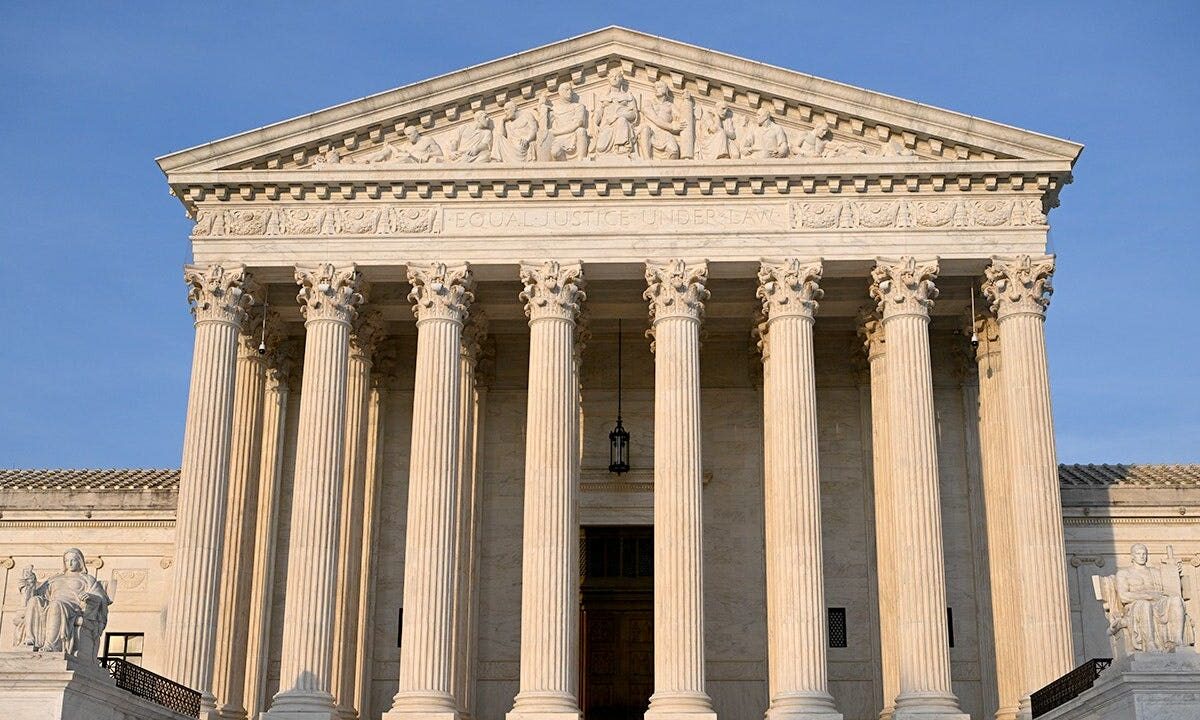
The Supreme Court has agreed to decide whether a city may force someone to seek a municipal permit before they can challenge a government demand that they stop a religious gathering — effectively whether a person must seek a “permit to pray in your home” before suing. The case, Grand v. City of University Heights, raises when federal courts may review claims that local zoning enforcement chills religious exercise.
permit to pray in your home
What the Supreme Court will decide
On June 30, 2026 the Court granted review to resolve whether the ripeness rules developed for takings claims should bar immediate federal review of free-exercise and Religious Land Use and Institutionalized Persons Act (RLUIPA) claims. The specific question is whether Williamson County Planning v. Hamilton Bank (473 U.S. 172 (1985)) — which requires a final administrative “final decision” before a takings claim is ripe — applies to cases where officials issue a coercive directive that chills religious worship.
The University Heights facts
Daniel Grand, an Orthodox Jew, invited neighbors to form a minyan in his University Heights, Ohio, home. He said travel limitations on the Sabbath make hosting a prayer quorum at his house essential to his practice.
On January 21, 2021 the city sent a cease-and-desist letter saying Grand’s home was being used as “a place of religious assembly” and that he needed a special use permit. The letter warned of possible code enforcement action and fines if services continued without the permit.
After canceling the next gathering and applying for the permit, Grand faced neighbor objections at the zoning hearing; one attendee warned the area could “be labeled as Jewish.” He also learned that a successful special use permit could reclassify the property as a “house of worship,” a designation that carries restrictions, including limits on sleeping on the premises and other changes to permitted residential uses.
Rather than accept those consequences, Grand withdrew his permit application and sued in federal court, alleging violations of the First Amendment and RLUIPA.
Why the Sixth Circuit called the case unripe
A unanimous Sixth Circuit panel dismissed Grand’s lawsuit as unripe. The court concluded that because Grand withdrew his permit application there was no “final decision” from the zoning authorities and, under Williamson County, the claim could not proceed in federal court until administrative remedies were exhausted.
Put simply, the Sixth Circuit treated the dispute like a takings exhaustion case: courts should wait for local officials to make a firm, final determination before resolving federal constitutional or statutory claims.
Constitutional and RLUIPA arguments explained
At the heart of Grand’s appeal is a dispute about ripeness and how it should work. “Ripeness” asks whether a controversy has matured into an actual, concrete dispute that a court can decide now. Williamson County established a ripeness test in the takings context: plaintiffs normally must obtain a final, binding decision from local authorities before seeking federal relief.
Grand and his supporters argue that applying Williamson County to free-exercise and RLUIPA claims misunderstands the nature of those injuries. Under First Amendment doctrine and RLUIPA — a federal law that bars land-use regulations imposing substantial burdens on religious exercise unless the government shows a compelling interest and narrow tailoring — the credible threat of enforcement can itself chill religious practice and produce an immediate injury. For example, being told to stop hosting religious services or face fines can stop worship in its tracks.
Defenders of the Sixth Circuit’s approach say consistent ripeness rules avoid premature judicial interference with local land-use decisionmaking. Critics counter that folding First Amendment chill claims into a takings-style exhaustion rule can force people to accept onerous permit conditions or forego their religious practices merely to preserve a future lawsuit.
Why it matters for home worship and local zoning
The stakes are practical. If the Court requires a final administrative decision before courts may hear free-exercise or RLUIPA claims, municipalities could use cease-and-desist orders and permit processes to delay or block judicial review. Homeowners and small religious groups could face a Hobson’s choice: either apply for permits that might reclassify their property (with side effects such as restrictions on sleeping) or forgo their right to immediate judicial relief and stop gathering.
Opponents of a broad Williamson County rule say that approach chills the First Amendment, because the mere threat of enforcement can be enough to end worship and discourage future gatherings like a minyan.
What comes next
The Supreme Court will hear argument during its next term and issue a decision later in the term. The Court could rule that Williamson County does not control free-exercise or RLUIPA claims, preserving quicker access to federal courts for threatened religious exercise. Alternatively, the Court could reaffirm a broad final-decision requirement, or craft a narrower standard that treats different constitutional claims differently.
In the meantime, homeowners threatened with enforcement must choose between complying with local permitting processes to preserve later review or pressing for immediate judicial relief and risking enforcement. Municipalities will be watching for guidance that balances deference to local land-use procedures against protection for constitutional rights.
Source attribution
This article draws on reporting in Fox News and on public court materials. For reporting, see: Fox News: “You shouldn’t need a permit to pray in your own home — the Supreme Court should agree”. For primary materials and dockets, see the Supreme Court orders page and the Sixth Circuit’s site: Supreme Court orders, U.S. Court of Appeals for the Sixth Circuit, and the district court docket available via PACER: PACER (district court filings). Additional neutral coverage and analysis on recent grants and ripeness issues can be found at SCOTUSblog.
Readers looking for the Sixth Circuit opinion and district-court filings should consult the official court dockets linked above for PDFs of opinions and orders. Key legal references cited in this explainer include Williamson County Planning v. Hamilton Bank, 473 U.S. 172 (1985) and the Religious Land Use and Institutionalized Persons Act (42 U.S.C. § 2000cc).
Source: Reporting and primary court materials on Grand v. City of University Heights.