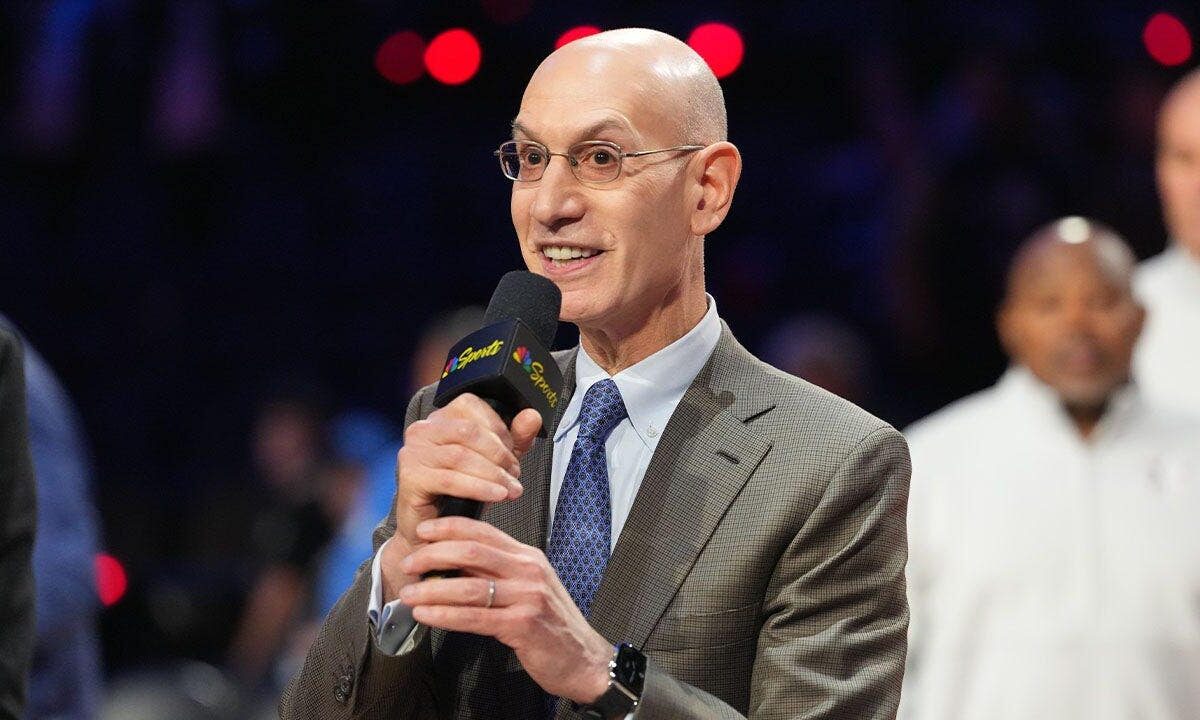
Adam Silver opened his CNBC Sports Summit remarks in New York by defending Caitlin Clark’s focus on basketball while acknowledging how the debate around her has escalated. “I’ve come to know Caitlin really well. … She has become a bit of a political football,” Silver said, framing much of the drama as political theater rather than only a matter of officiating or safety.
Silver named Clark early in his remarks and repeatedly returned to the theme that public discussion about her has been amplified beyond the court. Those comments — and his reluctance to confirm reported consultations with league leaders — have fed criticism that executives are prioritizing optics over transparent action.
What Silver said in New York
At the CNBC Sports Summit, Silver described Clark as “an incredible player” and “an incredible person” who deserves the space to play. He said the narrative around Clark has become “political ping-pong,” adding that the coverage has taken on a life beyond the incidents themselves.
Silver pushed back on the idea that officiating is the sole driver of concern. “Ultimately, the issues around Caitlin Clark are not largely about officiating,” he said, though elsewhere he conceded the league must do better: “Do we need to improve WNBA officiating? No doubt about it.” Those two lines — downplaying a single cause while admitting room for improvement — underline the mixed message critics have seized on.
Reports on Engelbert and the Thomas suspension
Several outlets reported that Silver consulted with WNBA Commissioner Cathy Engelbert before the league suspended Alyssa Thomas following a controversial throat strike. When asked directly about those reports, Silver declined to confirm or deny them, saying he did not want to comment in a way that would be unfair to Clark or Engelbert.
Because Silver would not verify the reporting, those accounts remain unverified here. That distinction matters: reported consultations suggest some interleague coordination, while Silver’s refusal to confirm keeps the formal record incomplete and fuels debate over transparency.
Caitlin Clark’s safety and officiating concerns
Caitlin Clark’s rise has coincided with increased physical attention on the court. Observers and supporters have pointed to a series of hard fouls and moments of contact they say were not consistently penalized. Advocates for Clark argue the pattern points to systemic issues in how referees and the league enforce safety protections.
League leadership, including Silver, has balanced that critique with a call for careful review rather than immediate attribution of malintent. “Context matters,” Silver said, urging observers to weigh each incident individually even as he acknowledged that refereeing needs to improve. That tension — between measured process and calls for swift corrective action — is central to the current debate.
The conversation around officiating cuts two ways: incremental improvements in refereeing could reduce repeat dangerous plays, but critics say only firmer, faster disciplinary measures will change behavior. Silver’s emphasis on optics has left some players and advocates frustrated that the league’s public posture may not be matched by procedural reforms.
Why the optics matter and the criticism
Silver’s description of Clark as a “political football” and of the discourse as “political ping-pong” has been interpreted by critics as an attempt to reframe the issue as media-driven rather than policy-driven. That reframing can deflect calls for immediate structural change.
Critics argue that when league executives center optics, they risk sidelining substantive fixes: clearer review standards, faster disciplinary timelines, or targeted referee training. Supporters of the league’s approach counter that transparent, fair processes are necessary to avoid ad-hoc punishments and that public pressure should not drive individual disciplinary outcomes.
What comes next for Clark and the league
In the near term, expect heightened scrutiny. Media, players and lawmakers are likely to press for clearer explanations of how disciplinary decisions are made, whether there was consultation between the NBA and WNBA, and what reform steps the WNBA will take on officiating.
Possible short-term moves include clearer public guidance on review standards, targeted officiating training sessions, and a more transparent timeline for postgame disciplinary reviews. Any substantive policy changes or disclosures about interleague discussions would be watched closely for signs the league is shifting from message control to operational change.
Takeaway
Adam Silver publicly framed Caitlin Clark as a figure caught in larger political debate while acknowledging shortcomings in WNBA officiating. Reports of consultations between league leaders remain unverified after Silver declined to confirm them; that gap in transparency is fueling calls for clearer, faster disciplinary processes and safer officiating standards. What happens next will hinge on whether league leaders pair messaging with concrete procedural reforms.
FAQ
Did Adam Silver confirm consulting with Cathy Engelbert?
No. Multiple outlets reported that Silver consulted with WNBA Commissioner Cathy Engelbert, but Silver declined to confirm or deny those reports at the CNBC summit. Treat those reports as unverified until directly confirmed by the parties involved.
Will Caitlin Clark get special protection from the league?
Silver rejected the idea of publicly singling out Clark for special treatment, stressing fairness and context. The league has acknowledged concerns about officiating and discipline, but there has been no public announcement of unique protections for any single player.
Are WNBA officiating changes planned after these reports?
Silver said the WNBA’s officiating “needs to improve” but did not provide an immediate list of planned changes at the summit. Observers will be watching for announcements on review procedures, training, or policy updates from the WNBA in response to the criticism.
Source attribution: This article is based on reporting from Fox News/Outkick. Source: Fox News/Outkick.