
Pumas head coach Felipe Contepomi told BBC Sport that “rugby union is ‘booming’ in football‑mad Argentina.” His comment points to growing attention around rugby union Argentina and raises questions about the drivers and consequences of that growth.
Rugby union Argentina: signs of the boom
Contepomi’s observation, reported by BBC Sport, frames a simple claim: rugby is attracting more players, more spectators and more media interest than in recent years. The BBC piece relays his view and highlights anecdotal signals from across the game.
Those signals include fuller club schedules, expanding youth programmes and more discussion of domestic competitions in national coverage. Presented as Contepomi’s assessment, the description of a “boom” is best read as an expert perspective rather than a statistical verdict.
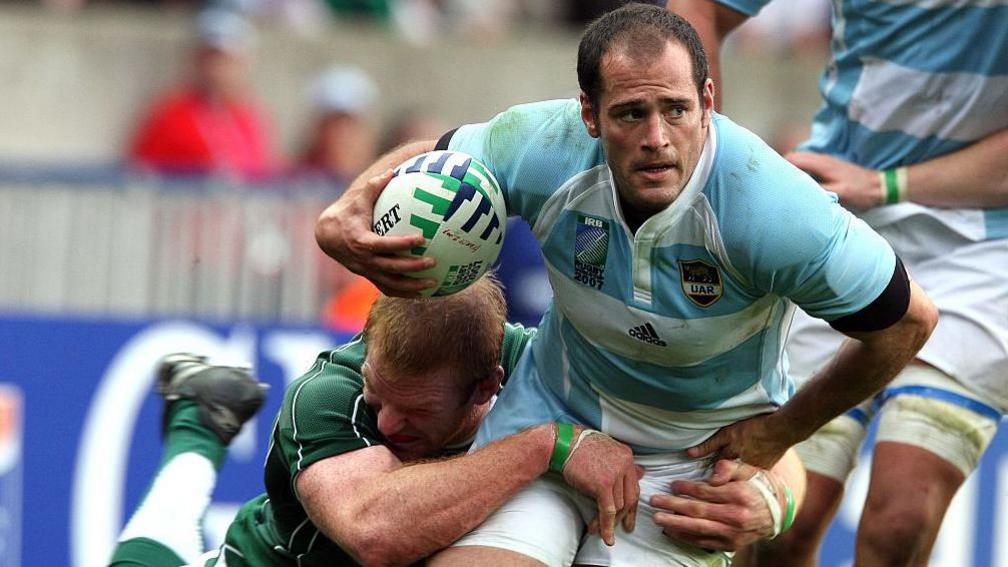
What Felipe Contepomi actually said
In the BBC Sport interview, Contepomi said directly that rugby union is “booming” in what the report described as football‑mad Argentina. The article attributes the remark to him in the context of discussing the national squad and the domestic scene.
BBC Sport carries the interview as a feature on broader trends; the outlet presents Contepomi’s words and context but does not offer a full independent dataset to prove a nationwide upturn. As such, the comment should be treated as informed commentary from someone in charge of the Pumas.
Local factors behind recent growth
Several concrete factors are commonly cited — and are consistent with Contepomi’s remarks — to explain why observers might describe rising momentum for rugby in Argentina. First, youth participation appears to be expanding in many urban and suburban areas as schools and clubs add or scale junior programmes.
Second, club activity has become more visible. Local clubs running more sessions and fielding fuller age‑group teams can create a perception of growth, because larger junior cohorts feed into regional selection and increase match density across weekends.
Third, clearer player development pathways matter. When young players see academies, professional contracts or overseas moves presented as realistic outcomes, interest and retention can rise. Contepomi’s role overseeing the national team gives him visibility on how those pathways affect selection and performance.
Fourth, media attention and broadcast access amplify change. Greater coverage of domestic fixtures and online reporting raises rugby’s profile, which in turn can attract sponsorship and spectator interest. BBC Sport’s decision to highlight Contepomi’s comment is itself an example of mainstream media treating the trend as newsworthy.
It is important to stress that these factors are described as drivers commonly associated with expansion — some were mentioned or implied in BBC’s reporting and in Contepomi’s comments — rather than as independently verified national statistics.
What this means for the Pumas and the national game
If the sport is experiencing meaningful growth, the Pumas could benefit from a deeper domestic talent pool. More competitive club environments and larger junior cohorts give national coaches more players to evaluate for selection.
That extra depth can increase competition for places and potentially introduce new skill sets into the squad. For selectors, it offers more tactical options and a broader platform from which to pick specialists, which can be especially valuable in preparation for major tournaments.
Growth at home may also shift the balance between relying on overseas‑based professionals and developing home‑grown talent. Stronger domestic structures can reduce dependence on foreign leagues by increasing the quality and readiness of players graduating from national academies and clubs.
Off the field, higher participation and attention can lift attendance and sponsorship interest in domestic competitions. Those financial and cultural benefits feed back into coaching resources, facilities and long‑term development — provided administrators convert participation into sustained high‑performance pathways.
Measuring the claim and limits of current reporting
Contepomi’s statement is a high‑profile endorsement of a growth narrative, but it is not a substitute for systematic measurement. Reliable confirmation would require access to datasets such as registered player numbers, youth enrolment trends, club participation figures and broadcast audience metrics.
The BBC Sport piece relays the coach’s view and situates it within visible changes in the game; it does not, however, publish a comprehensive audit of participation or financial figures. Readers should therefore view the “boom” label as an expert appraisal that merits further verification through official statistics.
Common questions
Is rugby really growing in Argentina?
There are multiple indicators — expanded youth activity, busier club calendars and increased media attention — that support the possibility of growth. Yet Contepomi’s description, as reported by BBC Sport, remains an informed observation; independent datasets would be needed to confirm a nationwide boom.
What did Felipe Contepomi say about the sport in Argentina?
Contepomi told BBC Sport that “rugby union is ‘booming’ in football‑mad Argentina.” The remark was offered in his capacity as Pumas head coach and reflects his perspective on participation, club activity and player pathways.
How could a rugby boom affect the Pumas national team?
Greater participation and stronger club systems could widen the talent pool, intensify competition for national selection and provide new tactical options for coaches. The ultimate impact depends on how well development programmes and competitions convert participation into elite performance.
Source and further reading
This article is based on the BBC Sport interview with Felipe Contepomi and the coverage published there. For the original interview and context, see the BBC Sport piece linked below.
Source: BBC Sport – Top Stories — How rugby union is ‘booming’ in football-mad Argentina