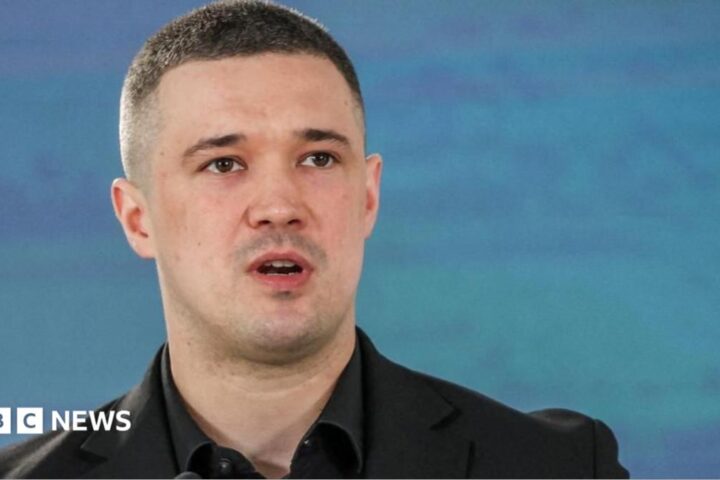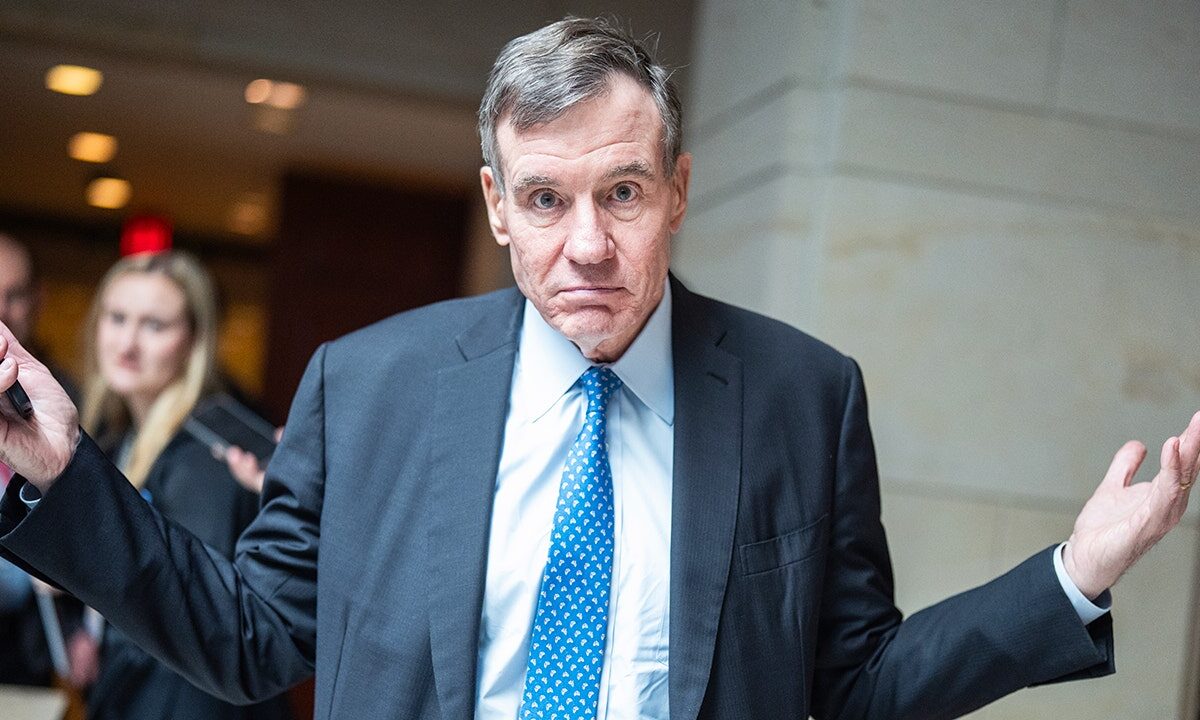
Tony Dokoupil clashes with Mark Warner during a live CBS special report following President Trump’s election-security address, touching off a sharp debate over network responsibility and several contested claims the president made about voter data and election systems.
The exchange began as CBS aired the roughly 25-minute address and then placed Warner, the top Democrat on the Senate Intelligence Committee, on air to respond. Warner told the network he was “embarrassed” that networks had carried the address “as news, as opposed to a rehash of falsehoods.” Dokoupil pushed back that CBS had brought Warner on to scrutinize the president’s assertions and that the network provided live analysis.
Tony Dokoupil clashes with Mark Warner on CBS live
On-air, Warner argued networks should not present disputed claims without robust challenge: “You must push back,” he said, pressing journalists to do more when high-profile figures make assertions that carry public-policy implications.
Dokoupil countered that airing the speech with immediate expert reaction and fact-checking allows viewers to see claims and the scrutiny they receive in near-real time. The back-and-forth highlighted an ongoing newsroom debate over how best to balance raw coverage of political statements with timely verification.
What Trump said and the contested claims
In the address, President Trump released materials he described as declassified intelligence and alleged a series of election-related vulnerabilities. Among the central assertions he made was that China had acquired 220 million U.S. voter files beginning around the 2020 period — a claim the president presented as evidence of what he called the “largest compromise of election data in history.” Those are President Trump’s characterizations of the materials and their significance.
The White House packet also raised concerns about electronic voting systems, a Michigan voter-registration probe and non-citizens listed on voter rolls. Trump used those points to press Congress to pass the SAVE America Act, which he described as imposing stricter ID rules and curbing mail voting for federal elections.
CBS fact checks and the intelligence context
CBS published a fact-check of the president’s address that explicitly characterized the specific claim that China acquired 220 million U.S. voter files as misleading. The CBS fact-check noted much voter-registration data is publicly available and underscored distinctions between possession of registration data and evidence that vote counts were altered (CBS Fact Checks).
Those distinctions align with public guidance from federal cyber and law-enforcement partners. A 2020 bulletin jointly issued by CISA and the FBI — titled “Potential Malicious Cyber Activity Targeting State Online Voter Registration Databases” — noted incidents of data acquisition from online registries but concluded such activity did not demonstrate that votes were changed or that election outcomes were affected (CISA–FBI bulletin, AA20-245A).
CBS also labeled other Trump statements on voting machines, non-citizen voting and mail ballots as disputed or lacking clear, corroborated evidence in the public record. Those characterizations were the network’s editorial findings in its post-speech fact-checking.
Warner’s critique of media and the push for election integrity
Warner broadened his criticism beyond any single claim, urging journalists and outlets to prioritize verification when speech content could influence policy debates or public trust in elections: “It is incumbent upon you and any responsible journalist to push back on these falsehoods,” he said on air.
The senator’s point reflected wider concern among some lawmakers and analysts that airing disputed assertions without prompt, clear context can leave viewers with misleading impressions even if networks subsequently publish fact checks.
Policy fallout: SAVE America Act and what comes next
The president tied his presentation to the SAVE America Act, a bill he and supporters say would tighten voter ID rules and restrict some mail-voting practices. The bill passed the House earlier this year but stalled in the Senate when a 53–47 vote failed to reach the 60 votes required to advance it. That procedural reality leaves the measure’s prospects uncertain in the divided chamber.
With the bill’s path blocked for now, the likely next steps include continued floor and committee debate, targeted proposals on specific election-security measures, and ongoing scrutiny of the evidence used to justify legislative changes. The Dokoupil–Warner exchange framed those questions as both political and journalistic: how evidence is presented matters to lawmakers, the public, and to the shape of any reform.
Expert reaction and context
Nonpartisan election-security analysts emphasize that different types of incidents carry different implications: public voter-registration information and scraped data are not the same as demonstrated manipulation of vote counts. Analysts advising state and federal election officials have repeatedly urged careful, evidence-based distinctions when evaluating alleged breaches, noting that policy responses should match proven risks.
Independent experts also note a practical newsroom trade-off: live coverage brings transparency and immediacy, while delayed or annotated airing allows fuller context. Many newsrooms now attempt to combine both — live presentation plus prompt fact-checking — but the balance remains contested.
Source attribution
This report summarizes on-air remarks and fact-check findings based on public reporting and primary sources. The on-air exchange was reported by Fox News Digital; CBS’s post-speech fact-check is cited above; and the 2020 joint CISA–FBI bulletin (AA20-245A) is cited for the relevant cyber and voter-registration context. The White House was contacted for comment and did not immediately respond to requests for comment, per the original reporting.
Primary sources and reporting referenced in this article: CBS fact-checking coverage (CBS Fact Checks), the CISA–FBI bulletin (AA20-245A) on state online voter-registration database activity (CISA–FBI AA20-245A), and the reporting of the on-air exchange by Fox News Digital (Fox News Digital).