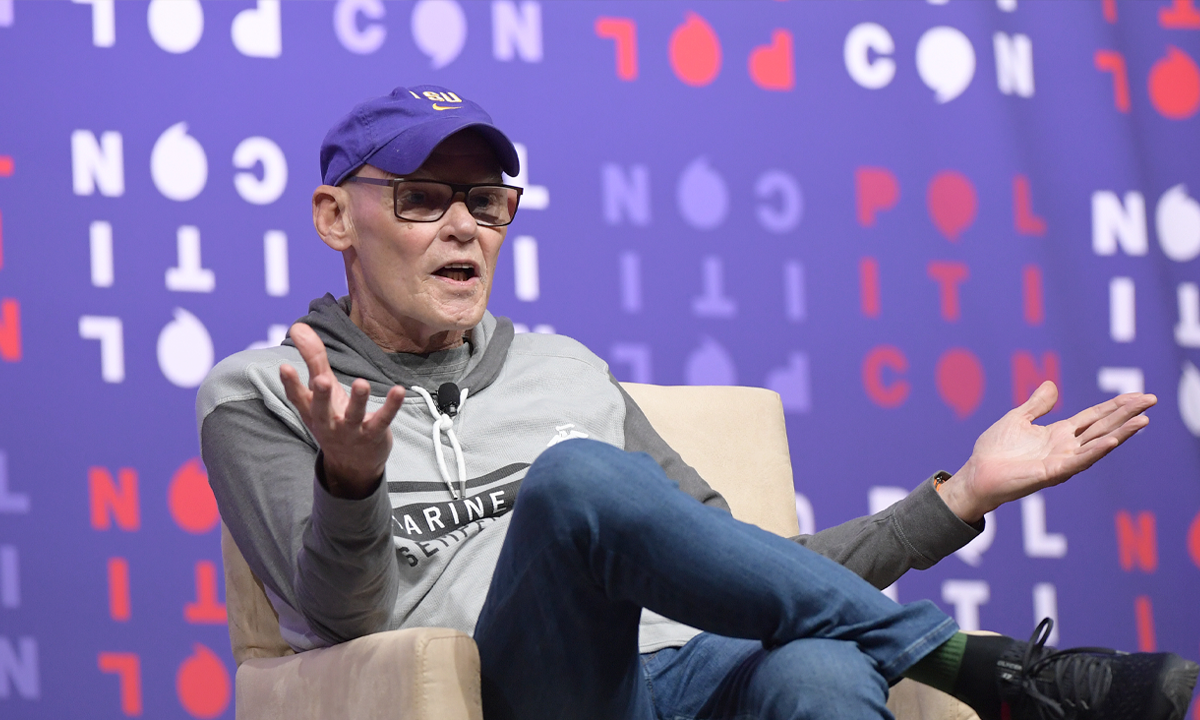
“I would advise them to attack CNN, attack ABC, attack NBC… because they didn’t air the speech,” James Carville told CNN’s Wolf Blitzer, arguing that some networks erred by limiting live coverage of President Donald Trump’s primetime address. Carville said the choice to curtail live carriage denied voters the opportunity to see the remarks firsthand and judge whether they were newsworthy.
Quick take
Carville accused major television outlets of missing a story by not airing the speech in full, saying viewers should have been allowed to assess Trump’s remarks directly. Fox News carried the entire address live, while other outlets chose summaries, analysis or partial carriage. Reporting on who aired or limited live coverage is attributed below to Fox News Digital and the outlets it cited.
What James Carville told Wolf Blitzer
On CNN, Carville pressed Democrats and their surrogates to critique the broadcast choices, telling Wolf Blitzer, “I would advise them to attack CNN, attack ABC, attack NBC… because they didn’t air the speech.” He argued the president’s behavior itself could be newsworthy, saying, “I think the president of the United States acting loonier than a tune is newsworthy.”
Pressed on whether that meant giving Trump wider publicity, Carville replied that airing the speech would let the public judge: “Absolutely… I think the decision not to air that speech by CNN and other networks is not being what’s really newsworthy.” His remarks were made on CNN and are reported here based on the network appearance as covered in Fox News Digital’s write-up of the segment.
How the networks covered the speech
Coverage choices diverged. Fox News carried the full address live, according to Fox News Digital’s report of the broadcast. CBS News ran parts of the speech inside a special program, cutting in for the address and later breaking away; that approach combined partial carriage with live analysis as described by Fox’s coverage.
CNN, ABC and NBC opted not to carry the prime-time address in full on their main broadcast platforms, instead providing summaries, clips and analysis in their programming and online platforms, according to the same reporting. MSNBC aired roughly the first 15 minutes of the address before switching to commentary and analysis, per Fox News Digital’s account of network reactions.
Those editorial choices prompted debate: supporters of full carriage said viewers deserve to see presidential remarks unfiltered, while critics argued networks should avoid giving immediate platform to claims that reporters had not yet verified.
What Trump said and the China allegation
Trump’s address centered on election integrity and included an allegation that China “worked to influence the results” of the 2020 election. He did not claim China physically changed vote tallies in public remarks; his statements focused on what he described as an influence campaign aimed at shaping U.S. perceptions.
Beijing denied the accusation, a denial noted in the reporting referenced below. The underlying intelligence assertions referenced by the president have not been independently verified in this article; reporting and fact checks by multiple outlets will be needed to confirm or refute elements of the claim.
Carville referenced reporting he said he had seen in outlets including The Daily Beast and Politico to bolster his view that the president ignored internal advice; those specific reports are cited by Carville and were noted in media coverage of his remarks (links below).
Legislative context: SAVE America Act
Trump tied his assertions to a push for the SAVE America Act, urging lawmakers to tighten federal election rules. The SAVE America Act cleared the House earlier this year but stalled in the Senate when a 53–47 result fell short of the 60 votes generally needed to advance major legislation, a vote count reported by outlets including Politico.
Whether lawmakers will revive or revise the SAVE America Act as a result of the president’s public assertions is uncertain. Congressional leaders and committee staff will likely weigh any new or resubmitted legislative language and factor in ongoing reporting and intelligence assessments.
Assessment and what to watch next
Carville framed the networks’ choices as a missed accountability moment: in his view, not airing the speech deprived viewers of direct evidence to form opinions about the president’s behavior. Media critics counter that networks have an editorial duty to avoid amplifying unverified allegations and to weigh the public interest in live carriage.
In practical terms, expect several follow-ups: reporters and fact-checkers will parse the intelligence-related claims; congressional lawmakers may react or reopen discussions about the SAVE America Act; and newsrooms will continue internal reviews of policies that govern live carriage of politically charged remarks.
Public reaction will probably split along political lines. Some audiences will view limited carriage as responsible gatekeeping; others will see it as withholding information. How media organizations explain their decisions and how political actors respond will shape the narrative heading into upcoming legislative and campaign cycles.
Sources and attribution
This article is based primarily on a Fox News Digital report that summarized James Carville’s CNN appearance and described how major networks covered President Trump’s address. The Fox News Digital story names contributors Greg Norman-Diamond, Joseph Wulfsohn and Morgan Phillips. Where reporting cited by Carville (The Daily Beast and Politico) was referenced, those outlets are listed below for readers to review the original coverage.
Original Fox News story: James Carville explains why he thinks mainstream media networks made a mistake avoiding Trump’s speech
Related reporting referenced by Carville: The Daily Beast and Politico. Where vote counts and legislative maneuvering are discussed, those details draw on Politico’s coverage.
FAQ
What happened with James Carville?
Carville told CNN he believed major networks made a mistake by not airing President Trump’s primetime address in full, arguing viewers should have been able to watch and judge the president’s conduct directly.
Why does James Carville matter?
As a longtime Democratic strategist and frequent media commentator, Carville’s critiques draw attention among political audiences and media organizations; his comments often shape partisan framing of media decisions.
What happens next?
Expect follow-up reporting and fact checks on the intelligence claims, possible renewed congressional discussion of the SAVE America Act, and continued debate about how networks handle politically charged live addresses.
Contributors to the primary source reporting: Greg Norman-Diamond, Joseph Wulfsohn and Morgan Phillips (Fox News Digital).