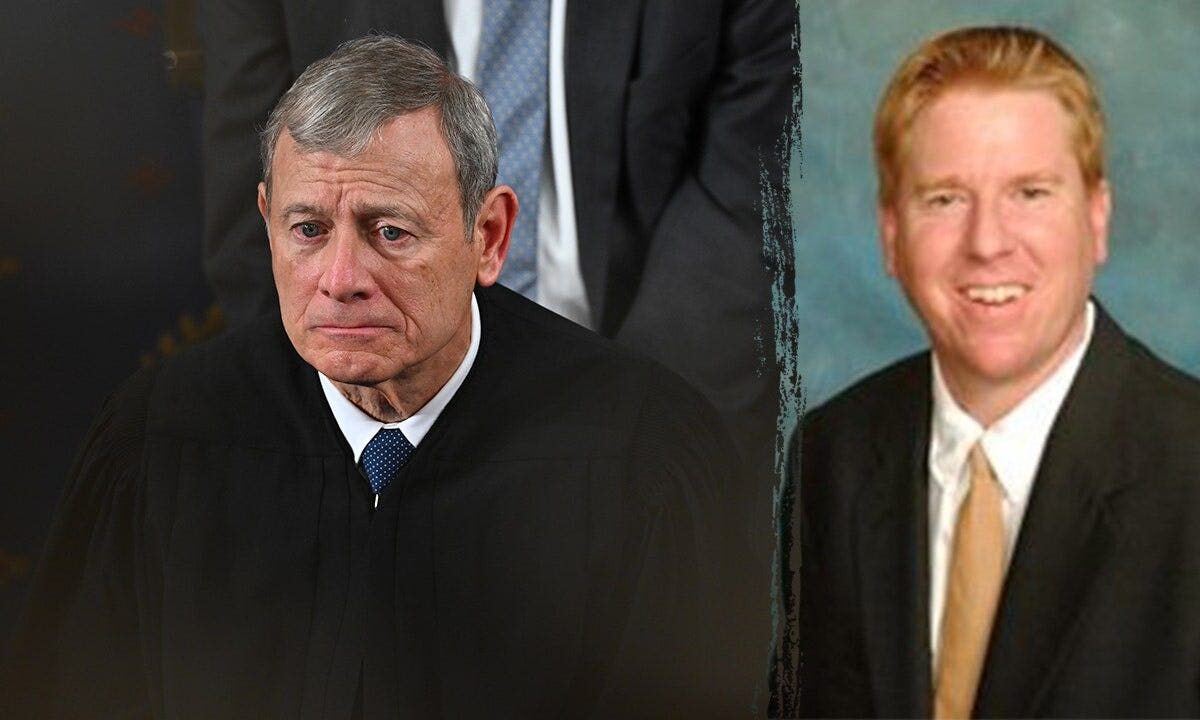
The Hawaii Supreme Court rebuke of Roberts Court came at the outset of its opinion in State v. Granillo, as the court ordered a new trial and held that forensic hair and fiber evidence presented at a 1990 trial can no longer be relied on. The court’s 91‑page opinion, authored by Justice Todd Eddins, is explicit that evolving scientific standards and state constitutional interpretation informed the decision (Hawaii Supreme Court opinion; reporting by Fox News: https://www.foxnews.com/politics/liberal-circuit-judge-blasts-scotus-conservatives-hawaii-defy-high-court).
Justice Todd Eddins wrote the majority opinion addressing both the specific forensic reliability issues and broader principles about the role of state constitutions in protecting rights beyond the federal baseline (Hawaii Supreme Court opinion; see Fox News coverage linked above).
Hawaii Supreme Court rebuke of Roberts Court: What the ruling did in State v. Granillo
The court vacated the 1990 conviction and ordered a new trial after concluding that testimony from an FBI hair‑and‑fiber examiner relied on comparative methods that the majority says are no longer sufficiently reliable. The opinion explains how the contested testimony was used in the original trial and why, in the court’s view, it undermined the fairness of the conviction (Hawaii Supreme Court opinion; factual reporting: Fox News).
The court’s order for a new trial is immediate; Eddins’s opinion devotes substantial appellate analysis to admissibility, prejudice, and the appropriate remedy under Hawaii law. The opinion ties its evidentiary conclusions to contemporary forensic science standards and to the particular record in the Granillo trial (Hawaii Supreme Court opinion).
How Justice Todd Eddins framed the Roberts Court
Eddins framed parts of the opinion as an argument for independent state constitutional interpretation, contrasting Hawaii’s choices with decisions of the U.S. Supreme Court. He invoked historical and landmark cases—Brown v. Board of Education, Dred Scott v. Sandford and Plessy v. Ferguson—to underscore how state and federal constitutional trajectories have diverged over time (Hawaii Supreme Court opinion).
The opinion also references recent federal decisions—including Dobbs, Citizens United, Rucho, Trump v. United States and Bruen—to explain why the Hawaii court believes state constitutions may offer protections beyond those recognized by the Roberts Court. The opinion presents these citations as part of an argument for preserving distinct state constitutional principles in areas from evidentiary rules to individual rights (Hawaii Supreme Court opinion).
Why the Hawaii Supreme Court rebuke of Roberts Court matters
Beyond overturning a historic conviction, the ruling signals that Hawaii’s courts are prepared to apply the Hawaii Constitution in ways that can diverge meaningfully from federal precedent on evidentiary and rights issues. That may change prosecutorial practice, defense strategy and how lower courts rule on similar forensic‑evidence claims in Hawaii (Hawaii Supreme Court opinion).
Practically, defense lawyers in the state will likely seek renewed review for other cases that relied heavily on similar comparative hair and fiber testimony; prosecutors will need to reassess when and how to introduce forensic evidence. The opinion situates the ruling alongside recent national litigation, including Wolford v. Lopez, a U.S. Supreme Court decision this year concerning a challenge to a Hawaii firearm restriction, to show the broader legal environment in which the court wrote (reporting: Fox News).
Reactions from the legal community
The opinion prompted strong responses. Iowa Solicitor General Eric Wessan criticized the majority, calling the opinion an “unhinged attack” on the legitimacy of the U.S. Supreme Court, a characterization reported and quoted in Fox News (quoted opinion cited in Fox News reporting). George Washington University law professor Jonathan Turley described the opinion as “devoid of judicial restraint and decorum,” language reported as his characterization in news coverage (quoted opinion cited in Fox News reporting).
Those statements reflect commentators’ opinions as reported in media coverage; supporters of the Hawaii majority argue the ruling is a legitimate exercise of state constitutional authority to protect defendants and to demand reliable scientific evidence before a jury (Hawaii Supreme Court opinion; reporting: Fox News).
Background on disputed forensic evidence and case history
For decades, comparative hair and fiber analysis was widely used to link suspects to crime scenes, often relying on examiner judgment. Over recent decades, scientific scrutiny, improvements in laboratory methods, and revised forensic standards have led courts and labs to reassess the probative value of some comparative techniques. The Granillo appeal turned on that reassessment: the Hawaii Supreme Court concluded the earlier testimony could not be treated as sufficiently reliable to sustain the 1990 conviction (Hawaii Supreme Court opinion).
Justice Eddins joined the court in 2020 after appointment by then‑Gov. David Ige; his opinion in State v. Granillo reflects both his approach to state constitutional analysis and a willingness to address systemic questions about forensic reliability (Hawaii Supreme Court opinion).
What comes next
The immediate legal consequence is a new trial for the defendant in State v. Granillo. Prosecutors may proceed to retry the case using admissible, reliable evidence; they may also revise charging or evidentiary strategies in light of the opinion’s analysis (Hawaii Supreme Court opinion).
Longer term, the decision could prompt further litigation if parties raise federal questions on appeal. The U.S. Supreme Court could be asked to review state‑federal conflicts if a case presents an issue of federal law or a claimed incompatibility between state constitutional interpretation and federal precedent. The Hawaii opinion explicitly invites debate about the role of state constitutions when federal doctrine has shifted (Hawaii Supreme Court opinion; reporting: Fox News).
Source attribution
Key factual claims in this analysis are based on the Hawaii Supreme Court opinion in State v. Granillo (see the court’s 91‑page majority opinion) and on coverage of the opinion and reactions by Fox News at https://www.foxnews.com/politics/liberal-circuit-judge-blasts-scotus-conservatives-hawaii-defy-high-court. Quotations attributed to named commentators are their reported opinions in that coverage.
FAQ
What did the Hawaii Supreme Court decide in State v. Granillo?
The court vacated the 1990 conviction and ordered a new trial, concluding that key forensic hair and fiber testimony relied on methods the majority regarded as discredited (Hawaii Supreme Court opinion).
Why did the court reject the FBI hair and fiber evidence?
The court found that later scientific developments and standards had undermined the reliability of the particular comparative forensic testimony introduced at the original trial, affecting the fairness of the conviction (Hawaii Supreme Court opinion).
Could the U.S. Supreme Court review this decision?
Yes. If the state’s decision implicates federal questions on appeal or if a party presents a conflict between federal precedent and Hawaii’s interpretation of its constitution, the U.S. Supreme Court could be asked to review the case (Hawaii Supreme Court opinion; reporting: Fox News).
Sources: Hawaii Supreme Court opinion in State v. Granillo; reporting and quoted reactions in Fox News: https://www.foxnews.com/politics/liberal-circuit-judge-blasts-scotus-conservatives-hawaii-defy-high-court.