The World Cup halftime show debuted during the 2026 FIFA World Cup Final, marking the first formally staged halftime concert in tournament history. Curated by Coldplay frontman Chris Martin, the sequence stitched together pop stars, novelty acts and a closing children’s chorus — and drew a wide range of reaction from viewers, broadcasters and pundits.
The production aimed to be a short, theatrical interlude that celebrated global pop culture at soccer’s biggest moment. It combined rapid staging moves with several high-profile performers and deliberate theatrical transitions. Within minutes of the broadcast, clips and hot takes began circulating across social platforms.
What happened: the first World Cup halftime show
Organizers staged the first World Cup halftime show as a production-heavy interlude between halves. Chris Martin oversaw a sequence that blended established performers, novelty cameos and a children’s closing number on the field.
Performers entered from tunnels and staged short, polished segments designed to fit into the halftime window that broadcasters typically reserve for analysis and ads. The sequence concluded with children joining the artists to sing about unity and love — a scripted finale intended to send a unifying message before the second half.
Broadcasters were tasked with balancing live match duties and extended production coverage, and the show highlighted the logistical complexity of staging pop productions in active sporting venues.
Who performed and key moments
The lineup pulled from multiple genres and generations. Madonna opened from a tunnel before stepping onto the pitch to loud cheers. The Muppets provided a novelty appearance, with conductor Gustavo Dudamel reportedly leading an orchestral-styled sting alongside their segment.
K-pop supergroup BTS performed “Dynamite,” one of their signature singles. Justin Bieber appeared for a quieter moment to sing “Everything Hallelujah,” in a rendition that included slight lyric tweaks referencing the World Cup atmosphere.
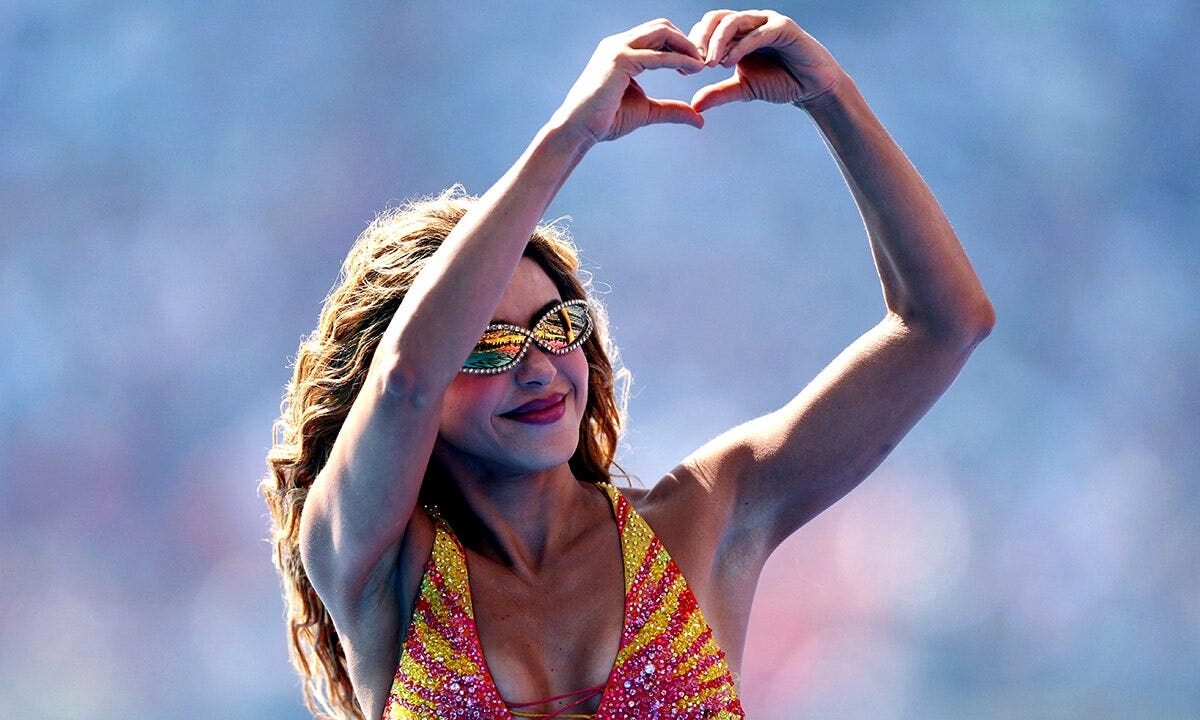
Shakira performed the official World Cup anthem “Dai Dai” with guest artist Burna Boy and high-energy choreography. Jason Sudeikis made a cameo in character as Ted Lasso in a brief comedic bit, and Chris Martin led the closing ensemble with several children on the field.
Standout visual moments that circulated widely included Gustavo Dudamel’s playful conducting moments, mashups of musical styles, and the rapid costume and staging shifts designed to keep the set moving.
Timing and logistics: the 27 minute gap
One of the clearest criticisms centered on timing. The halftime sequence coincided with an extended break between halves, producing roughly a 27-minute window running from the final whistle to the kickoff of the second half, according to broadcast reports.
That extended pause drew on-air commentary and frustration from some viewers. The BBC carried live reaction and analysis during and after the sequence, and former England striker Wayne Rooney openly criticized the show on his broadcast, calling it “crap” during his commentary segment.
Proponents defended the length as necessary for safe performer access, camera setups and a coherent production on a pitch not designed for quick pop staging. Critics said the delay risked disrupting player rhythm and dampening match momentum at a critical moment.
Public reaction and comparisons
Reaction was mixed across social platforms and media outlets. Many viewers praised some of the musical moments and cross-genre pairings; others said a World Cup Final should prioritize uninterrupted match flow. Several social posts compared the set to recent Super Bowl halftime shows, with some fans arguing the World Cup sequence felt more straightforward than certain Super Bowl productions — others disagreed.
Media coverage captured both enthusiasm for high points — singable moments and polished segments — and sharp criticism over pacing and necessity. The overall narrative across outlets and fan threads can be summarized as “mixed reactions,” with strong opinions on both sides.
Why this could matter for future World Cups
The halftime experiment raises practical and strategic questions for FIFA. Some reports, including coverage carried in news accounts, have described the 2026 tournament as among the most expensive and among the best-attended in modern World Cup history. Those broad rankings are presented in reporting but have not been independently verified here; FIFA has not issued a single-document confirmation that ranks the tournament as the “most expensive” or “most attended” in all metrics, so readers should treat those characterizations as reported context rather than independently confirmed fact.
If FIFA and broadcasters judge the halftime show a net success — measured by audience metrics, social engagement or sponsorship revenue — organizers could formalize halftime entertainment as a recurring feature. Conversely, persistent complaints about disruption, extended delays and broadcaster friction could prompt planners to shorten performances or shift them to pregame or postgame windows.
Logistics, cost and broadcast agreements will shape whether such halftime shows become routine. The 2026 final serves as a real-world test: a high-profile production that showcased global artists while prompting debate about priorities at soccer’s premier event.
Expert reaction
Broadcasters and media analysts noted the difficulty of marrying live sport with staged pop production at scale. BBC coverage highlighted the tension between delivering a television-friendly spectacle and maintaining the competitive integrity and tempo of a championship match. Industry commentators suggested future planners fold broadcaster input earlier into creative timelines to minimize on-field downtime.
Those analysts also pointed out safety and pitch-protection considerations: moving large sets and performers across turf requires careful choreography and time, which helps explain some of the added halftime minutes even as it fuels debate about the trade-offs involved.
Key takeaways
- The World Cup halftime show was the first of its kind, curated by Chris Martin, and featured Madonna, BTS, Justin Bieber and Shakira.
- Notable moments included Dudamel’s conducting segment with The Muppets, BTS singing “Dynamite,” and Shakira’s performance of the official anthem “Dai Dai.”
- Critics flagged an approximate 27-minute delay between halves; the BBC covered live reaction and Wayne Rooney offered blunt on-air criticism.
- Public reaction was split, with some comparing the set favorably to Super Bowl productions and others questioning its fit for a World Cup Final.
Source attribution: This summary is based primarily on the Fox News account of the halftime show. BBC live coverage and media analysis also provided contemporaneous reaction and broadcaster perspective. Claims describing the 2026 tournament as “most expensive” or “most attended” are reported in some outlets but are presented here as reported context; FIFA has not been cited here as independently verifying those specific rankings.