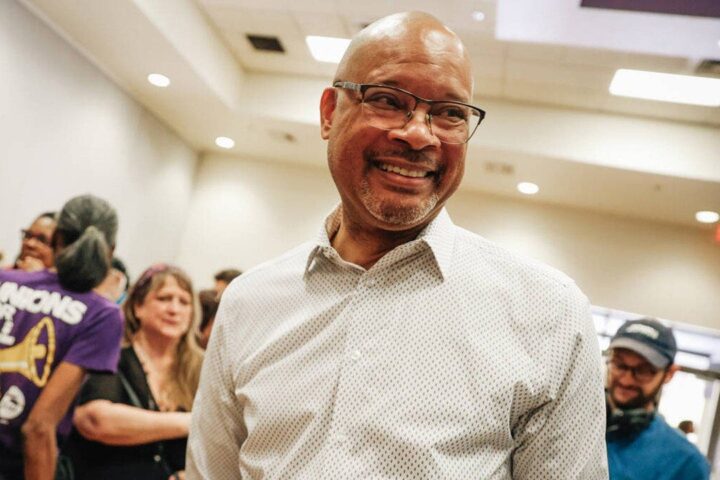
“It’s almost impossible to make a business work in California like that. I mean, just the state takes like 40% taxes,” Bill Maher said on his Club Random podcast, arguing that state charges and fees squeeze ordinary business owners. The remark — framed by Maher as personal observation and anecdote — prompted jokes on the show and a quick round of online discussion.
Maher’s line — that the state “takes like 40%” — is presented on the podcast as his view and as part of comedic framing. He compared the take to what he said a former illegal dealer “skimmed,” an anecdote he told for effect. That anecdote and the combined-percentage implications are Maher’s claims and are not independently verified in the reporting of the episode.
Bill Maher California taxes claim
On the episode, Maher said he feels squeezed by state costs and taxes, saying “the state takes like 40% taxes.” He used a personal anecdote to underline his point; the podcast exchange made clear the remarks were rhetorical and comedic rather than a formal tax calculation.
“It’s almost impossible to make a business work in California like that. I mean, just the state takes like 40% taxes.” — Bill Maher, Club Random
How California taxes actually work
Maher’s brief formulation mixes different types of charges — state corporate taxes, federal taxes, payroll taxes, sales and property taxes, and other fees — into a single sounding percentage. That conflation can mislead unless the speaker specifies the business entity type and which taxes are being combined.
According to the California Franchise Tax Board, the state’s general corporate tax rate is 8.84 percent for many C corporations. At the federal level, the statutory corporate tax rate for C corporations is 21 percent. These are the headline rates cited in coverage of the Club Random episode and in public tax resources.
However, those two headline rates do not automatically sum to a single flat government take for all businesses. A firm’s effective tax burden depends on entity type (C corporation vs. pass-through), allowable deductions and credits, payroll and employment taxes, local levies, sales and property taxes, industry-specific fees, and any state or federal incentives that reduce taxable income.
Put another way: while state and federal corporate rates are factual and verifiable, the share of revenue that ends up as taxes for a specific business varies widely. News coverage that quotes a public figure should make that distinction clear; Maher’s 40% phrasing was presented as an impression rather than a statutory calculation.
Reaction and context
Comedian Jack Whitehall, a guest on the episode, traded quips with Maher about how high costs push small-business owners to look for other revenue streams. The segment also echoed Maher’s past criticisms of progressive tax rhetoric; he has in earlier commentary taken aim at figures such as Sen. Bernie Sanders and Rep. Alexandria Ocasio-Cortez, arguing against broad-brush claims about who pays what in taxes.
Those references place the Club Random exchange in Maher’s longer pattern of remarks on taxation and economic fairness: a mix of humor, anecdote and political critique aimed at perceived policy outcomes rather than granular tax accounting.
Why it matters for business owners
Perceptions of a high tax burden matter for entrepreneurs deciding where to locate, how to price goods and whether to hire. Public assertions that a state “takes” a fixed share of revenue can influence voter attitudes and policy debates even when the underlying math depends on many variables.
Business groups frequently highlight statutory rates and regulatory costs when arguing for policy changes; advocates for higher public revenues emphasize services and infrastructure financed by taxes. Accurate, itemized accounting helps business owners and policymakers weigh those trade-offs rather than relying on single-percentage characterizations.
Source and caveats
This article follows reporting of the Club Random episode summarized by Fox News. The California corporate tax rate of 8.84% is reported by state tax authorities; the federal corporate rate of 21% is the statutory rate for C corporations. Maher’s anecdotes and his broader suggestion that combined state and other charges approach 60% are his claims and were not independently verified in the cited coverage.
For background and official figures see: California Franchise Tax Board (ftb.ca.gov) and IRS resources on corporate taxation. Additional context on state corporate rates is available from tax-policy organizations such as the Tax Foundation. The Fox News summary of the podcast was cited in initial coverage: Fox News.
Business groups often emphasize different aspects of tax and regulatory burden; those perspectives inform ongoing debates about competitiveness and public revenue. Maher’s remarks are commentary and anecdote, not an itemized tax analysis.