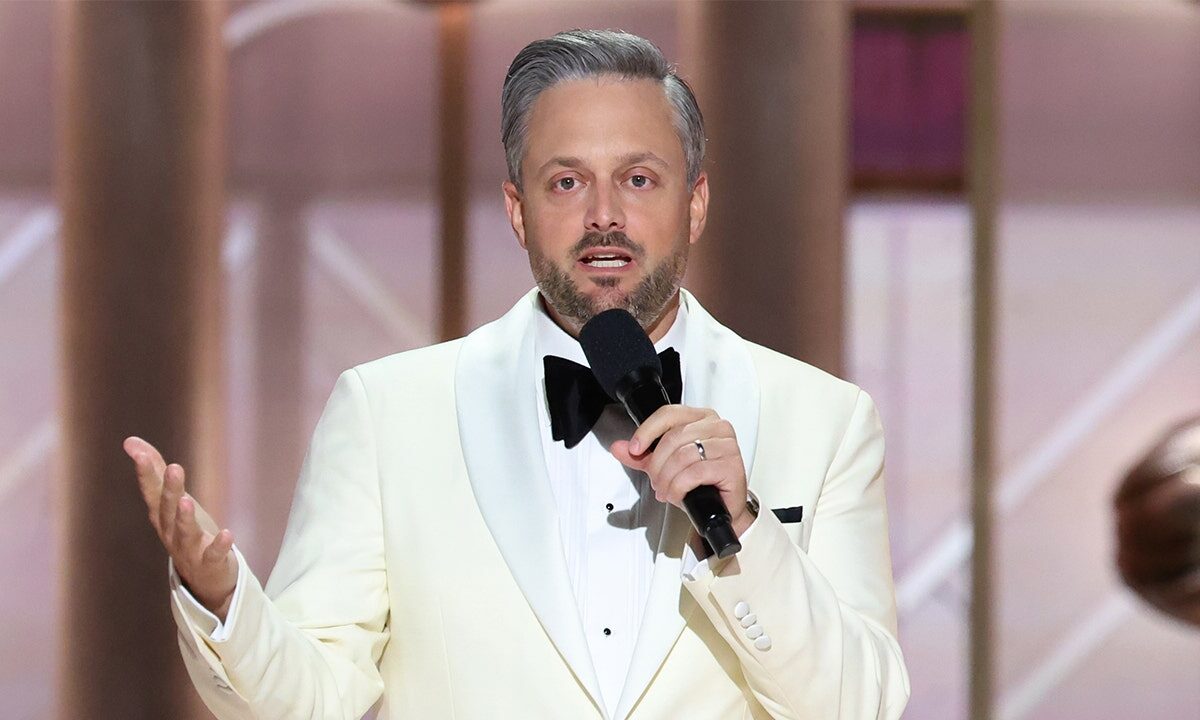
A widely circulated photograph showing comedian Nate Bargatze among guests at a White House event tied to the UFC 250 “America 250” celebration has prompted debate about whether appearing at a presidential-hosted event signals political endorsement. Bargatze, whose public persona is generally nonpolitical, is one of several entertainers and sports figures photographed at the gathering; the image quickly spread online and generated commentary from cultural critics.
UFC 250 White House event in brief
The White House event was presented as part of the larger America 250 commemorations marking the nation’s 250th anniversary and included participants from sports and entertainment. America250 is a year-long initiative with public programming and commemorations; the celebration at the White House was framed by hosts and some outlets as a ceremonial acknowledgment of athletes and brands tied to American cultural events.
Coverage of the gathering noted the presence of several public figures alongside organizers and officials. Organizers and some attendees described the occasion as a celebratory, nonpolicy-focused commemoration connected to a major sporting brand and the America 250 milestone, though the concentric place of the White House as a political institution makes such events visible and politically resonant to observers.
For context on the national anniversary program, see America250’s overview of commemorations and events at America250.org.
Nate Bargatze and the backlash
Nate Bargatze’s appearance drew attention because he is widely known as a comedian who generally avoids public political advocacy. That profile led some observers to express surprise and criticism when he was photographed at a White House-hosted occasion.
Criticism focused on the symbolic meaning of a White House photo: some commentators argue that being pictured with political leaders can be interpreted as conferring legitimacy or tacit approval. Supporters and others pushed back, noting that many invitees to ceremonial events do not intend to signal policy alignment and may attend for professional, cultural or personal reasons unrelated to politics.
At the time of publication, Bargatze had not issued a widely reported public political statement about the photo. How he or his representatives respond could determine whether the matter remains an online debate or evolves into broader reputational consequences.
W. Kamau Bell and the “Team Fascism” claim
Comedian and commentator W. Kamau Bell published a post on his Substack addressing the photograph and setting out a blunt admonition for public figures. In the post, Bell wrote, “Don’t be in a photo with fascists,” and added that absent a compelling reason to be pictured with people he described as such, a photographed person risks joining what he called “Team Fascism.” The post and Bell’s language were widely circulated on social platforms and prompted further discussion and pushback from some social users and commentators.
Bell’s original post can be read on his Substack page; he has also shared comments about the topic on his social account @wkamaubell. Fox News reported that Bell’s post was shared more than 500 times and received over 2,800 likes as it circulated in the aftermath of the White House photo publication (Fox News).
Why critics and defenders disagree
The dispute reflects two different ways of reading high-visibility photos. Critics argue that images taken at the White House carry symbolic weight and that public figures should consider whether appearing alongside elected officials or controversial figures will be used to normalize or lend cover to those actors.
Defenders stress that many White House invitations are ceremonial acknowledgments — honors or publicity moments rather than endorsements of policy — and that automatic political labeling of every photographed guest may be unfair. They argue context matters: the reason for an invite, the guest’s prior statements and whether a guest uses the moment to comment on policy are relevant to interpretation.
Media observers note that both interpretations are shaped by the current polarized media environment, where visual evidence can be rapidly amplified and repurposed across platforms.
Reaction and what comes next
So far, the reaction has been concentrated in online discussion and commentary from cultural critics rather than formal institutional responses. There have been no widely reported professional sanctions or legal consequences for Bargatze tied to the photograph.
Possible next developments to watch include: whether other commentators escalate calls for concrete actions by photographed guests; whether outlets or booking agents change how they handle invitations to politically visible events; and whether Bargatze or his representatives issue clarifying remarks. The episode also feeds a continuing conversation about how public figures navigate invitations that have political visibility.
For readers tracking the debate, primary documents and posts are useful: Bell’s comments appear on his Substack and social posts, and mainstream reporting has amplified both the photograph and subsequent commentary. Coverage and reaction illustrate how quickly an image can move from a ceremonial context into a political and cultural dispute.
Source attribution: Original reporting and metrics cited here rely on Fox News coverage of the exchange — Fox News. W. Kamau Bell’s published comments are available on his Substack and social account (see W. Kamau Bell on Substack and @wkamaubell on X). Background on the America 250 commemorations is available at America250.org.