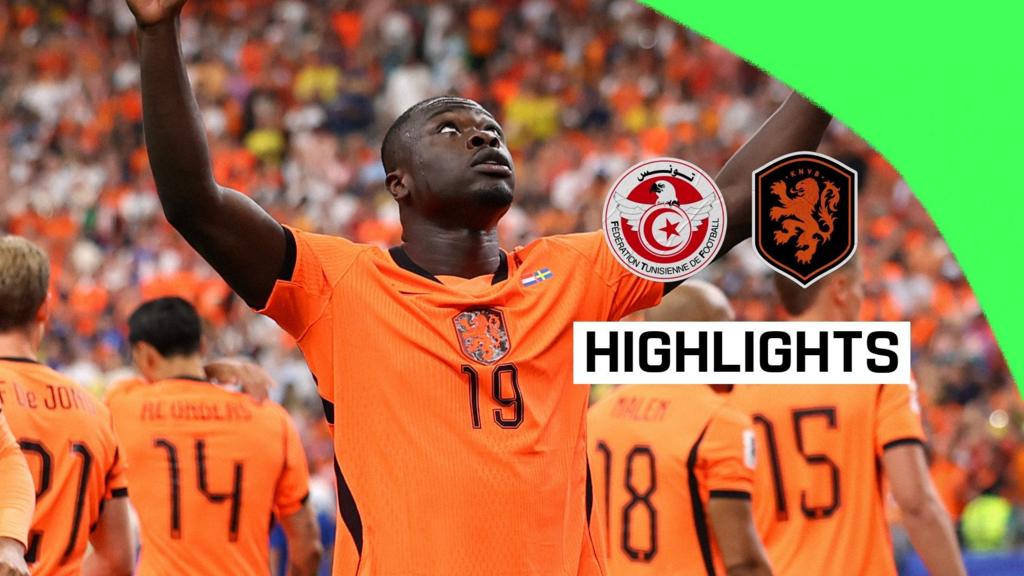
Brian Brobbey scored again as the Netherlands beat Tunisia 3-1 to seal top spot in Group F and progress to the World Cup last 32. The forward’s second successive strike underlined his recent scoring run and gave the Dutch a decisive advantage as they closed out the group stage.
Match at a glance
Netherlands 3, Tunisia 1 — final score. Brian Brobbey opened the scoring and the Netherlands added two further goals to put the game beyond doubt, while Tunisia managed a late reply that came too late to alter the outcome.
The result left the Netherlands clear at the top of Group F and confirmed a last-32 meeting with Morocco. Across the 90 minutes the visitors controlled possession for long spells, probing Tunisia’s rearguard and converting key chances when they arrived.
Key moments and goals
The match settled into a pattern of Dutch control punctuated by rapid Tunisian counters. Brobbey’s goal — a composed finish from close range — came after patient build-up play and a quick delivery into the box that punished a momentary defensive lapse.
After the opener, the Netherlands pushed to make the scoreline comfortable. The second goal arrived from a sustained period of pressure that drew Tunisia out of shape and allowed the Dutch attackers to exploit space in behind. A third goal followed from a set-piece sequence and a well-placed finish, which all but ended Tunisia’s hopes of a comeback.
Tunisia’s consolation goal was a demonstration of their willingness to fight until the end. They forced a couple of meaningful chances from turnovers and transitional moments, and the late strike served as a reminder that Tunisia remained dangerous on the break despite the deficit.
Brian Brobbey’s form
Brian Brobbey has now scored in two successive matches for the Netherlands, a run that has elevated his standing in the squad and given manager and teammates a clear focal point in attack. His goal-scoring has not been merely opportunistic; it has come from intelligent movement and timely runs into the box that create problems for defenders who must choose whether to track him or close down other threats.
Brobbey’s physicality and finishing ability have offered the Netherlands a different profile up front to the more mobile wide attackers. When he receives service in tight areas he tends to hold his position well and either convert chances himself or lay off for onrushing midfielders. That combination of hold-up play and a knack for being in the right place at the right time is why his recent form matters beyond the goals alone.
Maintaining this momentum into the knockout rounds is crucial. Brobbey’s confidence will be tested against tighter defences and in matches where space is limited. The coaching staff will need to decide how to balance his minutes with squad rotation, and whether to pair him with a second striker or deploy him as the primary target supported by wide pace.
Group outcome and what it means
By topping Group F the Netherlands avoid finishing second and the different set of knockout opponents that would have followed. Securing first place brings a clearer route through the draw and gives the team extra preparation time targeted at one opponent rather than juggling multiple scenarios.
That said, finishing top is not a guarantee of an easier route — the last-32 opponents can be strong and stylistically tricky. In this case, the Netherlands draw Morocco, a disciplined side known for compact defending and swift counter-attacks. The Dutch will need to translate their group-stage control into sharper, more clinical performance moments against this type of opposition.
What comes next for the Netherlands
Next up is the last-32 tie with Morocco. The Moroccan side poses different problems to Tunisia: they are structured defensively, quick on the break and effective at nullifying opponents’ space between the lines. Tactical questions for the Netherlands include how to combine Brobbey’s central presence with width and which midfielders will be tasked with breaking the Moroccan press.
Set-pieces and transitions are likely to be decisive. Against Tunisia the Netherlands showed they can control possession and create high-quality chances; against Morocco, prioritising ball retention in front of the defence and avoiding needless turnovers could be as important as creating chances in the final third.
For supporters and analysts, watch how the Dutch coaching staff manage playing time and whether they adjust the formation to give Brobbey more support or more room to run. Tactical flexibility, disciplined defending from the full-backs, and creative midfield link-up will all be factors in whether the Netherlands can progress deeper into the tournament.
Key takeaways
Brian Brobbey’s back-to-back goals have given the Netherlands a reliable attacking outlet as they move into the knockout phase. The 3-1 win over Tunisia confirmed top spot in Group F and sets up a last-32 meeting with Morocco — a tie that will test the Dutch balance between attack and defensive discipline.
For more on the upcoming tie, see BBC Sport’s Netherlands v Morocco match preview and wider World Cup coverage for tactical pointers and team news: BBC Sport preview search.
Source and further reading
Reporting and match details based on BBC Sport coverage: Brobbey scores again as Netherlands beat Tunisia to win group (BBC Sport).