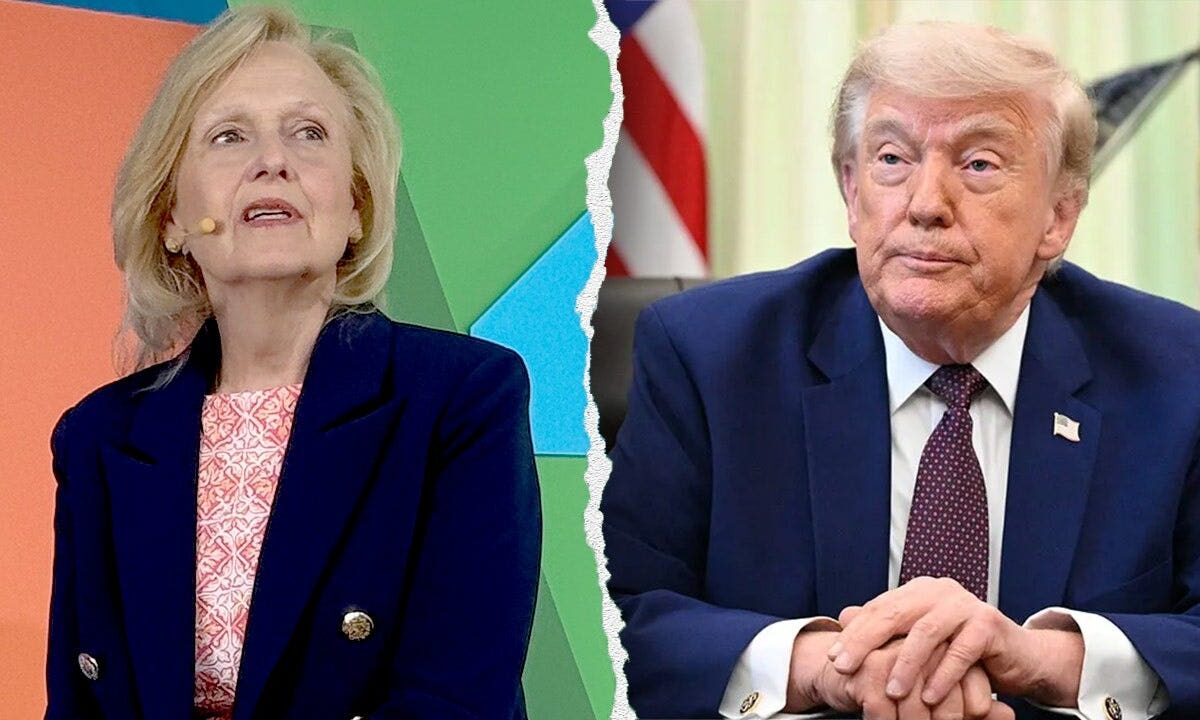
The PBS funding dispute has prompted legal action, rapid fundraising and operational fallout across public broadcasting, PBS CEO Paula Kerger said at the Aspen Ideas Festival. Kerger said she signed a lawsuit challenging an executive order that withheld federal support for public broadcasting; reporting shows a federal judge later issued a temporary block on that order while litigation proceeds.
Kerger framed the dispute as both a legal fight and a scramble to protect local stations and children’s programming. The main claims and many of the numerical impacts in this article are attributed to Kerger’s remarks and PBS statements, with procedural developments on the executive order reported by national news outlets.
How stations and programs were affected
Kerger told the Aspen audience that the funding cut had immediate, concrete consequences for stations and programming. She said local outlets depend heavily on federal support and that when that money was pulled, station managers faced urgent choices about staffing and lineups.
According to Kerger’s account, PBS and its member stations scrambled to find emergency support for new projects such as the PBS Kids show “Phoebe and Jay,” and an initiative to add American Sign Language to some children’s programming was shelved. Kerger said these program decisions were direct responses to the sudden shortfall in expected federal dollars.
On staffing and station budgets, Kerger stated that “we’ve laid off 100 people” across the system and described at least one local station in Cookeville, Tennessee, where federal funding represented roughly half of that station’s operating budget. Those figures are reported as Kerger’s account of internal impacts; PBS leaders say the distribution of federal funds means cuts at the national level can quickly translate into local service reductions.
Fundraising and legal responses
Kerger described a two-pronged response: litigation to challenge the executive action and an emergency fundraising effort to stabilize stations. PBS filed a lawsuit alleging the executive order that withheld funds violated the First Amendment; court proceedings are ongoing and, according to news reports, a federal judge issued a temporary block on the order while the case moves through the courts.
On the fundraising side, Kerger said PBS launched what it calls the Bridge Fund to provide a runway for stations—she described the effort as intended to cover at least two years of operating needs for the most affected stations while legal and political steps play out. PBS officials framed the Bridge Fund as bridge financing, not a permanent replacement for federal support.
Kerger also said the system saw a surge in individual support after the dispute became public. She told the Aspen audience that PBS and public broadcasting stations added about “a million new members,” many signing recurring monthly contributions; PBS leaders emphasized that while membership growth helps, it does not fully replace lost federal dollars and that long-term revenue plans remain a priority.
A brief background: Kerger said the sequence began with questions and letters from regulators and lawmakers, then escalated into an executive order that prompted the lawsuit and the fundraising response. That timeline—letters and probes followed by an executive action and subsequent litigation—frames how PBS leaders describe the organization’s emergency steps.
Politics, probes and hearings
Kerger traced the dispute to a wave of political scrutiny, including an inquiry from Federal Communications Commission Chair Brendan Carr in January 2025 about corporate partnerships and other relationships. She also described being summoned to testify before a committee chaired by Rep. Marjorie Taylor Greene; PBS officials said those hearings and public pressure were part of what they called a “year of letters.”
Kerger characterized the political campaign as sustained and high-profile, saying it set the stage for the White House action that led to the lawsuit. PBS leaders frame their legal case as a defense of press and expression rights; legal claims in the complaint are presented here as PBS’s position and are not adjudicated facts—litigation is ongoing.
Key takeaways
- PBS says the funding cut prompted layoffs, program cancellations and urgent budget shifts at national and local levels; the numeric impacts quoted here are attributed to PBS CEO Paula Kerger and PBS statements.
- PBS sued to challenge the executive order on First Amendment grounds; reporting indicates a federal judge temporarily blocked the order while courts consider the claims.
- The Bridge Fund and increased membership have provided short-term relief, but PBS leaders warn that long-term stability for local stations remains uncertain.
Why the PBS funding dispute matters
Kerger emphasized that federal dollars are routed through national organizations to member stations and that, she said, roughly “eighty percent” of federal public broadcasting money ultimately reaches local stations. That distribution means national-level funding actions can have outsized local effects: fewer reporters, reduced local news coverage, fewer educational outreach programs and cuts to children’s services are the kinds of results PBS leaders warn could follow sustained funding losses.
For communities that rely on public stations for noncommercial news and educational programming, a loss of predictable federal support drives immediate budget triage. PBS leaders and local managers say emergency fundraising can help in the short term, but they stress the need for a more stable funding model to avoid repeated disruptions.
Frequently asked questions
What is the current status of the lawsuit over the funding?
PBS filed suit alleging the executive order that withheld funds violated the First Amendment; court proceedings are ongoing. Reporting linked to Kerger’s remarks notes that a federal judge issued a temporary block on the order while litigation proceeds.
What is the Bridge Fund and who it helps?
PBS describes the Bridge Fund as emergency fundraising intended to give affected stations a runway—Kerger said at least two years of runway for the most vulnerable stations—while legal and policy outcomes are decided.
How did the funding cuts affect local stations and kids programming?
Kerger attributed layoffs, program cancellations and project delays to the sudden funding shortfall. She pointed to the scramble to fund “Phoebe and Jay” and the shelving of an ASL initiative as examples of how children’s programming was affected.
Source attribution: This article is based on PBS CEO Paula Kerger’s remarks at the Aspen Ideas Festival and reporting by Fox News. Numbers and detailed operational impacts are attributed to Kerger and PBS statements; procedural developments on the executive order and the judge’s temporary block are reported by national news outlets, including the Fox News account linked below.
Sources: Fox News — PBS CEO recounts dramatic year for organization, calls legal battle with Trump ‘the most sobering moment’; PBS statements and remarks by Paula Kerger at the Aspen Ideas Festival.