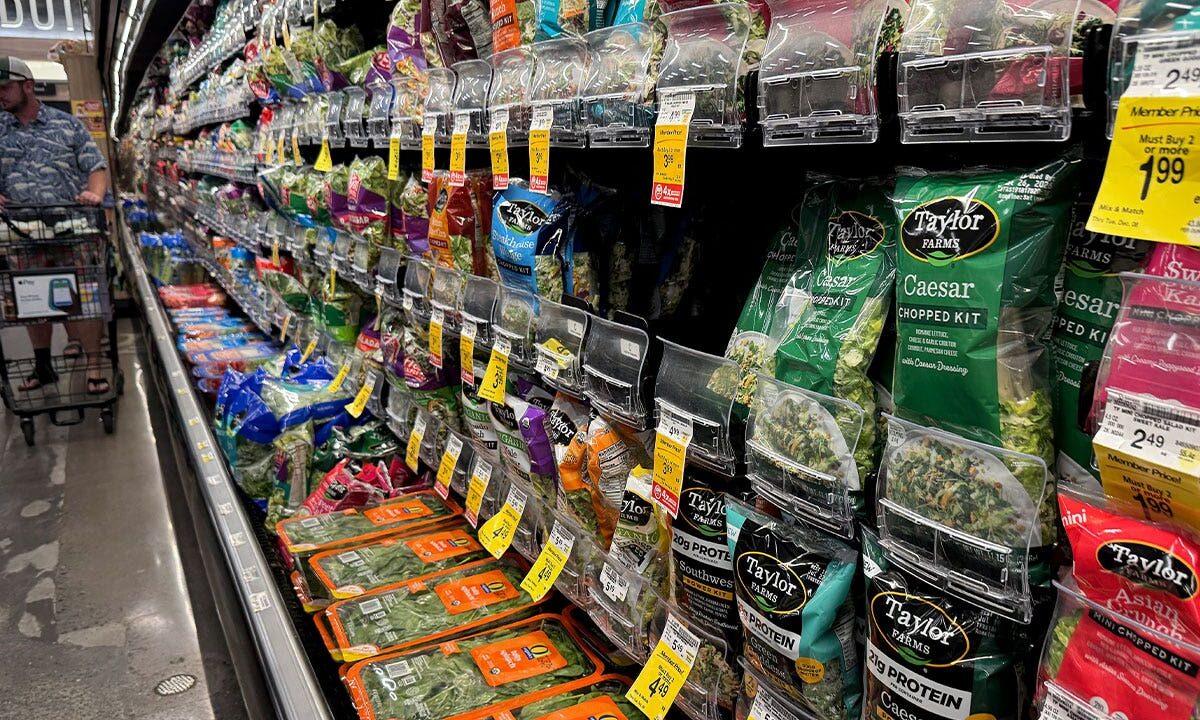
FDA laboratory re-review concluded that the item in question should be treated as a Taylor Farms Cyclospora false positive, the agency said — though the voluntary recall of shredded iceberg lettuce sourced from central Mexico remains in effect while testing and tracing continue. The finding, the Food and Drug Administration said, reflects an internal reassessment of an earlier test that the agency now says does not show “true amplification” for Cyclospora. Taylor Fresh Foods told investigators it had been informed of the revised laboratory conclusion.
Taylor Farms Cyclospora false positive
The FDA said its laboratory experts re-examined the initial test data and determined the earlier positive result should be considered a false positive. In its public statement, the agency emphasized that confirmatory testing and additional sample collection remain underway to fully characterize any food-safety risk. Taylor Fresh Foods acknowledged the agency’s re-review and said the company is cooperating with investigators.
“Due to the complexity in detection of Cyclospora, FDA laboratory experts re-reviewed the sample results and have concluded that the finding does not represent true amplification and should be considered a false positive,” the FDA said in its statement.
“To be clear, at this moment, FDA has not identified a single positive product test result for Cyclospora,” Taylor Fresh Foods said in a company statement shared with investigators and reported by news outlets.
Scope of the recall and products affected
The voluntary recall announced July 17 covers shredded iceberg lettuce grown and processed in central Mexico and distributed to retail stores, restaurants and other food-service customers. Taylor Fresh Foods and agency notices have said the recalled products are limited to specified shredded iceberg lettuce lots; other Taylor Farms-branded items are not included in the recall, the company stated.
Public-health and industry notices indicate distribution reached multiple states and food-service chains. Investigators continue traceback and distribution mapping to ensure recalled product is removed from commerce and to identify any other potentially affected lots.
Public health impact and CDC updates
The Centers for Disease Control and Prevention has linked a cluster of cyclosporiasis cases to shredded iceberg lettuce served at Taco Bell restaurants in several states, including Indiana, Kentucky, Michigan, Ohio and West Virginia. State and federal partners are interviewing ill people and reviewing purchase and consumption histories to refine the investigation.
As of agency updates, the outbreak investigation has resulted in around 100 hospitalizations; no deaths have been reported. Public-health officials caution that case counts can change as new reports are received and laboratory confirmations are completed. The CDC continues to monitor and coordinate with state health departments on case finding and messaging.
What consumers and restaurants should do now
Consumers who purchased or were served shredded iceberg lettuce should check product labels and purchase dates against recall notices. If you still have product that matches recalled lot information, do not eat it; dispose of it in a sealed container or return it to the place of purchase for a refund according to retailer guidance.
Restaurants, distributors and retailers must follow the recall instructions: isolate and remove recalled product from inventory, secure it to prevent accidental sale, and follow disposal guidance from local public-health authorities or the FDA. Businesses that served recalled product should follow local notification rules for customers and employees and preserve records for investigators assisting the traceback effort.
If you develop gastrointestinal symptoms after consuming salad or related ingredients, contact your health-care provider, mention possible Cyclospora exposure, and follow public-health testing and treatment guidance. Cyclospora infection typically requires specific laboratory testing and, when diagnosed, is treated with prescribed antimicrobial therapy; clinicians and laboratorians can consult state or local health departments and CDC guidance for testing protocols.
Timeline and next steps in the probe
July 17 — Taylor Fresh Foods announced a voluntary recall of shredded iceberg lettuce grown and processed in central Mexico after investigators traced lettuce served at certain Taco Bell restaurants to Taylor Farms de Mexico production.
Late last week — initial FDA laboratory testing reported a positive Cyclospora result in a shredded iceberg lettuce sample, prompting expanded sample collection and intensified traceback work by state and federal partners.
Following that, the FDA completed an internal re-review by its laboratory experts and concluded the earlier test did not show confirmatory amplification, calling the finding a false positive. The FDA said it is continuing product collection, testing and coordination with Taylor Fresh Foods and state partners to ensure recalled lots are not in commerce and to determine whether any confirmed positive product tests emerge.
Agencies and the company say they expect to release additional testing results and updates to public guidance if new evidence appears. Taylor Fresh Foods has stated it is cooperating with the FDA and state authorities while the probe continues.
Why this update matters
The revised lab conclusion underscores both the importance of confirmatory testing in foodborne-illness investigations and the need for cautious public-health action while probes continue. Even with a false positive ruling for the initial sample, the recall remains active because of the epidemiologic link between illnesses and shredded iceberg lettuce served at specific Taco Bell locations.
Continuing testing and case interviews will determine whether any product-level detections ultimately confirm contamination or whether the illness cluster can be linked to another source. Until agencies close the investigation or rule out implicated lots, public-health guidance and the recall remain the primary consumer-protection measures.
Sources and attribution
This report is based on statements and reporting from the Food and Drug Administration, the Centers for Disease Control and Prevention and Taylor Fresh Foods, and on contemporary news coverage. Key public statements include the FDA’s laboratory re-review announcement and Taylor Fresh Foods’ company statement; the CDC has posted outbreak guidance and case updates as part of its routine public-health response.
Contemporary reporting on the FDA re-review and company statements was published by news outlets; see reporting linked below for additional context and source excerpts.
FDA says Taylor Farms Cyclospora lettuce test was a false positive — Fox Business
Federal agency home pages: FDA, CDC.
Published July 20, 2026. Updated July 20, 2026.
Frequently asked questions
What happened with Taylor Farms Cyclospora false positive?
The FDA initially reported a positive Cyclospora test in a shredded iceberg lettuce sample supplied by Taylor Farms. After an internal laboratory re-review, agency experts said the result should be considered a false positive and that no confirmed product positives have been identified to date; testing and traceback continue.
Why does Taylor Farms Cyclospora false positive matter?
The finding matters because it affects public-health messaging and the scope of recalls. Although the re-review revised the laboratory conclusion, the voluntary recall remains in place while agencies investigate illnesses, hospitalizations and distribution to ensure public safety.
What happens next?
The FDA and state partners will continue to collect product samples, run confirmatory tests, and update guidance if new confirmed results or epidemiologic evidence emerges. Taylor Fresh Foods says it is cooperating with investigators; further public updates will come from health agencies and the company as testing and interviews proceed.