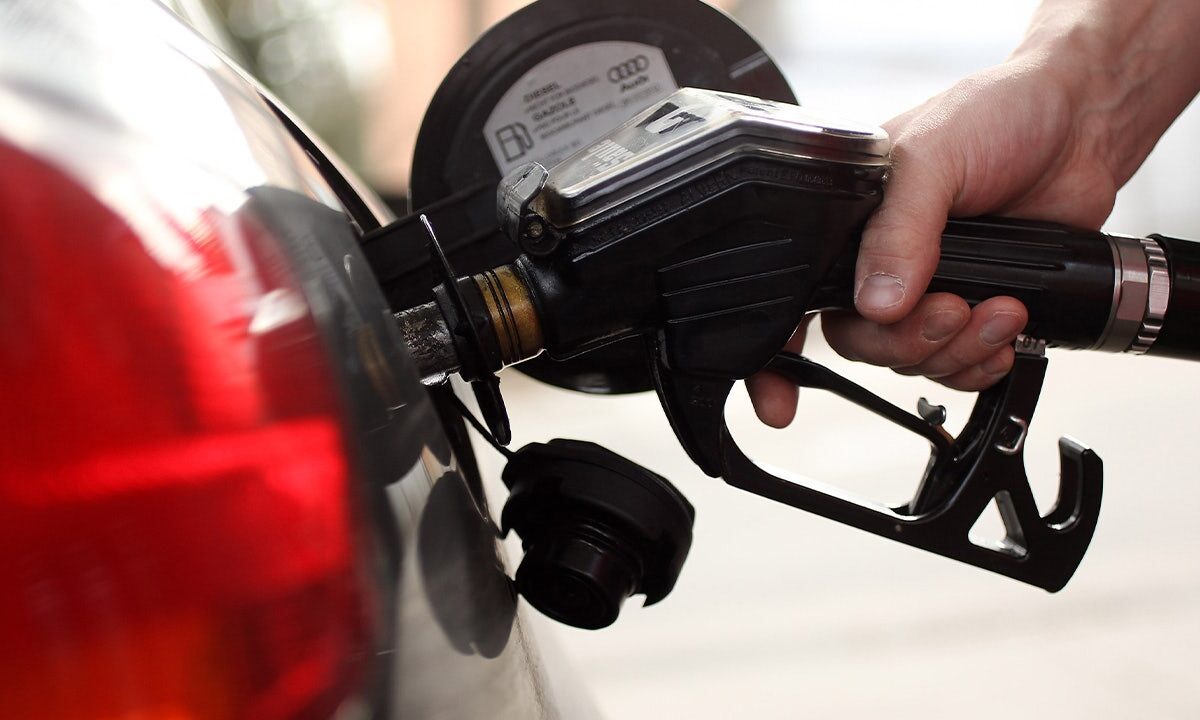
President Donald Trump on Monday demanded that gasoline prices come down immediately, telling retailers to “Start targeting around the $2.50 a Gallon number” and announcing that the U.S. Department of Justice has been instructed to investigate alleged fuel price gouging.
Trump posted the comments on Truth Social and tied his call directly to recent declines in wholesale crude costs, saying retailers should pass lower wholesale prices to motorists. He renewed criticism of state taxes — singling out California — as a factor that keeps pump prices elevated.
Trump’s demand on gasoline prices
In a string of posts, Trump wrote that “Gasoline Retailers must get their Prices down, IMMEDIATELY!” and warned that “There will be no gauging, which is totally illegal. If Retailers don’t do this, big problems lie ahead!” He urged station operators and national chains to begin targeting roughly $2.50 per gallon for regular gasoline where possible.
Trump framed the request as consumer protection tied to movements in wholesale markets. He said the DOJ has been asked to examine whether retailers and suppliers are failing to reflect falling wholesale costs at the pump.
Market context and gasoline prices
The president linked his demand to recent moves in energy markets. West Texas Intermediate crude futures traded around $70.24 per barrel Monday evening, easing from higher levels seen during a recent flare-up of tensions in the Middle East.
That retreat in crude has helped push retail averages lower. The AAA national average for regular gasoline was $3.860 per gallon as of June 29, down from $4.391 a month earlier but still above the year-ago level of $3.187. Market participants cited temporary geopolitical risk — including tensions between Israel and Iran that briefly affected tanker routes — as a driver of earlier price increases.
Energy analysts note that wholesale crude is only one component of pump pricing. Refining costs, regional supply and demand balances, distribution and retail margins and state and local taxes all contribute to the final price motorists pay.
What the DOJ instruction could mean
The White House request asks the U.S. Department of Justice to review whether industry practices violate federal antitrust laws or state price-gouging statutes. A DOJ fact-gathering effort can include requests for pricing data, communications and contracts to assess whether coordination or other unlawful conduct occurred.
Legal experts caution that an investigation is an inquiry, not proof of wrongdoing. Authorities must develop evidence showing unlawful coordination, deceptive practices or violations of specific statutes before seeking penalties. The reporting here does not independently confirm that illegal activity has occurred.
Implications for drivers and gas stations
Short-term effects for drivers may be uneven. Some retailers, especially in highly competitive markets, may lower pump prices quickly to avoid scrutiny or negative publicity. Others may cite fixed local costs, long-term supply contracts or regional refinery constraints as reasons for more gradual price changes.
State taxes and fees — which vary significantly across the country — mean a $2.50 target will be more achievable in some regions than others. Urban areas with higher distribution costs or states with higher gasoline taxes are less likely to reach that level without broader declines in crude and wholesale margins.
Retailers’ pricing strategies also differ. Branded chains, convenience-store operators and independent stations face distinct cost structures and customer mixes that influence how fast they pass wholesale savings to consumers. Credit card processing fees, labor, and local operating expenses can blunt the speed of pass-through even when crude prices fall.
What comes next
The DOJ review timeline is uncertain: some inquiries are resolved within weeks, while others extend for months if subpoenas and extensive data analysis are required. Initial steps typically focus on assembling pricing histories and communications; further action depends on whether evidence suggests coordinated or unlawful conduct.
Market developments will also influence outcomes. Continued declines in oil prices and strengthening competition among retailers would increase the likelihood of faster pump-price reductions. Conversely, renewed geopolitical tensions, refinery outages or distribution bottlenecks could push prices back up and limit retailers’ ability to lower consumer prices.
Ultimately, whether motorists see quick relief depends on a mix of market forces, retailer decisions and any regulatory or legal actions that emerge from the DOJ review.
FAQ
Will retailers face legal penalties for not cutting gas prices?
Not automatically. A DOJ investigation would seek evidence of unlawful conduct such as price-fixing, coordinated behavior or violations of price-gouging laws. Simply choosing not to lower prices is not by itself proof of illegality; prosecutors would need to show coordinated or deceptive conduct under applicable statutes.
How soon could pump prices fall to $2.50 nationwide?
A nationwide drop to $2.50 per gallon would require sustained declines in crude, broad retailer pass-through and favorable regional tax and distribution conditions. Given current averages and the role of state taxes and local costs, such a level would likely appear unevenly and could take weeks or months, if it occurs at all.
Does the DOJ probe confirm price gouging is happening?
No. The initiation of an inquiry means authorities are examining whether evidence exists to support allegations. It does not itself establish that illegal price gouging or other violations have occurred; conclusions depend on the facts developed during the review.
Source attribution
Fox Business reported the president’s comments and the earlier instruction to the Department of Justice. For the original reporting, see Fox Business: Trump demands gas stations lower pump prices immediately and renews push for $2.50 gasoline.
Reporting note: This article summarizes public statements and market data. Allegations of unlawful conduct mentioned in those statements were not independently confirmed here.