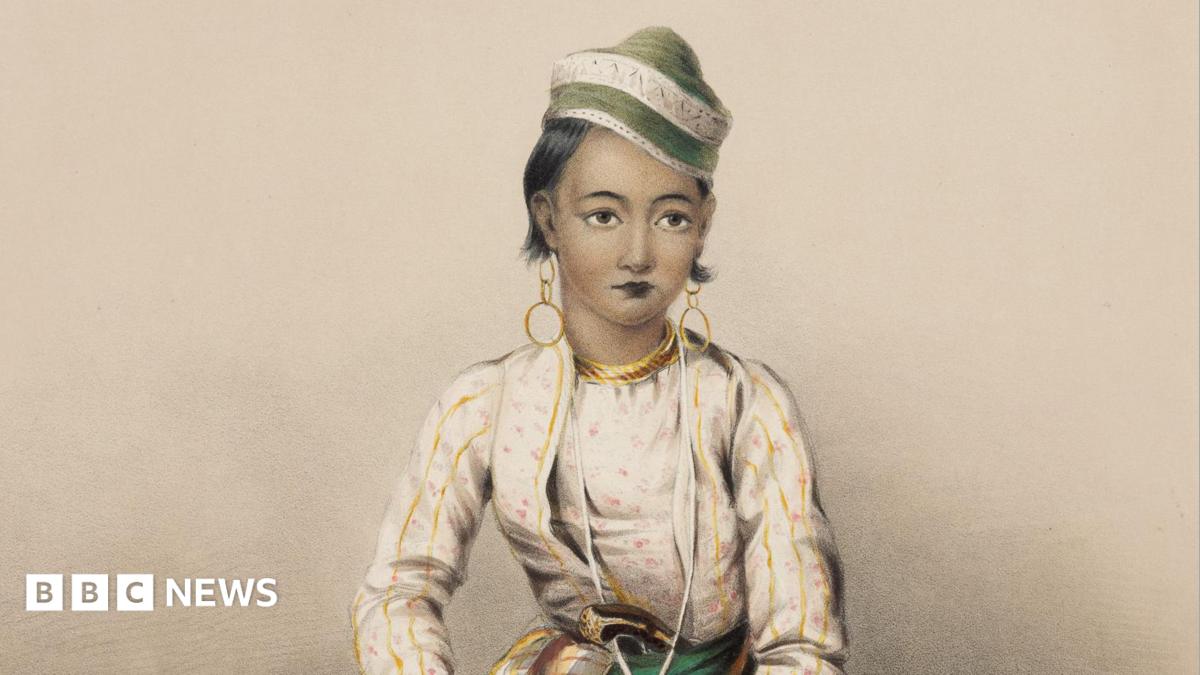
Emily Eden travelled across northern India in the 1830s, producing a large number of lively pencil and ink sketches of princes, warriors, hill communities and animals at a moment when drawn images were a primary visual record.
Eden’s drawings read like a visual diary: quick studies made on the move that later fed written descriptions and the reminiscences circulated in England. Her work offers readers a sense of how a British visitor observed the region nearly two centuries ago — recording faces, costumes and landscapes that a traveller might encounter on circuit through northern courts and rural communities.
Who was Emily Eden
Emily Eden was an English writer and artist who spent time in India in the 1830s. She came from a well-connected English family and moved in social circles that brought her into contact with colonial society and with local elites while she was abroad. That vantage point shaped the subjects she chose to draw and the perspective she brought to her notebooks.
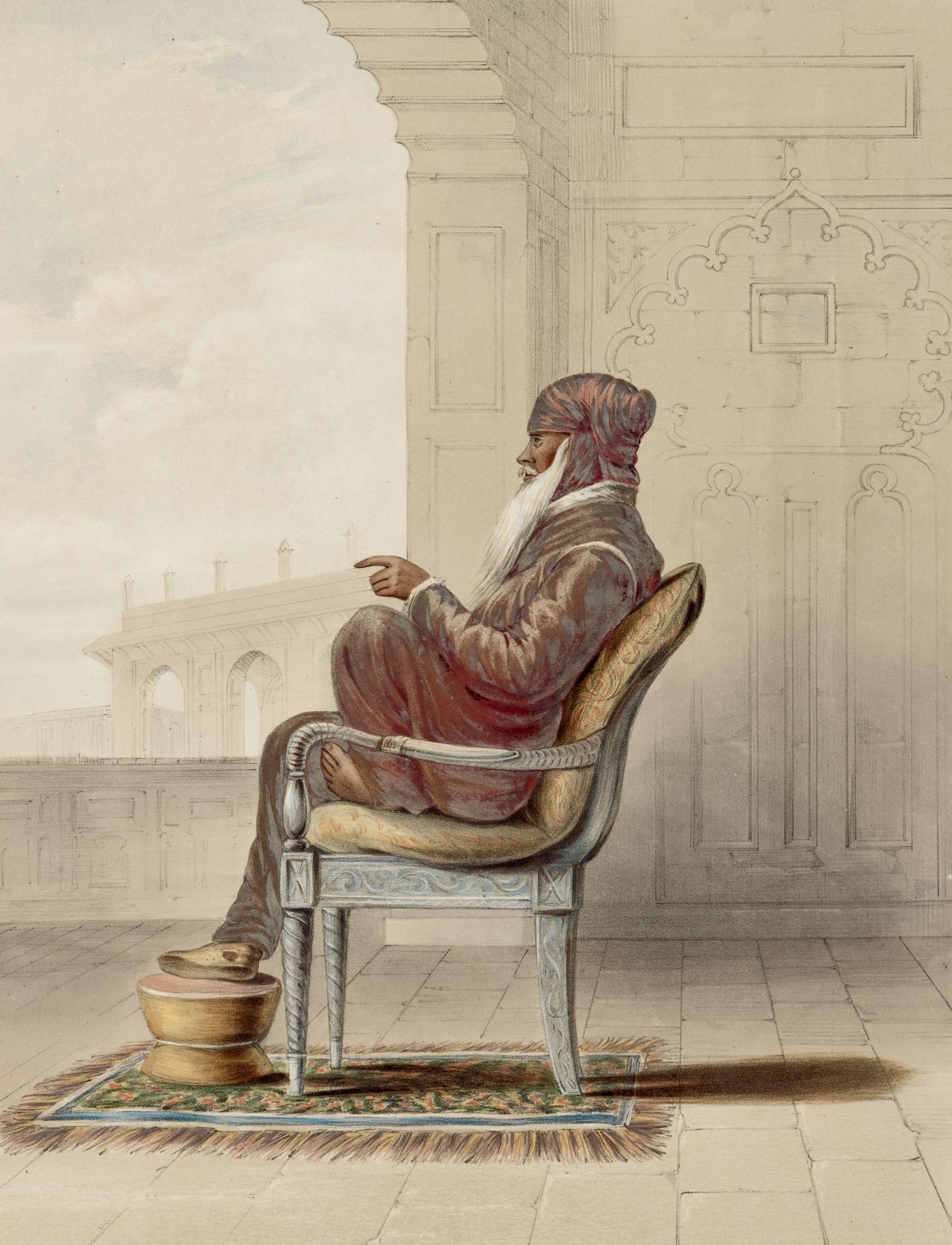
Her surviving sketches and letters form a mixed body of visual and textual observation. They were often produced quickly — small, economical studies made during travel — and later used alongside written recollections to convey what she had seen to an English readership.
Sketching northern India: routes and subjects
Although detailed itineraries are seldom neatly recorded in brief accounts, the sketches associated with Eden come from journeys through parts of northern India where princely courts, frontier hill settlements and agrarian villages intersected. The corpus shows a range of subjects: intimate portraits of regional leaders and courtiers, groups of armed men or retainers, scenes from hill communities and studies of animals she met on the road.
Technically, many drawings are quick, confident line studies: the kind of marks an artist makes while watching a subject at rest or in motion. Some were probably redrawn or refined later for albums or as illustrations that accompanied letters. Their immediacy — gestures, postures and dress captured in the moment — makes them valuable as visual notes, even as they must be read with an awareness of the artist’s choices.
The range of subjects — from portraits to domestic scenes and animals — reflects the breadth of what a travelling observer might encounter. Rather than staged studio portraits, many of Eden’s works look like field studies, intended to fix a pose, an item of clothing or a particular combination of landscape and human activity for later recollection.
Before photography took hold
Framing Eden’s work as produced “before photography took hold” situates it historically. As the BBC notes, her sketches date to a period when photographic processes were only just beginning to emerge and were not yet practical or widespread for most travellers. Early photographic methods developed in the late 1830s and 1840s, but for on-the-road documentation artists and sketchbooks remained the chief means of recording scenes and people.
That historical context explains why sketches were so important, while also tempering any assumption that drawings are neutral records. Sketches are shaped by what the artist chose to see and to prioritise; they can omit context, condense scenes, or stylise figures. Read alongside letters, official records and later photographs, they help build a fuller sense of place and encounter in the 19th century.
Seeing Eden’s sketches today
Original drawings and reproductions linked to Emily Eden are preserved in institutional collections, including libraries and museum archives that hold travel-era materials. Journalistic features, such as the recent BBC News piece, bring selected images to a wider public and often provide starting points and references for viewers who want to trace originals in catalogues and collections.
For readers who want to view specific works, consult the BBC News feature for selected reproductions and the links it supplies to library or museum catalogues where originals or high-resolution reproductions may be held. The BBC feature frames Eden’s work within its historical context and highlights representative images from those journeys.
Why her sketches matter
Eden’s drawings matter because they provide a first-hand visual perspective tied to a particular historical moment in India. For students of art history, colonial history and travel writing, her work helps bridge the era when drawn images were the primary tool for travellers and the later decades when photography reshaped visual reportage.
The sketches also prompt important questions about viewpoint: who is doing the looking, how are subjects framed, and what was left out. When combined with contemporaneous documents — letters, administrative records and later photographs — Eden’s drawings enrich our understanding of cultural contact, observation and representation in the 19th century.
Key takeaways
Emily Eden travelled northern India in the 1830s and made numerous sketches of people and places encountered on the road.
Her work represents a pre-photographic era when travel drawings were an essential visual resource for travellers documenting unfamiliar regions.
Selected reproductions can be viewed through the BBC News feature and in institutional collections that hold travel drawings from the period.
FAQ
When did Emily Eden travel to India?
Emily Eden’s journeys discussed here date to the 1830s, the decade associated with the sketches and notes highlighted in recent reporting.
What subjects did Emily Eden sketch in northern India?
Her sketches include portraits of regional leaders and princes, groups of warriors and retainers, scenes from hill communities and studies of animals encountered while travelling. The works range from quick studies to more finished portrait sketches.
Where can I view Emily Eden’s sketches online or in person?
Selected images and a journalistic overview are available via the BBC News feature on her work. Institutional collections and archives that hold 19th-century travel drawings may also hold originals or reproductions; the BBC piece provides links and references for further searching.
Source attribution: Selected reproductions and contextual reporting are available in the BBC News feature on Emily Eden’s sketches: BBC News – India.