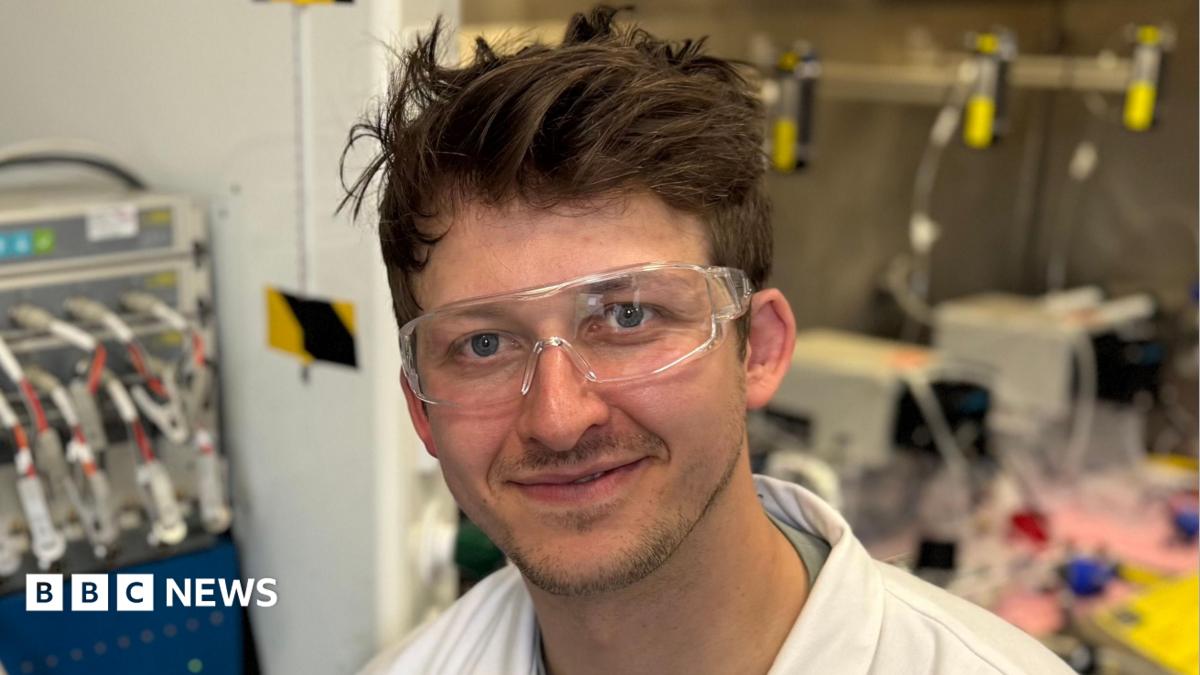
Researchers at Queen’s University Belfast have unveiled a 3D-printed battery design that, according to reporting by BBC News and the university team, could speed up energy storage research. The coverage frames the development as a lab-stage technique to accelerate prototyping and testing rather than an immediate commercial product.
The BBC report and statements from Queen’s University Belfast emphasise the potential for additive manufacturing to reduce the time needed to make and modify experimental cells. Photographs released by the BBC show researchers at Queen’s with the prototype and close-up images of the printed battery structure used in lab tests, illustrating the method’s focus on rapid iteration.
3D-printed battery design
The work uses 3D printing to create the internal architecture and supporting structures of small test cells. By printing layered components and bespoke geometries, the team can alter shapes, internal pathways and material placement quickly during lab work. The goal is not to replace conventional manufacturing immediately but to give researchers a faster way to build and compare many design variants.
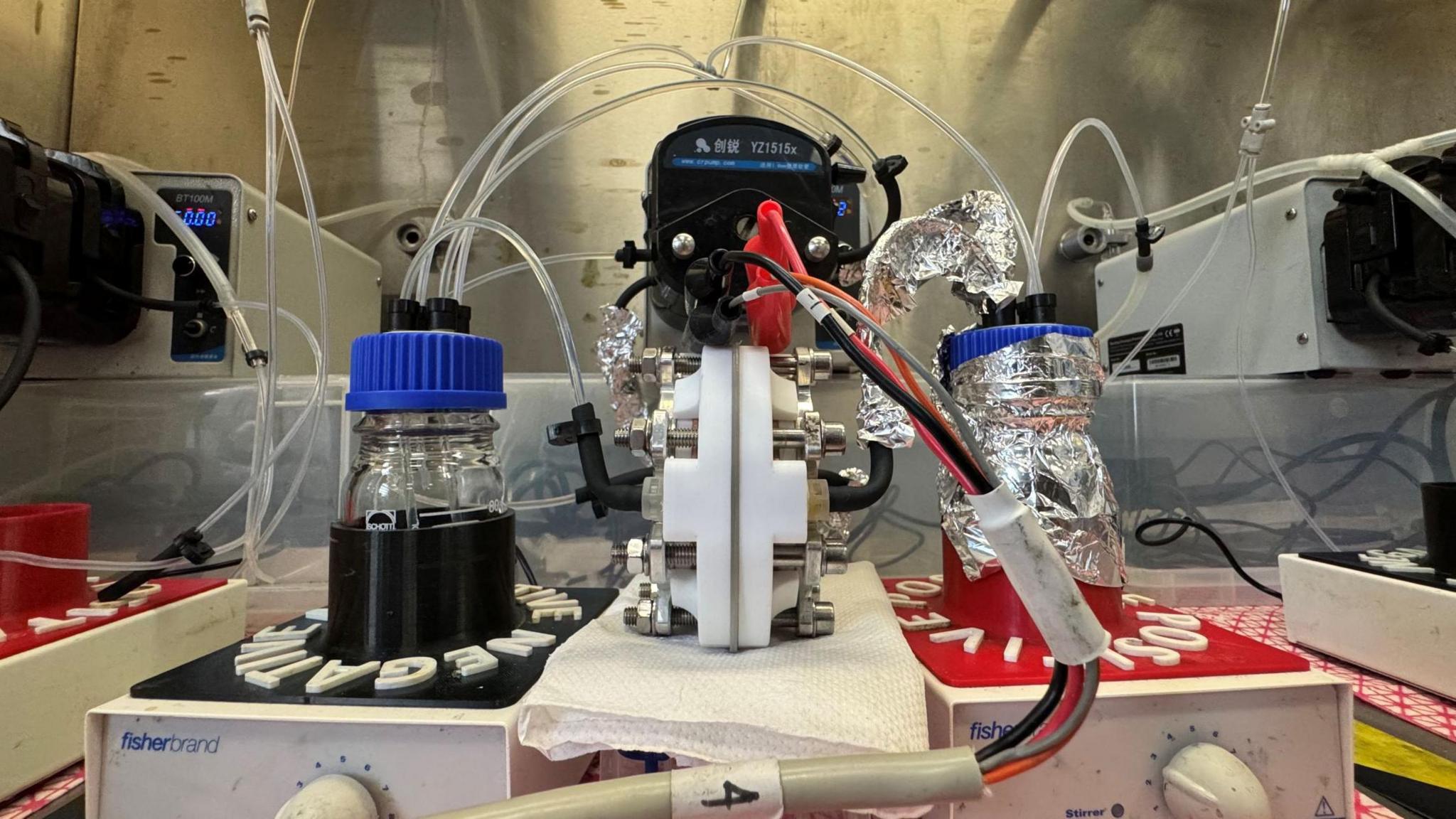
In practice this means researchers can produce one-off or small-batch test cells with tailored internal layouts, then measure electrochemical performance and adjust designs for subsequent prints. That flexibility is valuable in early-stage materials and cell-architecture research where each new arrangement can point to better performance or reveal failure modes.
What researchers built
According to the BBC coverage, the Belfast team demonstrated printed prototypes that combine structural printed elements with the electrochemical components required for a working cell. The prototypes are used to test ideas about how electrode placement, separator geometry and material interfaces affect performance.
The design emphasises modularity: printed scaffolds and channels let researchers try different active materials and configurations without the long lead times of traditional cell fabrication. Early demonstrations focus on showing the method can produce functioning test cells and enable repeated, varied experiments.
Why this could matter for energy storage
The central promise is speeding up energy storage research. Faster prototyping means labs can move from concept to physical test in days rather than weeks, allowing more design permutations to be explored within the same research timeframe. That accelerated cycle—build, test, learn—can help surface promising materials and architectures sooner.
For renewable energy systems that rely on improved storage—longer life, lower cost, better safety—any method that increases the pace of discovery could indirectly contribute to faster deployment of better batteries. The reported advantage is primarily scientific throughput rather than an immediate improvement in commercial battery metrics.
How the 3D-printed battery could speed research — and its limits
The proposed speed-up rests on reducing fabrication time and enabling rapid iteration. 3D printing lets teams produce multiple variants quickly, gather performance data and feed that back into new prototypes. That iterative loop shortens the experiment turnaround and can improve the efficiency of research programmes.
However, both the BBC report and the researchers note important caveats. The potential to speed up energy storage research is promising but not yet independently validated. Performance seen in small printed test cells in controlled lab conditions does not automatically translate to full-scale battery packs or long-term reliability in real-world use.
Key limitations include scale-up challenges—materials and structures that behave well in tiny printed cells can show different properties when scaled up—compatibility of printed materials with high-volume manufacturing, and the need for rigorous performance, durability and safety testing. Independent replication and peer-reviewed results will be crucial to confirm the claimed benefits.
What comes next
The Belfast team plans further experiments to validate the printed designs and quantify how much faster prototyping can be in practice. Expected next steps include extended cycle-life testing, safety assessments, reproducibility checks by other groups, and more extensive measurement under varied conditions to map strengths and weaknesses.
Observers will watch for peer-reviewed publications, third-party replication of results, and any moves to partner with industry for pilot studies. Demonstrating that printed approaches can be translated into manufacturing-compatible processes, and that they deliver meaningful improvements in performance or testing throughput, would be important milestones before any commercial claims are possible.
Background and context
Battery research balances discovery of new materials, novel cell architectures and the constraints of manufacturing. Techniques that lower the turnaround time for building and testing prototypes can increase the rate at which promising concepts are identified and refined. 3D printing has been of growing interest because it can produce bespoke geometries and integrate multiple materials in ways that are difficult with conventional processes.
Yet moving from lab demonstration to industry adoption typically requires solving new engineering and cost challenges. Even if printing speeds early-stage research, widespread use in production would depend on demonstrated benefits at scale, material supply chains, and alignment with manufacturing practices.
Source and further reading
This article is based on reporting by BBC News – Top Stories and information provided by researchers at Queen’s University Belfast. Read the original BBC story: https://www.bbc.co.uk/news/articles/c3dyd4l8250o?at_medium=RSS&at_campaign=rss.
FAQ
What is a 3D-printed battery?
A 3D-printed battery uses additive manufacturing to create parts of a battery’s internal structure or casing layer by layer, enabling custom geometries and new material arrangements for testing.
How could this speed energy storage research?
By shortening the time it takes to fabricate and modify test cells, researchers can run more experiments and iterate designs faster, accelerating the build-test-learn cycle used in materials and cell-architecture research.
Is the design ready for commercial use?
No. The BBC and the researchers describe the work as promising for research speed but not as a validated commercial product. Independent validation, safety testing, scalability studies and further replication are needed before any commercialisation can be claimed.