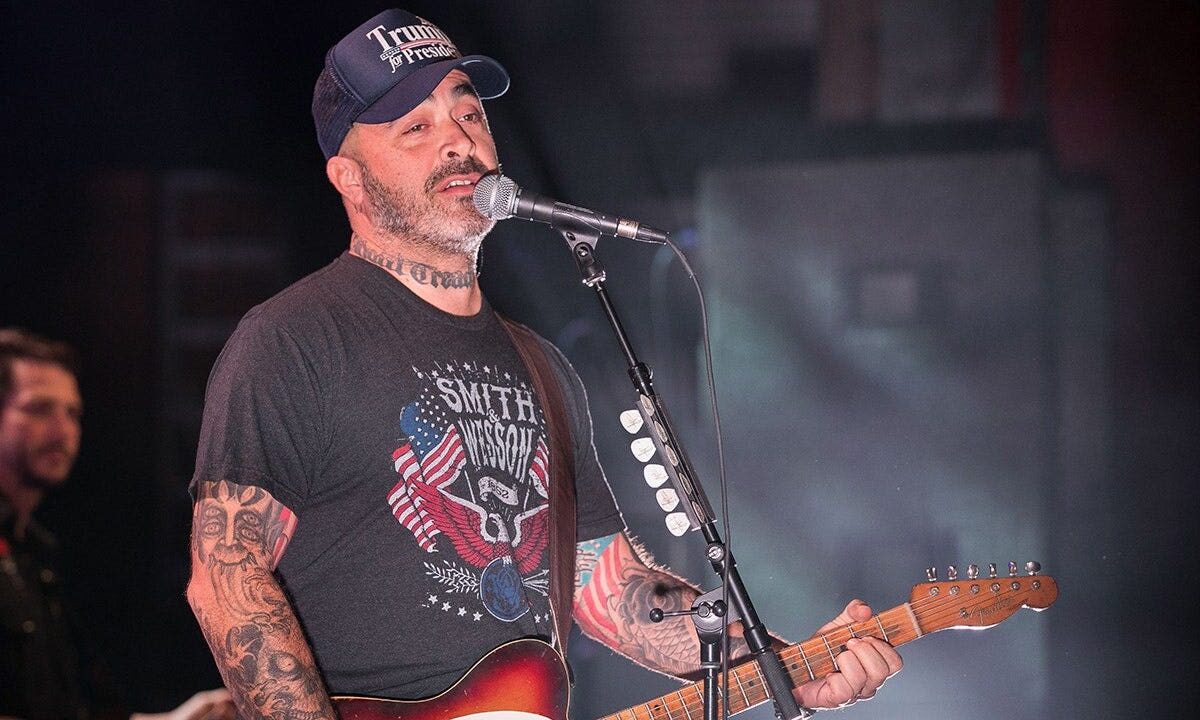
Aaron Lewis told the Pickin’ It Out with Andrew Pope podcast that the music industry has “turned its back” on him, a claim he repeated while promoting his upcoming record. Lewis said politics now shape who gets invited to certain stages and suggested that he no longer receives the same invitations he once did.
Speaking with host Andrew Pope, Lewis framed the shift as an industry response to his political stance. He described the business as a “machine” he feels can exclude artists, and said “everything’s too political now.” Those remarks are presented here as Lewis’s statements and have not been independently verified.
Aaron Lewis on industry reaction
On the podcast, Lewis recounted that he used to play some venues and receive invitations he no longer sees. He said he has stopped getting asked to appear at the Grand Ole Opry despite having performed there previously. Lewis characterized the change as the result of wider industry and cultural pressures rather than personal decline.
Lewis emphasized continued productivity, noting he still records and tours. He framed persistence in music as a personal priority and a way to reach fans directly, saying listeners who support him will find his work even if promotional channels shift.
Album details and release date
Lewis confirmed on the podcast that his sixth solo studio album, Give My Country Back, is scheduled for release on July 17. He and the host discussed expectations that fans will be able to locate and stream the record when it drops, and Lewis urged supporters to seek out the new material should distribution channels be limited by industry gatekeepers.
The album announcement places Give My Country Back in the context of Lewis’s ongoing solo output, which he has developed alongside his catalog with the rock band Staind. The release date and the characterization of the project as his sixth studio album were provided during the podcast and reported by Fox News.
Career context: from Staind to solo country
Lewis first gained mainstream attention as the lead singer of the rock band Staind. He moved into solo work beginning around 2010, pursuing country and Americana-leaning projects in addition to occasional rock performances. That cross-genre background helps explain why his comments about being sidelined in country spaces have drawn notice: he has ties to both mainstream rock audiences and country circles.
His crossover career means conversations about access and venue invitations touch on more than personal reputation; they reflect how gatekeepers in different genres respond to an artist’s public profile. Lewis’s experience, as he described it, underscores that dynamic.
Industry fallout and fair lineup changes
Lewis’s podcast remarks came amid broader controversy over entertainment bookings and political context. The Great American State Fair announced a lineup on May 29 that prompted several artists to withdraw in the days that followed. Reported pullouts included Martina McBride, Bret Michaels, Young MC, the Commodores and Morris Day; those departures were tied in media reports to backlash over connections with the Freedom 250 celebration.
The episode at the state fair illustrates how political associations around an event can alter who chooses to participate. Some artists publicly distanced themselves from the fair’s programming, while others — including performers still linked to related events — defended their decisions or said they view themselves primarily as entertainers, not political actors. Those reactions, as reported, show competing attitudes among artists and promoters about the extent to which politics should influence bookings.
Why it matters
Lewis’s claims and the fair lineup controversy reflect a larger conversation about how politics, audience expectations and industry gatekeepers intersect. For established performers, being perceived as politically controversial can affect touring opportunities, radio support and festival placement. That in turn can influence an artist’s promotional reach and revenue — practical consequences that make such disputes consequential beyond rhetoric.
At the same time, the marketplace for music has changed: artists increasingly rely on direct channels to fans, from touring and merchandise to streaming and social platforms. Lewis suggested on the podcast that fans who want his work may need to seek it out, a strategy some artists adopt when they perceive institutional obstacles. Whether this approach offsets potential promotional losses often depends on fan loyalty, media attention and the decisions of promoters and venues.
Readers should view Lewis’s allegations as his account of events and consider them alongside reporting on the fair lineup fallout and other industry responses. The interplay between public political expression and career opportunities remains a contested and evolving area of the music business.
Source: Fox News