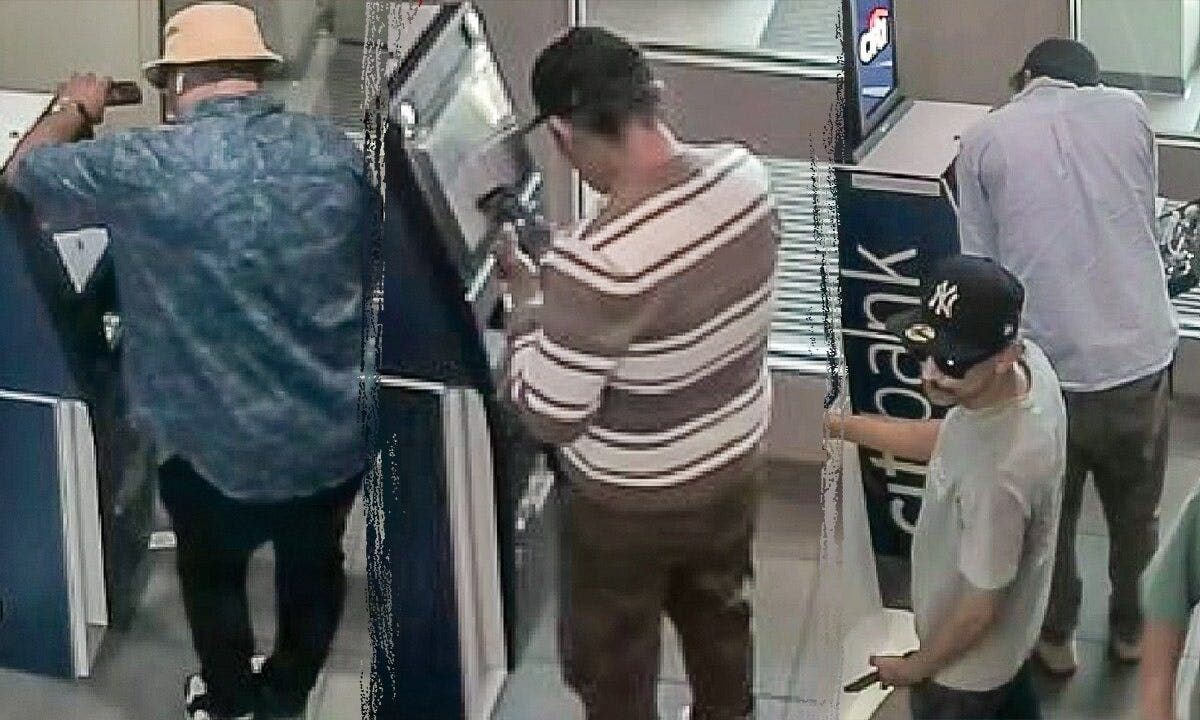
Federal prosecutors say four men allegedly used specialized hardware and malware to carry out ATM jackpotting at Connecticut rest stops, stealing more than $529,000 between Aug. 8 and Aug. 18, 2025. The suspects were arrested June 25, 2026, and have been charged in the scheme.
The U.S. Attorney’s Office for the District of Connecticut identified the defendants as Euclides Moreno Itanare, Willian Ricardo Flores, Alberto Jose Freites Arvilla and Luis Jose Freites Arvilla. Prosecutors describe the case as a coordinated series of thefts that targeted ATMs at rest areas along Interstate 95 and other Connecticut locations.
What prosecutors say
Charging documents allege the group used a combination of hardware tampering and malware to force ATMs to dispense cash. Prosecutors say the alleged hits occurred at machines in Milford and Ansonia and at I-95 rest stops in Fairfield, Branford, Madison and Darien.
Prosecutors provided breakdowns of several alleged hauls: an estimated $136,000 at the I-95 northbound rest stop in Fairfield; $84,000 at the I-95 southbound rest stop in Madison; $66,400 at the I-95 northbound rest stop in Branford; and multiple hits in Darien that prosecutors say totaled more than $177,000.
Where and how the crew hit ATMs
Court papers describe a repeated pattern: one person acted as a lookout while another opened an ATM’s hood and accessed internal components. Over several hours, the suspects allegedly used specialized devices and malware to force machines to dispense cash, then collected the bills.
Prosecutors said suspects sometimes changed clothes between returns to the same ATM to avoid detection. One attempted hit at a Cumberland Farms ATM in Ansonia was reportedly blocked because that machine had been patched against the method described in the complaint.
Evidence investigators used
Investigators say they tied the suspects to the thefts using surveillance footage, phone records and account data. Court documents reviewed by reporters cite Google and Apple account records and photos allegedly recovered from the suspects’ devices.
The complaint references an Apple account containing images of target ATMs before and during thefts, photos of cash inside a vehicle and images that prosecutors say show suspects counting money in New York hours after a Connecticut theft. Surveillance images and phone-location records are cited as linking individuals to specific times and places.
Prosecutors also say photos recovered during the investigation show stacks of cash in a vehicle, which they included in their complaint as corroborating evidence.
By the numbers
- Total alleged loss: more than $529,000
- Alleged crime window: Aug. 8 to Aug. 18, 2025
- Arrest date: June 25, 2026 (per prosecutor filings)
- Defendants charged: 4
- Noted large hauls: $136,000 (Fairfield), $84,000 (Madison), $66,400 (Branford), $177,000+ (Darien)
Legal charges and possible penalties
The four men were charged with interstate transportation of stolen property and conspiracy, according to the U.S. Attorney’s Office for the District of Connecticut. Prosecutors say those charges carry maximum penalties of up to 10 years and up to five years in federal prison, respectively.
All four defendants are detained; filings make clear the allegations come from prosecutors and charging documents. Those charged are presumed innocent unless proven guilty in court.
Why ATM jackpotting is rising
Federal authorities say the type of attack alleged here — commonly called “jackpotting” — has increased nationally. Prosecutors cited an IC3 report saying roughly 1,900 ATM jackpotting incidents have been reported since 2020, with more than 700 reported in 2025 alone, resulting in millions in losses.
The U.S. Department of Justice and FBI have warned that the availability of specialized hardware and malware that can exploit older ATM models has contributed to the trend.
What comes next
The FBI is leading the investigation with assistance from Connecticut State Police, the Raleigh Police Department and the New York City Police Department, officials said. Prosecutors indicated the probe is ongoing as authorities work to determine whether the same alleged crew is tied to other ATM thefts.
Defense attorneys for some defendants had not yet offered public comment at the time of reporting; upcoming court proceedings and pretrial filings will further detail the evidence prosecutors present and any defenses raised.
FAQ
What is ATM jackpotting?
ATM jackpotting refers to using hardware tampering and malware to force an ATM to dispense cash. The technique often targets a machine’s internal components and can exploit outdated software or hardware protections.
How common are jackpotting attacks in the US?
Federal investigators reported roughly 1,900 incidents since 2020, with more than 700 occurring in 2025, according to the IC3 report cited by prosecutors.
What can ATM owners do to prevent jackpotting?
Industry and law enforcement recommendations include keeping machines patched and up to date, adding physical security measures to restrict internal access, routinely reviewing surveillance footage, and limiting who can access ATM internals.
Source: U.S. Attorney’s Office for the District of Connecticut; FBI; Connecticut State Police. Original reporting and criminal complaint reviewed by Fox News Digital: Fox News.