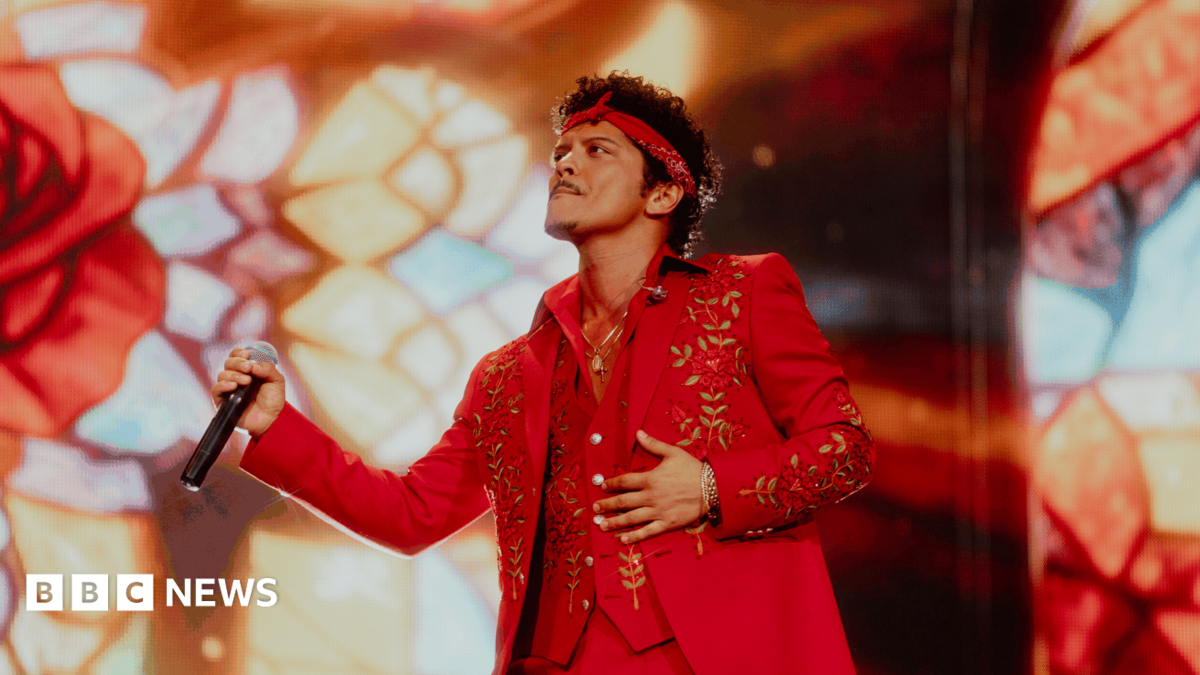
Bruno Mars returned to Wembley Stadium on Saturday, marking what the BBC reported as his first headline UK show in eight years; the broadcaster described the night as “polished, hit-filled” and said the performance underlined Mars’s status as a stadium-level pop showman. The concert leaned on familiar hits, tight band work and large-scale staging, drawing strong reactions from the audience and prompting broad coverage in the British press.
Bruno Mars’ Wembley return
The Wembley date was presented as a UK comeback by several outlets, with BBC coverage noting the roughly eight-year gap between headline appearances in the country. The evening combined arena-sized production values with songs drawn from across Mars’s catalogue, aimed at creating an instantly recognisable stadium set.
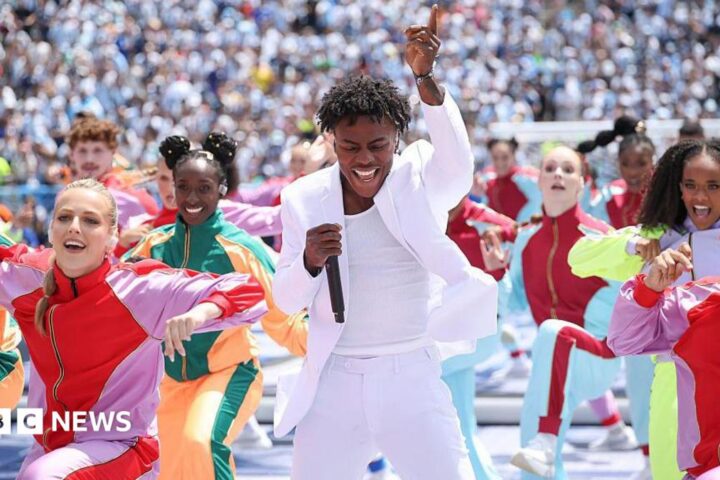
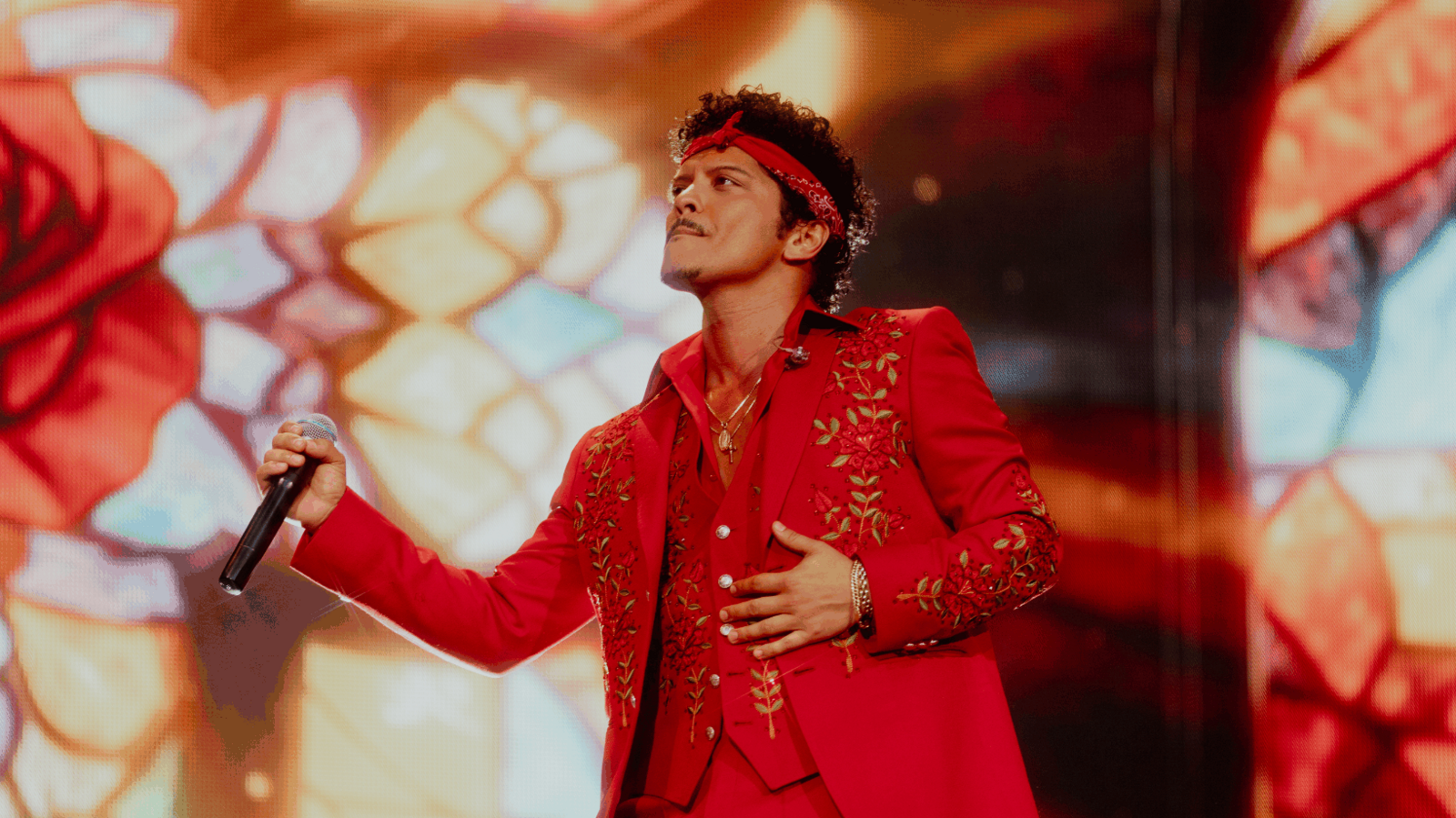
The production made clear use of theatrical cues familiar from large pop stadium shows: expansive lighting rigs, choreographed backing performers and a band arranged to support both rhythmic moments and full-group harmonies. Reviewers highlighted how the staging was configured to keep much of the crowd engaged across the bowl of Wembley Stadium.
Performance highlights
BBC reviewers described the concert as “polished, hit-filled,” a phrase that summarises the night’s focus on well-known songs delivered with careful craft. The setlist favoured crowd-pleasing singles and high-energy numbers designed for call-and-response moments and big choruses.
Musically, the evening alternated between large production moments and tighter band-led passages that showcased the musicianship behind the pop presentation. Brass, backing vocals and layered percussion were used to amplify hooks and to translate studio recordings into something suitable for a stadium environment.
Transitions between songs were generally brisk and arranged to maintain momentum. Review coverage emphasised Mars’s ability to move between big showstoppers and more intimate-seeming sections without losing the concert’s forward drive — a feature often cited in assessments of successful stadium shows.
Crowd and atmosphere at Wembley Stadium
Audience reaction was repeatedly noted in press accounts: large sections of the stadium joined in on choruses, and several moments drew sustained applause. The size and design of Wembley meant that visual production choices — lighting, video and performer placement — were important to preserving a sense of collective participation across the venue.
Wembley’s acoustic and sightline characteristics were referenced in coverage as factors the production sought to address. Reviewers observed that staging and pacing were tuned to keep different areas of the stadium involved, from the floor to the upper tiers.
Why the return matters
BBC framed the Wembley show as significant because it represented a renewed headline presence in the UK after a lengthy interval. For the artist, such a return has commercial and cultural implications: headline stadium dates help sustain visibility in major markets and reinforce an artist’s place on the global touring map.
For the wider pop sector, polished stadium productions that balance legacy hits with contemporary showcraft remain a central part of how major acts connect with mass audiences. The BBC’s description of the concert as hit-filled underlines the continuing value of well-known repertoire in driving stadium attendance and media attention.
Observers also noted that large-scale comeback shows tend to be measured not only by setlist choices but by how well an artist’s live presentation translates to the scale of a venue like Wembley — a metric this production aimed to meet through careful pacing and clear visual design.
Source and credits
This report is based on BBC News coverage of the event. Read the original BBC article for full context: https://www.bbc.co.uk/news/articles/cyv0vvg1pqdo?at_medium=RSS&at_campaign=rss