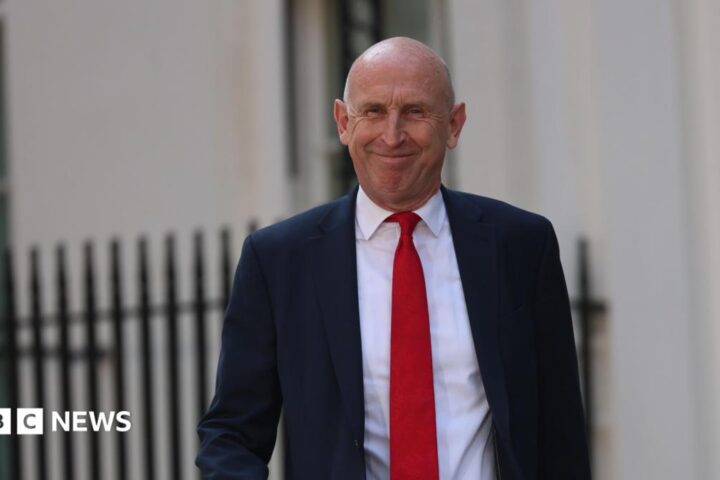
Chancellor Healey is facing early scrutiny over defence spending after the defence secretary resigned last month amid a reported row over military spending. According to BBC reporting, the resignation followed disagreements inside government about planned defence budgets and procurement priorities. The departure, and the way it has been covered in initial reporting, has left questions about whether the new chancellor — appointed by Prime Minister Andy Burnham — can reassure the armed forces quickly and stabilise funding decisions.
Fast facts
- Prime Minister Andy Burnham appointed Chancellor Healey following recent ministerial changes.
- The defence secretary resigned last month, reported by the BBC to have come after a row over military spending.
- Initial reports link the dispute to disagreements about planned defence budgets, procurement and priorities.
What the resignation means for defence funding
Resignations at senior defence levels can change the immediate tempo of budget decisions. If Treasury officials and ministers pause to reassess priorities, there can be delays to procurement notifications, contract signoffs and multi‑year spending commitments. That said, much depends on how quickly the new leadership signals continuity.
If Chancellor Healey moves to reassure departments and the armed forces, officials told sources in similar past episodes, it can limit disruption. Conversely, if he orders a thorough review of planned spending — framed as efficiency or prioritisation work — some programmes could see timetables adjusted. These outcomes are procedural possibilities rather than confirmed plans and should be treated as contingent on forthcoming ministerial statements and formal Treasury processes.

Chancellor Healey
The political spotlight now falls on Chancellor Healey. He is under pressure from party colleagues, defence stakeholders and opposition MPs to provide clarity. According to BBC coverage, the resignation has been framed by some commentators as symptomatic of deeper disagreements over how much to prioritise defence spending relative to other public services.
Healey must weigh competing demands: maintaining industrial commitments and international obligations on one hand, and managing domestic fiscal pressures on the other. How he balances those priorities will signal to the armed forces whether procurement plans and personnel programmes remain secure.
Political pressure on Chancellor Healey
Prime Minister Andy Burnham’s standing is also affected. A senior ministerial exit so soon after appointments can create a narrative of instability; critics have used the resignation to question the cohesion of the new cabinet, according to press accounts. Within government, ministers and senior officials will be focused on limiting any operational harm and preventing the story from becoming a protracted political issue.
Expect political demands for swift public clarity. Opposition parties and defence groups typically call for firm budget confirmations after such events. Healey’s public statements and early Treasury briefings will shape whether the episode is read as a short‑term blip or evidence of a sizeable policy rethink.
What comes next for the armed forces
For the armed forces, predictability is the immediate priority. Short‑term uncertainty affects training timetables, recruitment forecasts and the sequencing of major equipment orders. Service leaders will be attentive to concrete signals rather than broad assurances.
Near‑term milestones and signals to watch include:
- Any Treasury or chancellor statements that explicitly reaffirm existing procurement tranches or spending envelopes.
- Confirmations that planned contract awards will proceed on schedule, and publication of updated procurement timelines if changes are made.
- Parliamentary questions and committee hearings that demand detail on timelines and contingency plans.
Even a limited, clearly worded commitment to maintain current spending levels for a defined interval can reduce operational uncertainty. If Healey opts for a staged review — immediate reassurance followed by a targeted efficiency assessment — that path could limit short‑term disruption while allowing for longer‑term adjustments.
Background and context
Disagreements about defence budgets are common because spending decisions intersect with industrial policy, alliance commitments and domestic priorities. Reported rows often reflect negotiating dynamics rather than finalized policy changes. Early media accounts can emphasise conflict while departments continue to discuss technical and financial details.
Readers should therefore treat early reports — including the BBC’s account of a resignation linked to a spending row — as initial coverage that points to tensions rather than definitive evidence of long‑term policy shifts.
Analysis: options open to Healey
Healey’s pragmatic options include reaffirming existing commitments to provide immediate stability, or initiating a targeted review aimed at reallocating resources without undercutting core capabilities. Each route carries trade‑offs: reassurance reduces immediate political risk, while a review can address underlying inefficiencies but may extend uncertainty.
A staged approach — public reassurance combined with a bounded, transparent review process tied to clear timelines — would balance the need for short‑term calm with the option to adjust strategy where necessary. The chancellor’s handling of communications, engagement with service chiefs and the publication of timetable signals will be the key determinants of market and operational confidence.
Source attribution
This article draws on initial reporting by the BBC. According to BBC coverage, the defence secretary resigned last month after what the broadcaster described as a row over military spending. Readers should treat that account as reported information and not a full confirmation of internal deliberations: https://www.bbc.co.uk/news/articles/cjej92vgxkvo?at_medium=RSS&at_campaign=rss.
Where the piece describes possible outcomes and options for Chancellor Healey, these are framed as analysis and contingent scenarios rather than verified decisions. Further reporting and official statements from the Treasury, the Prime Minister’s office and defence departments will be required to confirm any policy changes.