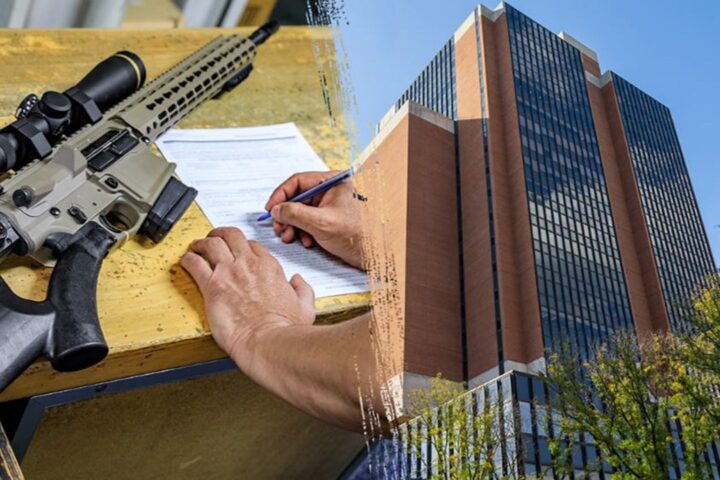
President Trump said China stole millions of American voter-registration records, and the White House posted heavily redacted intelligence documents it said support the claim. The allegation landed alongside a Department of Homeland Security announcement tightening rules on foreign student visas, a set of moves that placed Chinese student visas at the center of a larger debate over election integrity and national-security risks.
“It is imperative that our electoral system be safe and secure, as must the private information of American citizens,” the White House said in a statement accompanying the release.
What President Trump said and the public documents
The president asserted that China appropriated millions of voter-registration records containing names, addresses, phone numbers and political affiliations and used that data to influence U.S. elections. The White House made public a set of heavily redacted intelligence documents it says underpin the allegation.
Those documents, as released, contain extensive redactions. The administration presented them as supporting evidence, but independent public verification of the central claims has not been completed. Journalists and analysts note that redactions limit the ability to confirm sourcing, methodology and any direct link between the files and actions by a foreign government.
In other words, the claim is an active allegation supported by partially released material; it has not been adjudicated or fully corroborated in open-source reporting.
DHS moves and the timing
The Department of Homeland Security announced a set of changes to rules governing foreign student visas the same day the White House posted its documents. DHS framed the action as part of broader steps intended to protect national security and sensitive U.S. research institutions.
The agency’s public statements cited concerns about long-term enrollments and potential misuse of visa pathways, and they included policy language about changing allowable course loads and the length of stay for certain categories of foreign students. DHS officials and some lawmakers argued the timing signaled a direct policy response to the president’s national-security assertions.
How Chinese student visas factor in
Chinese student visas are central to the discussion because of the scale of enrollment and the concentration of many students in STEM programs. The White House previously referenced an August 2025 allowance to accept up to 600,000 Chinese students — a figure that became a focal point for critics concerned about national-security implications.
There are hundreds of thousands of Chinese nationals enrolled at U.S. colleges and universities, many in programs linked to advanced research. Policymakers and security advocates say those patterns create potential pathways for sensitive-data access, technology transfer or other activities they view as risky.
At the same time, those concerns remain policy judgments and risk assessments rather than proven facts about specific wrongdoing by students or institutions. Officials have called for tightened vetting and clearer oversight for programs that intersect with sensitive research, but any new rules would need to balance national-security aims with academic openness and visa-law constraints.
Risks cited: voter data and sensitive research
The administration’s public narrative connects two broad risk categories. First, the alleged compromise of voter-registration databases — if the files described are as extensive as the White House says, exposed personal data could be used for targeted messaging, disinformation or other influence operations.
Second, officials highlight risks tied to research and technology. Access to laboratories, dual-use technologies and advanced computing can present opportunities for espionage or intellectual-property loss when oversight is weak. Proponents of stricter visa rules argue that more granular vetting for students working in certain fields could reduce those risks.
Reporting to date emphasizes these as allegations and assessments; the released documents are redacted and independent verification of the specific claims — including how the voter files were obtained and whether a foreign government used them — remains outstanding.
Policy options and what comes next
Policymakers now face a suite of options. DHS could narrow visa categories tied to sensitive fields, shorten allowable continuous study durations, or increase background checks and sponsor accountability. Congress could pursue legislation to tighten vetting for applicants connected to specified institutions or research areas, or require enhanced interagency briefings and oversight.
Legislative and oversight steps are likely: members of both parties may demand classified and unclassified briefings, and congressional committees could hold hearings with DHS, the State Department and intelligence officials. The potential for bipartisan concern about election integrity and technology-security risks makes hearings and additional inquiries probable.
Universities and research centers should expect guidance or compliance requirements that raise administrative burdens: enhanced export-control reviews, restricted access to certain facilities, and closer scrutiny of sponsored projects. For prospective and current students, that could translate into longer visa-processing times and more restrictive program approvals.
Background
Short recap of the key public steps so far:
- White House released heavily redacted intelligence documents tied to the allegation.
- DHS announced changes to student-visa rules and framed them as national-security measures.
- Officials and some lawmakers have raised concerns about large numbers of foreign students in sensitive fields; independent corroboration of the voter-file claims remains pending.
Bottom line
The administration linked new visa steps directly to President Trump’s allegations about voter data, putting Chinese student visas at the intersection of immigration policy and national-security debate. The government has released supporting documents, but those materials are heavily redacted and key claims remain unverified in public reporting.
What happens next will turn on intelligence reviews, any unredacted corroborating evidence, formal DHS rulemaking and congressional oversight. Observers should watch for rule changes from DHS, requests for classified briefings, and any additional documentation that clarifies the provenance and scope of the alleged voter-file compromises.
Source attribution: This article draws on the Fox News opinion piece cited below and the administration materials posted publicly. See the White House briefing room for the posted documents and the Department of Homeland Security news page for the agency’s statements. For the Fox News opinion referenced, see: Fox News: If China targeted our elections, why reward it with 600,000 student visas?
Relevant official pages: White House briefing room | Department of Homeland Security news