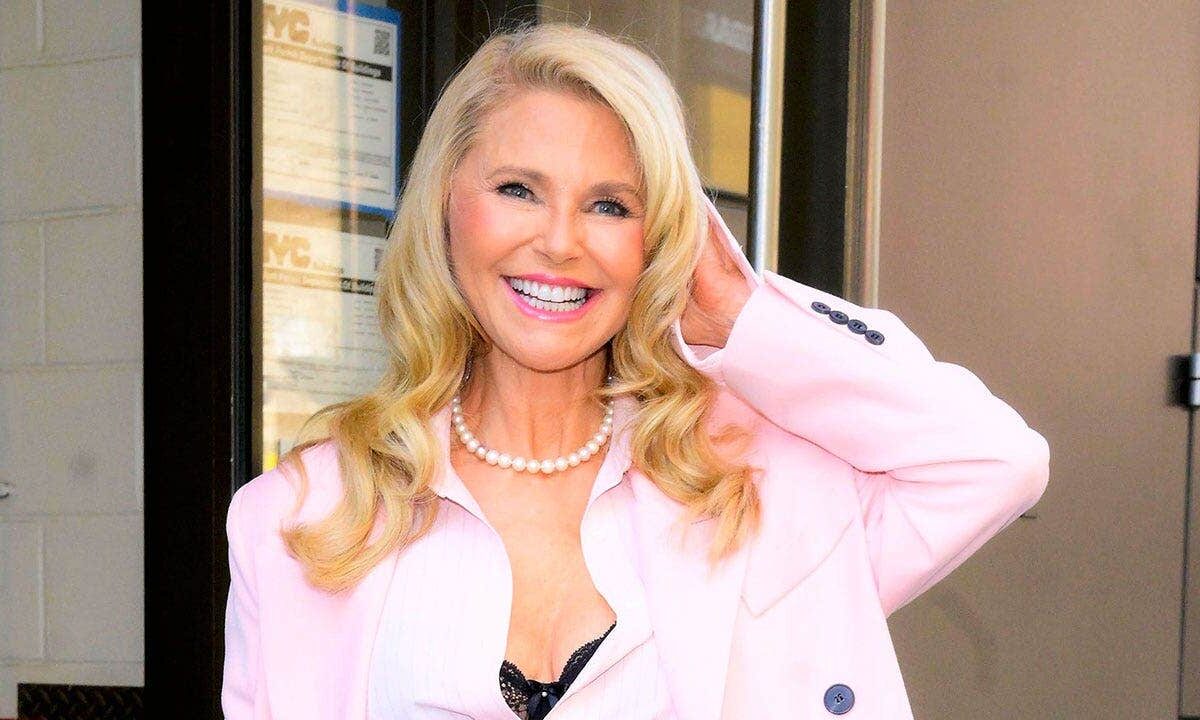
“I’m a believer in soulmates,” Christie Brinkley told Social Life magazine, but she added she’s rethinking whether they endure the way she once thought. The supermodel framed the shift as part of how love and identity change over decades.
Quick summary:
Brinkley says soulmates can transform rather than remain a single romantic person forever. She revisits four marriages in her memoir Uptown Girl and says aging has given her greater freedom and clearer boundaries.
Christie Brinkley on soulmates
Brinkley, now in her 70s, told Social Life that while she remains “a believer in soulmates,” she no longer assumes a soulmate will always be the same romantic partner. “I also believe that soulmates can transform and still be soulmates even though it’s not the romantic soulmate anymore,” she said, framing the idea as part of how people evolve.
Her remarks emphasize a distinction between feeling a deep connection and expecting a single romantic destiny to last unchanged. That nuance underpins much of the conversation she opens in recent interviews and in her memoir.
A quick timeline of her marriages
Here are the key dates and events readers should know about Brinkley’s marital history:
- Jean-François Allaux — married 1975, divorced 1981.
- Olivier Chandon de Brailles — relationship began 1982; he died in 1983.
- Billy Joel — married 1985, divorced 1994.
- Richard Taubman — married 1994, divorced 1995.
- Peter Cook — married 1996; marriage ended with divorce finalized in 2008.
Those dates outline a public arc that Brinkley revisits candidly — acknowledging youthful choices, grief and later struggles that played out in the public eye. The timeline also shows how the experience of loss, recovery and public scrutiny has shaped her later reflections.
Each marriage, in her words
Brinkley has described marrying Jean-François Allaux as young and impulsive, saying it felt like “love at first sight” before later calling the union a “slow dissolve” as she came to recognize her own needs.
Her relationship with Olivier Chandon de Brailles was cut short by his death in 1983; Brinkley has called his passing one of the most heartbreaking moments of her life.
Writing in her memoir and speaking in interviews, she has discussed the marriage to Billy Joel in frank terms, noting struggles with his drinking and summarizing that “booze was the other woman.” Those passages in Uptown Girl address both personal responsibility and the strains substance use placed on that marriage.
On Richard Taubman she has said, as her account, that he “married me for my money,” and described that marriage as brief and complicated. About Peter Cook, Brinkley has written about infidelity and a long, painful divorce, calling the period emotionally tormented.
What she says in her memoir Uptown Girl
In Uptown Girl Brinkley revisits these relationships with more context and reflection, acknowledging mistakes she made and the lessons she took from each marriage. She writes about being “too trusting” at times and about how her priorities and boundaries evolved.
The memoir ties directly to her recent interviews. A 2025 New York Times profile described Brinkley as “a fool for love,” a phrase that underscores her continuing openness to relationship and romance even as she reframes expectations. Reporting on her comments has appeared in outlets including Fox News, which summarized her points about soulmates and aging after the Social Life interview.
How aging changed her view on love
Brinkley told Social Life that aging brought a new freedom: “You do what you wanna do when you wanna do it. I think that there’s a freedom that comes with age and that’s quite wonderful.” She said that freedom is partly practical self-knowledge — clearer boundaries about what she will accept, and less pressure to stay in damaging situations.
That perspective reframes soulmates as connections that may shift in character over time: some remain close friends or vital emotional influences even if they are no longer romantic partners. In interviews and her book she connects that shift to a broader cultural conversation about aging, autonomy and how relationships adapt across life stages.
Key takeaways
- Brinkley still believes in soulmates but now sees them as potentially changing rather than a single unchanging romantic destiny.
- Her four marriages span from 1975 through the 2000s and include moments of public heartbreak and private reconsideration that she discusses in Uptown Girl.
- Claims about ex-partners (including comments about money, drinking and affairs) are reported here as Brinkley’s account and have not been independently verified by this outlet.
- Aging, she says, brought greater freedom and clearer boundaries, leaving her open to love but less willing to tolerate harm.
Brinkley’s remarks were given to Social Life magazine and have been summarized in other coverage, including Fox News; her memoir Uptown Girl expands on these episodes and her reflections. Readers should treat specific allegations noted in her account as her perspective unless corroborated by additional reporting.
Source attribution: This item is based on Social Life’s cover interview with Christie Brinkley and reporting summarized by Fox News. For full original coverage see the Fox News story: Fox News — Christie Brinkley says she’s rethinking soulmates after four marriages. The New York Times profile referenced above ran in 2025: The New York Times (2025).