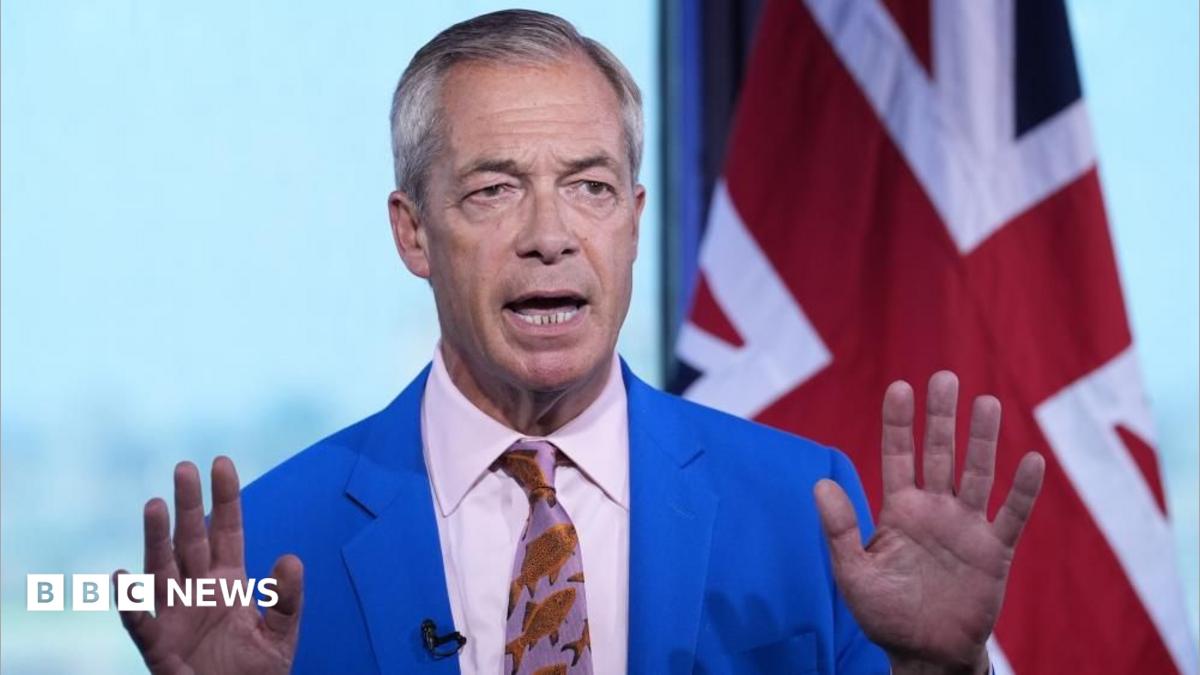
The BBC reports it is “far from certain” that the Clacton by-election will strengthen Farage. That framing sets the terms for a contest that has attracted broad attention but, according to the BBC, remains ambiguous in what it can say about national politics.
Clacton by-election: what the BBC reports
The BBC article by Chris Mason – published as part of BBC News – Top Stories on 2026-07-08T11:33:13.000Z – says a win in the Clacton by-election would be “far from certain” to give the Reform UK leader sustained national momentum. The piece foregrounds uncertainty: a single victory, even a high-profile one, is not presented by the BBC as definitive proof of wider political realignment.
What the BBC report says
The report highlights several immediate facts: the Reform UK leader is standing in the contest; Count Binface is among challengers; and the main parties have elected not to field candidates. The BBC frames these elements as complicating factors that make simple extrapolation from a local result to national fortunes problematic.
The BBC coverage stresses caution, noting that local dynamics, candidate profiles and an atypical ballot can all limit what the result reveals about broader public opinion.
Who is standing in Clacton
According to the BBC report, the Reform UK leader is the marquee candidate in the Clacton by-election. He is facing a mix of independents, local figures and smaller-party candidates, including Count Binface, a satirical contestant who has stood in several high-profile races.
The absence of Conservative and Labour candidates — as reported by the BBC — reshapes the competitive field. That decision concentrates media attention on smaller parties and independents and alters the usual dynamics of tactical voting and turnout.
Why a win may not strengthen Farage
The BBC’s central caution is that a by-election victory does not automatically translate into a national shift. There are several reasons for that caution:
First, by-elections frequently reflect local issues and personalities more than nationwide opinion. Voters can use by-elections to register a local protest or reward a particular figure without that sentiment being replicated across many constituencies.
Second, the competitive field in Clacton will be unusual with the main parties absent. Turnout patterns, protest votes and the prominence of niche or satirical candidates can make vote shares hard to interpret as transferable support for a national campaign.
Third, sustaining national momentum requires organisational reach, candidate depth and repeated successes across different areas. The BBC piece points out that a single headline result is only one data point; long-term change depends on follow-through beyond election night.
Local context and background
Clacton is a constituency with its own political character and local issues that shape how residents vote. Past UK by-elections have shown that results can be driven by constituency-specific concerns, the appeal of individual candidates, and short-term protest voting. The BBC coverage urges readers to view the Clacton result through this local lens rather than assuming it will map neatly onto national opinion polls.
Recent by-election trends in the UK illustrate the point: occasional surprise wins or swings in single seats have not always presaged durable change at general elections. That historical pattern is part of why the BBC emphasises uncertainty about the national meaning of any Clacton outcome.
What comes next and reporting notes
Polling day will be followed by the count, normally held on the night of the election or early the next day. Key milestones to watch in the hours after polls close include turnout figures, the vote share for Reform UK, and the relative performance of independents and minor parties such as Count Binface.
Expect an initial picture on the night of the count, with more detailed analysis and official declarations possible within 24–48 hours as postal votes and verified totals are completed. Commentators will be looking for signs that any higher vote share is transferable to other seats and whether local campaign infrastructure can be scaled up nationally.
Reporting on the result should treat immediate headlines about national impact cautiously. As the BBC article emphasises, analysts will weigh this single contest alongside other indicators rather than treating it as conclusive evidence of a wider trend.
Source and attribution
This article is based on reporting by BBC News – Top Stories. Original reporting by Chris Mason. For full details and the original coverage, see the BBC article: https://www.bbc.co.uk/news/articles/c9d2882jj3yo?at_medium=RSS&at_campaign=rss