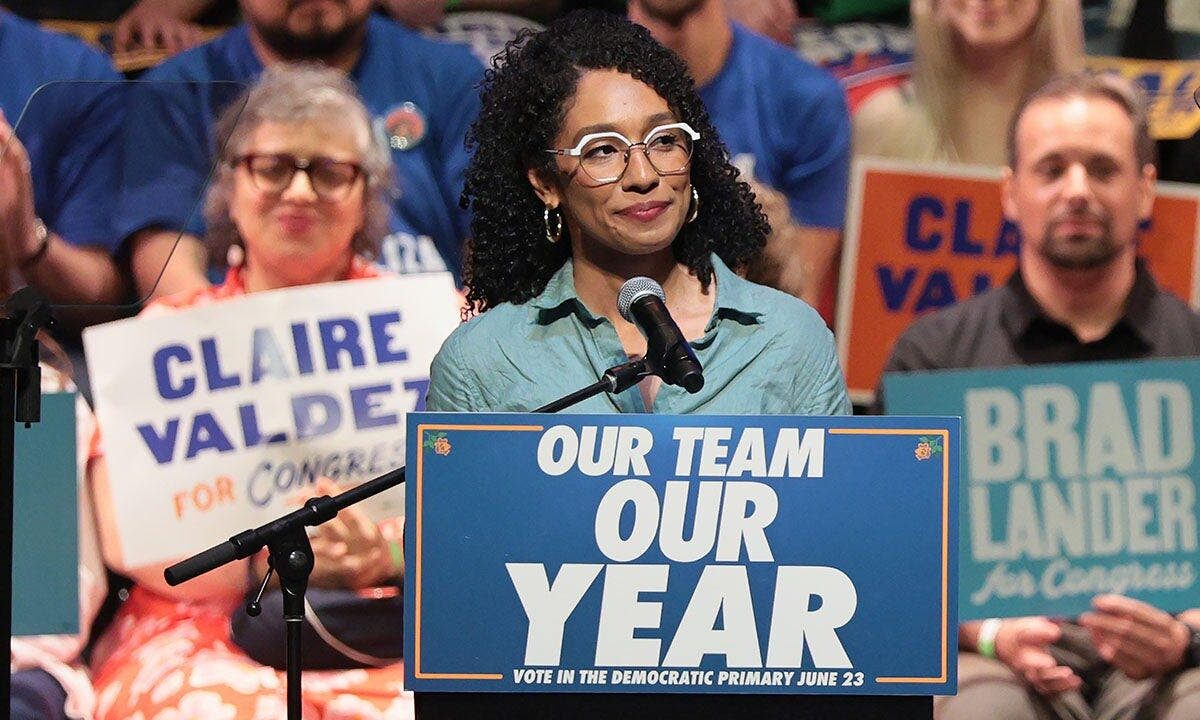
Darializa Avila Chevalier drew national attention after winning the Democratic primary in New York’s 13th Congressional District and declining, in an interview exchange that was widely reported, to answer with a simple “yes” when asked whether a person who murders someone should go to jail. That exchange — highlighted in local and national reporting — prompted Bill Maher to call her “patient zero” of a “woke mind virus” on Real Time.
What Bill Maher said
“The New York Times asked her, ‘If someone murders someone randomly, should they go to jail?’ Couldn’t get her to say yes for that. So, there is a woke mind virus, and I think we found patient zero. Her name is Darializa Avila Chevalier.” — Bill Maher, Real Time
On his HBO program, Maher referenced reporting and interviews about the candidate’s answers to questions about criminal justice. His segment framed the exchange as emblematic of a broader critique of abolitionist language and what he described as excessive progressivism. Fox News summarized Maher’s remarks in its coverage of the segment.
Darializa Avila Chevalier’s stated positions
Chevalier’s campaign identifies her with abolitionist language and a progressive platform. Her campaign issues page lists priorities including “Abolish ICE,” Medicare for All, Housing for All and a foreign-policy stance described as reallocating funds away from wars abroad. On her campaign site she frames many problems — including crime and housing — as rooted in systemic failures rather than individual moral failings. Her campaign issues page is available at the candidate’s official site.
In an interview with the New York Editorial Board, which pressed her on responses to violent crime under an abolitionist framework, Chevalier described the murder cited by the board as tragic and reflective of broader systemic issues. She has been quoted saying, according to published excerpts, “I am not OK with any deportation,” and her campaign materials say she would work to “abolish the deportation machine.” Those positions have been emphasized by both critics and supporters in local and national coverage.
Primary win and local context
Chevalier defeated incumbent Rep. Adriano Espaillat in the Democratic primary for New York’s 13th Congressional District, securing roughly 49.4% of the vote to Espaillat’s approximate 45.9%, according to reporting on the race. The victory reflects intra-party tensions and a broader progressive challenge to entrenched incumbents in New York City politics.
The district — which has a large Dominican and wider Latino population and is represented by the chair of the Congressional Hispanic Caucus — was watched closely because of the symbolic and practical implications of an upset. Chevalier was supported by progressive organizing and endorsements aligned with Zohran Mamdani’s political network, and her win prompted immediate attention from national commentators who framed the race as a test of abolitionist and far-left messaging in a general-election environment.
How major outlets pressed her views
The New York Times and the New York Editorial Board published interviews and analysis that highlighted exchanges in which Chevalier described systemic drivers of crime and declined to endorse incarceration as the sole response. The Editorial Board’s Q&A pressed her repeatedly on how an abolitionist framework would address violent crime; the published back-and-forth was cited widely in subsequent commentary.
Fox News and other national outlets amplified those excerpts and paired them with broader critiques of abolitionist rhetoric, while progressive outlets and some local organizers framed her answers as part of a deliberate effort to reimagine public safety and prioritize prevention and housing interventions. Reporting also noted past social-media posts and historical statements attributed to Chevalier; outlets varied in how they contextualized those posts when assessing how the positions might play to a wider electorate.
Political reaction and what comes next
Maher’s segment added national airtime to what had been primarily local and citywide debate. The commentary pushed the discussion beyond the district, increasing pressure for more interviews, clarifications and detailed policy proposals from Chevalier’s campaign. Local Democrats, national observers and some community leaders have signaled they will be watching how she articulates specifics — particularly on crime, immigration enforcement and constituent services — as the campaign shifts to the general election.
Next steps are likely to include follow-up interviews with national and local outlets, targeted messaging to reassure moderate and swing voters in the district, and continued scrutiny from opponents who may use the editorial-board exchange and Maher’s segment in general-election advertising. The narrow margin in the primary and the profile of the incumbent she defeated make the general election a focal point for both critics and supporters as they test whether abolitionist framing can be translated into policy proposals that resonate broadly.
Sources
This article is based on reporting and interview excerpts from Fox News, the New York Editorial Board and the candidate’s campaign materials. See Fox News’ coverage of Bill Maher’s remarks for the segment summary: Fox News. The New York Editorial Board’s coverage and interview are available here: New York Editorial Board. Chevalier’s campaign issues page is available at darializaforcongress.com. Additional reporting and context appeared in national coverage, including summaries in major outlets such as The New York Times.