
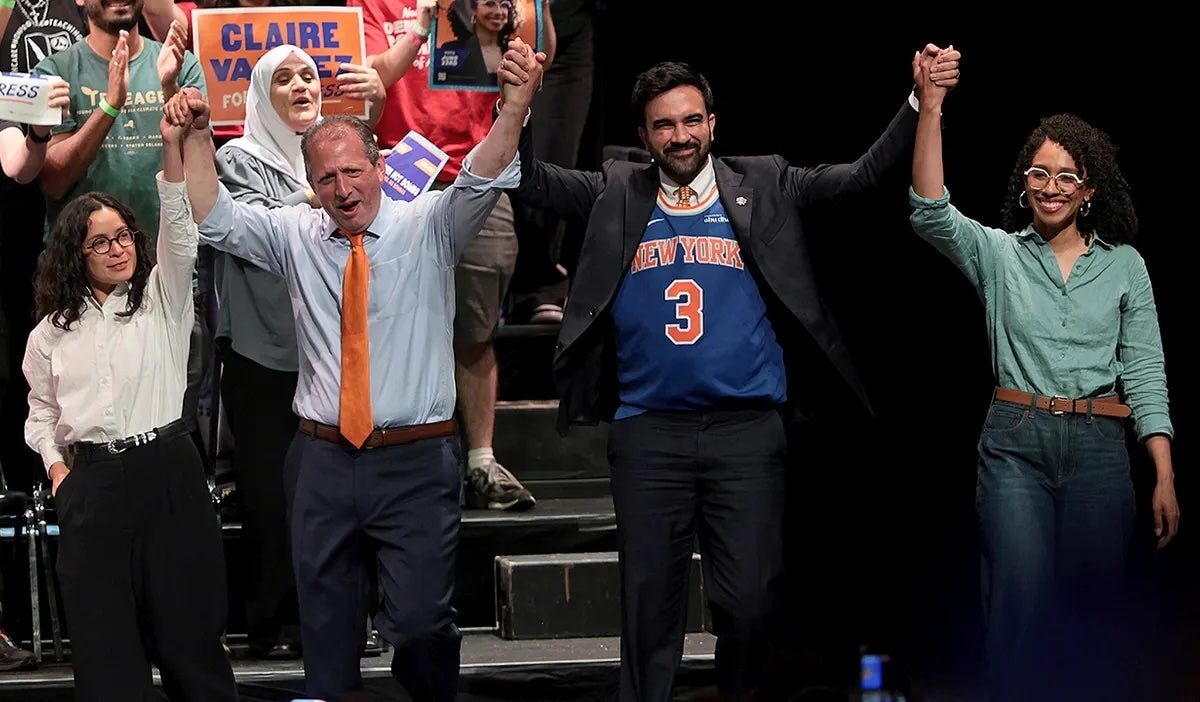
The Democratic Socialists of America scored upset victories in New York’s congressional primaries, unseating Representatives Adriano Espaillat and Dan Goldman and instantly reshaping the internal math and messaging calculations for House Democrats.
Those wins refocused attention on party unity, economic messaging and the strategic risks heading into the 2026 midterms. Republican operatives moved quickly to nationalize the results while Democratic leaders signaled an early push to integrate the new members without ceding control of the message.
What happened in the New York primaries: Democratic Socialists of America wins
In back-to-back contests, candidates backed by the Democratic Socialists of America defeated two sitting members of Congress: Adriano Espaillat and Dan Goldman. Espaillat had served as a leader in the Congressional Hispanic Caucus; Goldman was a former House impeachment staffer who later won a district seat.
The upsets alter more than individual races. They represent a tactical win for DSA organizers who targeted districts where progressive turnout and ground game could overcome incumbency advantages. For House Democrats, the results mean integrating outspoken insurgent voices into a narrow governing coalition already sensitive to swing-district vulnerabilities.
Why Democratic leaders are alarmed
Moderate and establishment Democrats publicly framed the defeats as a cautionary signal about electability and messaging. Some centrists argued the party should pivot back to kitchen‑table issues — groceries, gas prices and inflation — that resonate with swing voters. Rep. Tom Suozzi criticized the new nominees as “not those type of Democrats,” reflecting broader concern among moderates.
House Democratic Leader Hakeem Jeffries has been a focal point for party unity messaging; Rep. Robert Garcia said the nominees “are going to be part of our caucus and we’re going to unite behind Leader Hakeem Jeffries.” That commitment signals an early effort to avoid a formal split even as leaders contend with the operational and rhetorical challenges of a more ideologically diverse caucus.
Some Democrats worry media coverage of intra‑party fights will drown out policy debates on cost of living and public safety. Those concerns are not unanimous: other progressives argue the insurgent victories show the party’s energy and ability to mobilize new voters. Observers should treat claims about electability as debated assessments rather than settled facts.
Republican and national response
Republicans seized on the New York results to nationalize their criticism. House Judiciary Chairman Jim Jordan highlighted the defeats to argue Democrats were moving left, and House Oversight Chairman James Comer similarly used the outcomes to amplify warnings about perceived extremism. Conservative media personalities and some GOP officials labeled the victors with stark partisan terms; those characterizations should be read as political framing and allegations rather than neutral description.
GOP strategists see an opening to fold the DSA narrative into broader ad lines that emphasize groceries, gas prices and security, aiming to shift battleground frames away from local policy accomplishments and toward cultural and ideological contrast. At the same time, Republicans are managing their own internal disputes and legislative hurdles, so the political payoff depends on message discipline and execution ahead of 2026.
Implications for 2026 and campaign messaging
The primary outcomes create tactical questions for Democrats heading into the midterms. Insurgent nominees can energize grassroots donors and volunteers, but they also risk alienating moderate voters in competitive districts if opponents successfully cast them as out of step on pocketbook issues. Campaigns that fail to foreground inflation, housing costs and everyday expenses may leave a vulnerability Republicans are eager to exploit.
Analysts note a dual possibility: in some districts, DSA-backed candidates could boost turnout among younger and more progressive voters, improving chances where turnout was previously low; in others, they could hand messaging advantages to Republicans who tailor ads toward suburban and swing-leaning constituencies. Which effect dominates will vary district by district and depend heavily on nationalized ad buys and ground operations.
Democratic strategists emphasize coordination: if national leaders, state parties and nominees align on kitchen‑table messaging while allowing room for progressive policy goals, the party may blunt Republican attacks. Conversely, if intraparty disputes dominate headlines, Republicans can compress complex policy debates into simple clips about groceries, gas and alleged extremism — a framing that can be effective in tight races.
Ultimately, the New York primaries make clear that 2026 messaging will hinge on discipline and prioritization. Parties that manage to present a coherent economic narrative while accommodating ideological breadth may fare best; those that lapse into internecine conflict risk giving Republicans a steady line of attack in swing districts.
What happens next inside the House and the caucus
House Democrats face short-term operational choices. Rep. Robert Garcia’s public pledge to “welcome” the nominees into the caucus is an early attempt to preserve cohesion. Practically, expect negotiations over staffing, committee assignments and whether the leadership will formally distance the caucus from controversial campaign statements.
Allegations raised during the campaigns — including claims of antisemitism or other serious charges — should be treated as allegations and investigated through appropriate channels rather than assumed. How leadership handles such inquiries will shape internal morale and public perception.
If new members prioritize legislative coalitions and regular governing tasks, tensions may ease. If they pursue primarily adversarial or symbolic actions, the party risks giving Republicans clearer contrast lines to use in 2026 messaging. The immediate weeks will show whether the caucus can convert primary results into a manageable working majority or whether fault lines persist.
In short, the DSA wins in New York force Democrats to answer two linked questions: can the party preserve unity and deliver clear economic messaging, and can it integrate insurgent newcomers without ceding its playbook in competitive districts? The answers will shape both operational choices in the House and the national campaign narrative heading into 2026.
FAQ
Who are the Democratic Socialists of America?
The Democratic Socialists of America is an organization that endorses progressive and left‑leaning candidates and pushes for broad economic and social reforms. Endorsed candidates differ in policy emphasis and electoral strategy.
Which incumbents lost in the New York primaries?
Candidates backed by the Democratic Socialists of America unseated Representatives Adriano Espaillat and Dan Goldman in the recent New York primaries.
How could these primary results affect the 2026 midterms?
The results could reshape messaging and competitiveness in swing districts. Republicans plan to highlight perceived extremism, while Democrats must decide whether to unify behind the nominees and refocus on economic issues like groceries and gas to retain moderate voters.
Source: Fox News — Emotion and feelings: How Democratic Socialists’ congressional insurgency could come back to bite them


