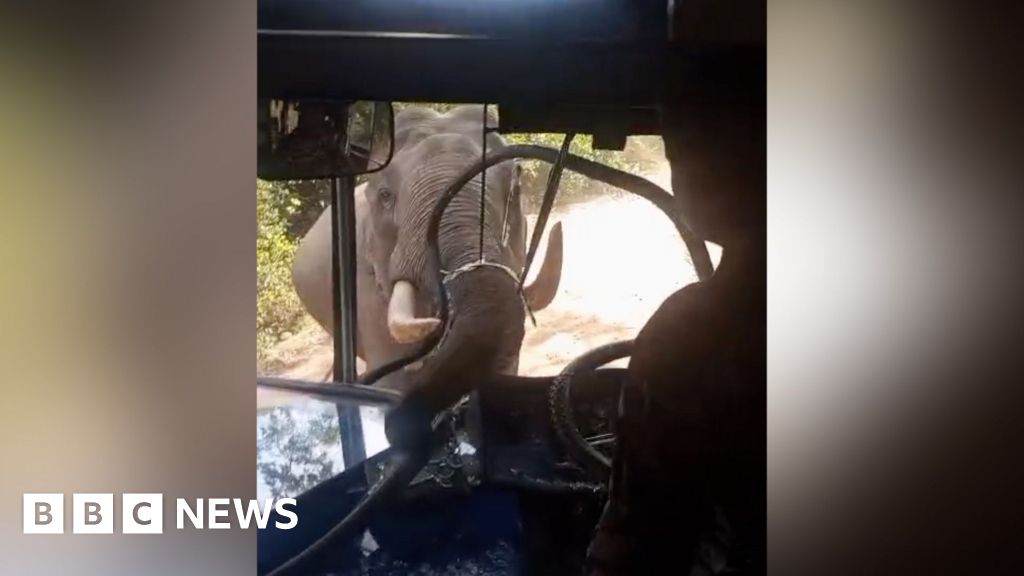
A BBC video shows an elephant attack on a bus in Sri Lanka that shatters the vehicle’s windscreen. The footage — the main publicly available visual record of the incident — captures the animal striking the front of the bus and causing extensive damage while people inside react.
What the video shows — elephant attack on a bus windscreen
The clip opens with a close view of a large elephant approaching a parked or slow-moving bus. The animal places its trunk and forehead against the windscreen and exerts repeated force; the glass cracks and fails under the blows shown on camera.
Shots in the video show passengers moving inside the vehicle and people standing nearby outside the frame, but the footage does not clearly identify individuals or confirm their condition. The elephant is seen moving around the front of the vehicle and striking the windscreen multiple times before walking away from immediate contact.
The BBC published the video under the headline identifying the animal’s actions and the vehicle damage. This article relies on that BBC footage as the primary contemporaneous source for the visual sequence described here.
Who was on the bus
Media reports that accompanied the footage state the bus was carrying air force personnel. That description appears in the BBC coverage but has not been independently verified in official statements available with the video.
At the time the footage was published, there were no formal on-camera confirmations of injuries or fatalities. The video does not provide conclusive information about the number of people on board or their identities. Until Sri Lankan authorities release an official update, details about passengers and any injuries should be treated as unconfirmed.
Context: human-wildlife conflict in Sri Lanka
Encounters between elephants and vehicles are part of a broader pattern of human-wildlife conflict in Sri Lanka. As roads, settlements and farmland intersect elephant ranges, unexpected meetings can lead to property damage and risk to people and animals.
Conservation groups and researchers have documented that movement of elephants along traditional corridors can bring them into proximity with roads and transport routes. Night driving, narrow roads, and busy stops near forest edges increase the likelihood of sudden encounters.
Authorities and wildlife managers in Sri Lanka and elsewhere often recommend measures such as clear signage of known elephant corridors, speed reductions on roads that cross wildlife routes, community awareness programmes and, where feasible, engineered crossings that reduce direct interactions between animals and vehicles.
Open questions and safety takeaways
Key questions about this incident remain unanswered. Officials have not, in the footage itself, confirmed whether passengers were military personnel, the number of people aboard, or whether anyone was injured. The motive or context for the elephant’s behaviour — whether defensive, startled, or otherwise — is not determinable from the video alone.
Investigations into similar events typically examine factors such as time of day, visibility, whether the elephant was solitary or part of a herd, prior human-animal interactions in the immediate area, and any vehicle behaviour that might have provoked a response. Those details are necessary before drawing firm conclusions.
Practical safety advice for drivers and passengers in elephant country includes: keep a safe distance from animals, avoid sudden loud noises, do not attempt to herd or frighten elephants, and reverse slowly if an elephant approaches the vehicle. If you witness a wildlife incident, report it promptly to local authorities and emergency services rather than attempting to intervene. Photographs and video can assist investigators but should only be taken from a safe distance.
Source and further reading
This report is based on video footage and reporting published by BBC News, which provides the primary publicly available visual record of the event. The BBC item is titled “Watch: Elephant smashes through bus windscreen during attack.” Readers should consult the BBC video and local Sri Lankan official statements for further updates.
For the original footage and reporting, see: BBC News – Top Stories.
Notes on verification: the description of the animal as a “wild elephant” and reports that the bus carried “air force personnel” derive from BBC’s coverage and accompanying reports; these claims are not independently verified by this outlet in the absence of official releases. Updates should rely on statements from Sri Lankan authorities and formal investigations.