
Florida Gov. Ron DeSantis announced Wednesday that the state will use a newly enacted law to impose Florida terrorist designations on more than 90 organizations, saying the measure will let state officials identify groups they consider threats while denying them public support.
The announcement follows HB 1471 going into effect this week. DeSantis and state officials described the move as the first formal use of powers created by the law; critics including civil liberties groups immediately vowed legal challenges.
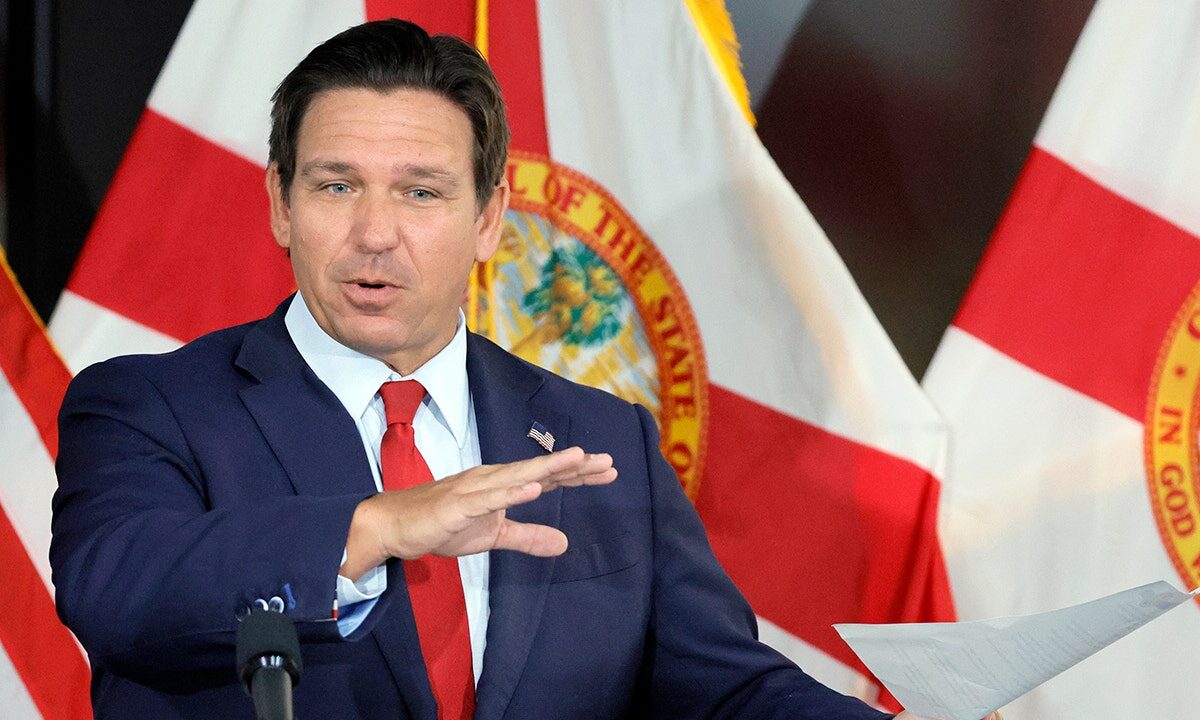
Photographs from the announcement show DeSantis at an event where he outlined the administration’s plan and state officials emphasized the law’s aim to deny public support and add penalties for material support to designated groups.
What DeSantis announced on Florida terrorist designations
The governor said the state intends to implement HB 1471 to “identify, designate, and combat terrorist organizations operating in Florida.” He named a slate of domestic and foreign groups the administration plans to classify under the statute.
DeSantis framed the effort as a public-safety step and tied it to prior executive actions and recent legislation designed to remove what he described as “the influence of radical terrorist ideologies and the organizations that promote them in Florida.”
“This is about identifying threats and strengthening public safety through cooperation with officers and federal partners,” Florida Department of Law Enforcement Commissioner Mark Glass said in explaining the state’s approach to the new designations.
Which groups were named as examples
State officials said the list includes both domestic and foreign entities. Among the notable organizations cited by the administration are the Council on American-Islamic Relations (CAIR), the Muslim Brotherhood and Antifa.
The announced package of more than 90 groups also includes foreign organizations and criminal gangs named in the announcement, such as the Islamic Revolutionary Guard Corps and cartels identified on the list, including Cartel de Sinaloa, Tren de Aragua, Cartel del Noreste and Cartel del Golfo.
How HB 1471 works and new penalties
Under HB 1471, the Chief of Domestic Security at the Florida Department of Law Enforcement may identify qualifying organizations as domestic or foreign terrorist groups. Those initial designations are forwarded to the governor and Cabinet, who may approve or reject them by majority vote before any list is published in the Florida Administrative Register.
The law directs state agencies to deny public support and taxpayer funding to designated groups. It also establishes state criminal penalties for knowingly providing, attempting to provide or conspiring to provide material support to a designated domestic terrorist organization.
State officials note the statute also instructs courts that foreign or religious legal codes cannot supersede the U.S. or Florida Constitutions in state courts.
Legal and civil liberties concerns
Critics, including CAIR and national civil liberties advocates, condemned the announcement and said they will challenge the designations in court. CAIR said it does not engage in “terrorist activity” and has not been charged or convicted of a crime.
Hina Shamsi, director of the ACLU’s National Security Project, is quoted in the reporting saying Florida’s imminent designation of CAIR and CAIR-Florida is “both dire and unmoored from reality” and that the groups’ speech and advocacy are protected by the First Amendment.
Supporters respond that the law targets government funding and material support rather than protected speech. State officials emphasize enforcement is limited to the statute’s funding, contracting and criminal-support provisions, and that those actions will be subject to judicial review.
Frequently asked questions
What do Florida terrorist designations mean for listed groups?
Under the state law, designated groups could be denied certain public benefits, funding and institutional support. The statute also creates criminal penalties for material support to designated domestic terrorist organizations if those penalties are applied and enforced under state law.
Are state designations the same as federal terror labels?
No. Designations under HB 1471 operate under Florida law and are not the same as federal foreign terrorist organization designations made by the U.S. State Department, which follow a separate federal process and carry distinct federal penalties.
Can individuals face charges for supporting a designated group?
HB 1471 establishes state-level criminal penalties for knowingly providing material support or resources to designated domestic terrorist organizations. Whether an individual is charged would depend on the specific conduct, available evidence and prosecutorial decisions; such charges would likely be contested on constitutional grounds.
What comes next
The Chief of Domestic Security’s initial list must be reviewed by the governor and Cabinet. If the Cabinet approves the list by majority vote, the designations would be published in the Florida Administrative Register and the law’s funding and enforcement provisions would take effect for those groups.
Legal experts and the named organizations have already signaled lawsuits are likely. Observers note the state’s list could prompt constitutional claims centered on the First Amendment and due process, and courts will likely be asked to clarify how state authority interacts with federal designations and protections.
“We will defend our members and our work in court,” CAIR said in response to the announced plan, noting it has not been charged with terrorism-related crimes.
As the process moves forward, affected groups, civil liberties organizations and state officials are expected to press their cases in public filings and courtrooms, which will determine how — and whether — Florida enforces the new statute against the entities identified.
Source: Original reporting at Fox News: DeSantis announces plans to use new state law to target dozens of alleged terrorist groups


