The Folarin Balogun red card at Levi’s Stadium dominated the closing stages of the match and immediately prompted former U.S. international John Harkes to question whether tournament rules should automatically carry that punishment into the team’s next game. Harkes, watching the incident live and speaking to Fox News Digital, said the decision did not look like a red card and urged a review of how sendings-off are handled in tournament formats.
What happened at Levi’s Stadium
Folarin Balogun was dismissed after a late challenge that the referee judged to be a red-card offense. The U.S. finished the match with 10 players on the field, and under the current 2026 World Cup regulations the sending-off triggers an automatic suspension for the following match.
John Harkes was at Levi’s Stadium and described the immediate reaction in an interview with Fox News Digital. The game shifted after the dismissal, forcing tactical changes and a defensive reshuffle as the roster adjusted to playing a man down for the remaining minutes.
Folarin Balogun red card: the case
Harkes recounted the scene in real time. “We kept going, ‘Wait a minute, that’s not a red card,’” he told Fox News Digital, reflecting the view of fans and those around him at the stadium. He added plainly: “I don’t think it was a red card at all, to be honest with you.”
Those statements underline the core dispute: whether the on-field contact merited a sending-off under the Laws of the Game and whether a single in-game interpretation should automatically trigger absence from the subsequent match in a tournament setting.
How 2026 World Cup rules apply
The regulatory consequences are straightforward on paper. Article 10.5 of the 2026 World Cup regulations states a player sent off will automatically be suspended from their team’s subsequent match. That rule converts an in-game disciplinary decision into an immediate, tournament-level availability penalty.
At the same time, Article 9.6 of the 2026 World Cup regulations states referee decisions regarding facts connected with play are final and not subject to appeal. The combined effect is that teams have little procedural recourse to overturn or contest a red card’s downstream impact on squad selection for the next fixture.
Harkes’s view and historical context
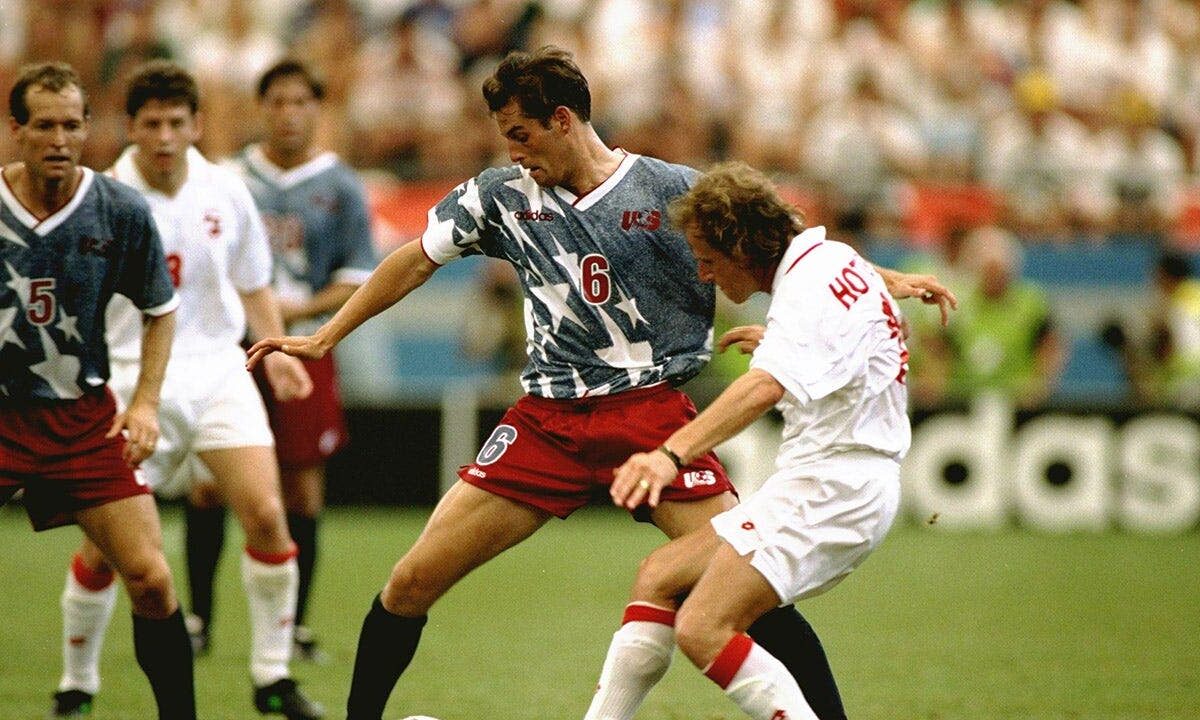
Harkes framed his objection with a player’s memory of tournament consequences. He pointed to his own experience at the 1994 World Cup, noting that yellow-card accumulation forced him to miss an important group-stage game. He said he received yellow cards in the first and third games in 1994 and that the suspension for the July 4 match against Brazil was a painful personal moment.
That history informs Harkes’s plea: a single decision in one match can have outsized effects on subsequent matches and tournament dynamics. He urged organizers to consider whether automatic next-game suspensions tied to sendings-off best serve competitive balance in a condensed multiteam event. “That’s way above my pay grade, but at the same time, so many people discuss it on a consistent basis. So let’s really take a look at this and see: Does it make sense? I don’t think it does. Not in a tournament format. I don’t think so,” he said to Fox News Digital.
Concise timeline of key moments
• Incident and red card: Balogun sent off at Levi’s Stadium after a late challenge called by the referee as a red-card offense.
• Immediate match effect: The USMNT played the remainder of the match with 10 players and adjusted tactics to compensate.
• Regulatory consequence: Under Article 10.5, the player is automatically suspended for the next match; Article 9.6 limits conventional appeals of factual referee decisions.
Impact on the USMNT and what comes next
In practical terms, the U.S. coaching staff must select an alternative forward or alter formation and match strategy for the upcoming World Cup fixture. Losing a key attacker to suspension reshapes attacking patterns, rotation choices and set-piece plans, and it can influence short-term tournament momentum.
Procedurally, federation officials and coaches have limited paths to overturn the on-field call because Article 9.6 bars appeals of referee judgments about facts connected to play. That restriction means the team’s immediate focus will be tactical mitigation rather than a formal protest aimed at reversing the ban.
Longer term, the incident bolsters calls from former players like Harkes for a rules review. Possible reforms could include clearer categories of sendings-off that trigger automatic suspensions versus those subject to review, or a distinct disciplinary panel for tournament play—changes that would require FIFA and tournament organizers to amend disciplinary regulations ahead of future World Cups.
FAQ
Will Balogun be suspended for the next game?
Yes. Article 10.5 of the 2026 World Cup regulations states a player sent off will automatically be suspended from their team’s subsequent match.
Can the red card be appealed under current rules?
Article 9.6 states referee decisions regarding facts connected with play are final and not subject to appeal, which leaves little conventional avenue for overturning the red card and its automatic suspension.
How could FIFA change Article 10.5 for future tournaments?
Any change would require FIFA to revise its disciplinary code or adopt tournament-specific exceptions. Options discussed publicly include discretionary reviews for certain sendings-off, separating match punishments from automatic next-game suspensions, or establishing rapid post-match review mechanisms to protect tournament integrity.
Source attribution: Reporting and direct quotes from Fox News Digital. For the original story and full interview, see: Fox News Digital.
If tournament stakeholders want to limit the damage a single-game decision can inflict on subsequent matches, the controversy around the Folarin Balogun red card provides a clear, timely case for reviewing how red cards and automatic suspensions are applied in World Cup formats.