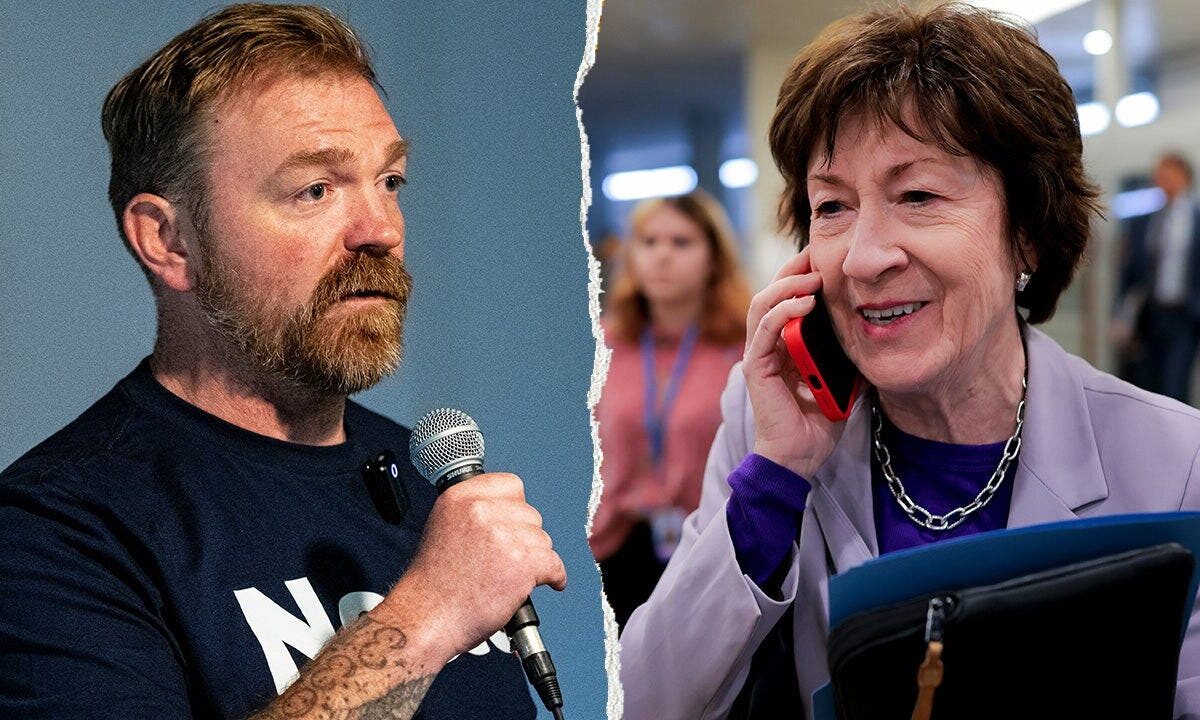
A New York Times/Portland Press Herald/Siena poll released Monday shows Graham Platner struggling with voters who do not hold a four-year college degree, a setback for a candidate whose campaign leans heavily on an oyster-farmer, working-class image.
The poll finds Platner trailing incumbent Sen. Susan Collins 58% to 37% among registered voters without a college degree, even as he holds a roughly two-point lead over Collins statewide. The split highlights a stark education gap that could shape the November outcome.
Topline poll numbers
The NYT/Portland Press Herald/Siena survey presents a mixed picture for Platner. Among non-college-educated registered voters, Collins leads by 21 points, 58% to 37%, a decisive margin in that slice of the electorate.
Yet the same poll shows Platner performing strongly with college-educated white voters — up by 37 points in that cross-tab — which helps explain his narrow overall edge in the statewide head-to-head.
Pollsters also report that 54% of respondents favored Democrats regaining control of the Senate, a sign of the national environment that could affect turnout dynamics in Maine.
What the cross tabs reveal
The cross-tabs underline a classic modern divide: Platner gains among college-educated white voters but loses ground with white voters without a four-year degree. In the poll, he is up 37 points with white college-educated voters while trailing Collins by 23 points with white non-college-educated voters.
That pattern contrasts with 2020 figures. In a September 2020 New York Times/Siena poll, Collins led Democrat Sara Gideon 48% to 45% with white non-college-educated voters — a roughly 20-point swing when compared with the current margins in the new survey.
Graham Platner background and authenticity
Platner has made his past as an oyster farmer and harbor master a central element of his pitch, aiming to connect with working-class Mainers. He also markets his service as a combat veteran and frames his campaign against corporate influence and oligarchy.
But critics and some voters argue those signals haven’t landed. Social media commentary cited in reporting included charges that Platner’s presentation comes off as performative: one post said he seemed like “what a college educated person thinks a working-class person is supposed to act like,” and another suggested “blue collar voters can tell he’s not one of them.”
Platner’s personal history also includes private-school education at The Hotchkiss School, an expensive boarding school in Connecticut, which opponents say undercuts his working-class narrative. Supporters point to his military record and local roots; the poll shows those appeals have been only partially effective.
Controversies and income reports
Reporting has compiled a range of controversies and questions surrounding Platner that may be influencing voter perceptions. Media accounts list allegations including infidelity, claims of past abusive behavior, reporting of a Nazi-linked tattoo, and past comments that critics have said disparage the military. These items have been presented in source coverage as controversies or allegations rather than independently verified findings.
Financial reporting cited by Fox News Digital indicates Platner appears to earn relatively little directly from oyster farming, and some outlets have reported — as unconfirmed claims — that veteran disability payments constitute a significant share of his income. Those income-related assertions remain characterized in journalism as reported or alleged, not adjudicated fact.
Voters in the new poll rated Platner’s character unevenly: 44% said he has “good character” while 47% said he is “too extreme” for Maine, a net negative that may reflect both controversies and questions about authenticity.
Electoral impact and what comes next
The education-based gaps in the survey have practical implications for both campaigns. Collins’s advantage with non-college voters represents a durable bloc that helped secure her previous statewide wins. To win in November, Platner will need to either cut into that advantage or expand turnout among his stronger cohorts.
The race also factors into the larger Senate map: the poll shows a narrow overall lead for Platner but indicates 54% of respondents favor Democrats reclaiming the Senate majority, creating a complex backdrop for November. Collins’s campaign may focus on retaining non-college voters and highlighting questions about Platner’s background, while Platner’s team is likely to emphasize his veteran status and attacks on corporate power to energize supporters.
Strategically, expect targeted messaging aimed at working-class communities and additional scrutiny from both local and national reporters on the allegations and financial disclosures that have followed Platner’s emergence as the Democratic nominee.
Key takeaways
- Platner’s oyster-farmer image is not closing the gap with non-college-educated voters, per the NYT/Portland Press Herald/Siena poll.
- He leads with college-educated white voters, which helps explain a narrow statewide edge despite losses elsewhere.
- Allegations and reporting on income sources remain in the public eye and could affect undecided and swing voters.
FAQ
Why is Graham Platner trailing among working class voters?
Polling suggests Platner’s working-class messaging has not overcome voters’ perceptions about his background and authenticity. Reports about private schooling, questions over income sources, and a series of controversies appear to have reduced his appeal with non-college-educated voters, according to the survey and cited commentary.
Does the poll show Platner leading overall?
The New York Times/Portland Press Herald/Siena poll indicates Platner holds a slim overall lead in the statewide matchup, even as he lags significantly with non-college-educated voters. That split produces the tight statewide margin captured by pollsters.
Are reports about Platner’s income verified?
Media reports have noted financial-disclosure details and reported claims that Platner receives substantial veteran disability payments, but those income claims have been presented as reported and not independently verified by a court or regulatory finding. Journalistic accounts treat them as assertions requiring caution.
Sources and campaign contact
Main poll cited: New York Times / Portland Press Herald / Siena College survey (NYT/Portland Press Herald/Siena poll). Controversies and income reporting in this piece are attributed to Fox News Digital and to other media coverage summarizing allegations; those items are described here as reported or alleged by sources rather than independently adjudicated.
Fox News Digital reported on the poll and related reporting; original Fox News coverage is available here: Fox News – Poll shows Platner’s oyster-farmer image failing to win over working-class Maine voters.
Fox News Digital contacted the Platner campaign for comment as part of reporting on the poll and related claims.