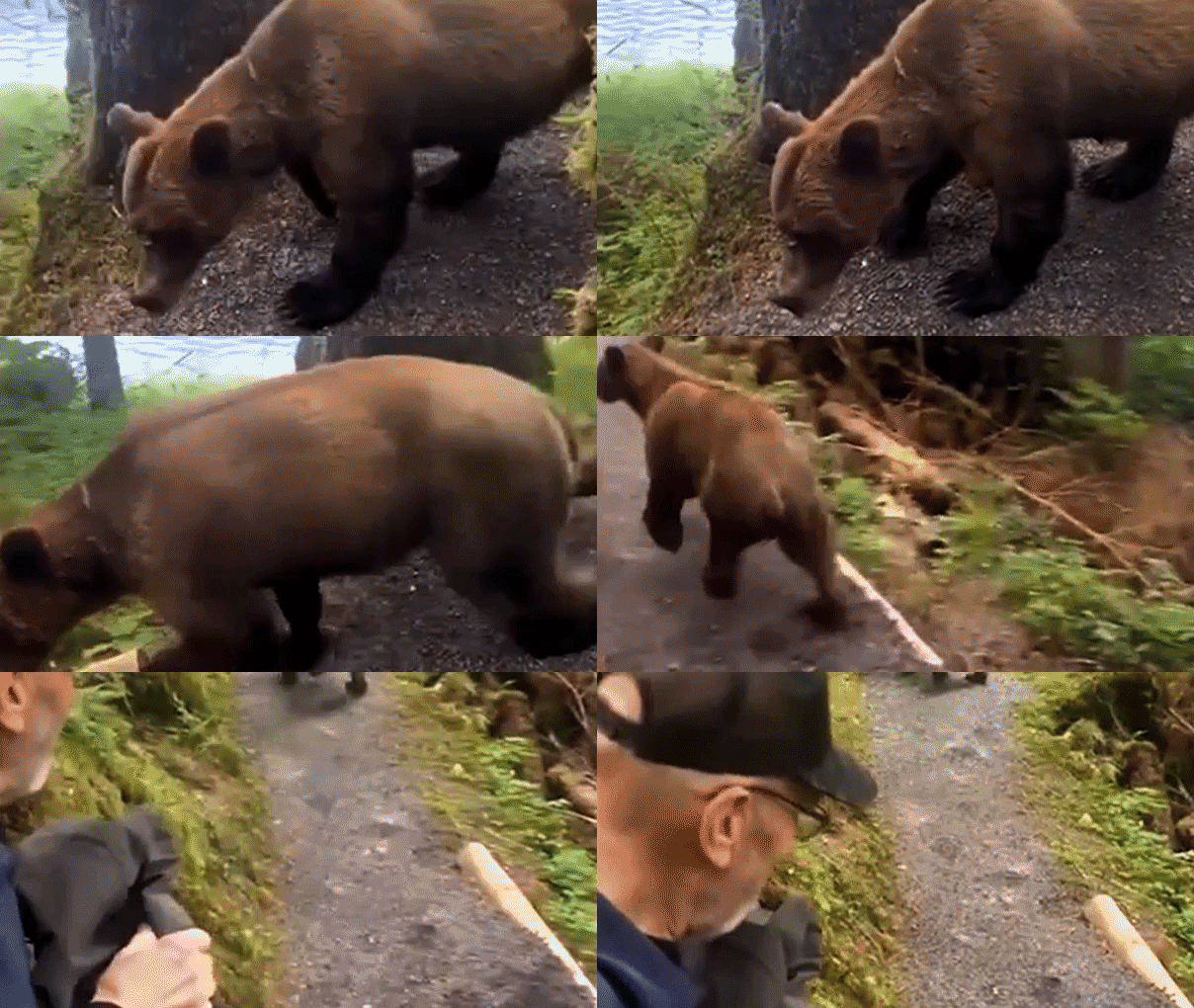
A grizzly bear encounter on a narrow trail at the Anan Creek Wildlife Observatory in southeast Alaska left three hikers shaken but unharmed after they followed park guidance. Video from the scene shows the group coming around a bend and finding themselves face-to-face with a large grizzly moving between the trail and the nearby creek.
The encounter unfolded quickly. The three hikers were moving single-file on a confined section of boardwalk and trail when the bear emerged around a corner. With little room to step aside, the group paused, identified themselves in low voices and slowly backed away until the animal passed. Participants later described the episode as tense but controlled.
Grizzly bear encounter: how it unfolded
Video and on-scene interviews show the trio encountered the grizzly on a narrow stretch where the trail runs close to the river. The hikers said they had seen signs of bears earlier in the day and had observed black bears in the area during the same hike.
Tanya Thompson, one of the hikers, described the moment: “Right around the corner came this grizzly bear.” Another hiker, Tony Cutraro, said the group had been briefed by park rangers before they started and had been watching for wildlife along the creek. Because the trail offered limited room to move, they spoke calmly, kept their hands visible and edged backward until the bear walked by.
How hikers used park safety guidance
The hikers credited National Park Service guidance for helping them respond. They said they identified themselves with calm voices, avoided sudden movements and retreated rather than running. “We’d actually been watching bears earlier in the hike,” one participant said, adding that remembering ranger instructions helped them act deliberately under stress.
The National Park Service advises: “Identify yourself by talking calmly so the bear knows you are human, back away slowly, and do not run.” The NPS guidance emphasizes remaining calm, making yourself known, and increasing distance without turning your back on the animal. Those steps match the actions the Anan Creek hikers said they used when the grizzly appeared.
Why bears may be more active now
Experts who spoke with reporters linked higher bear activity near trails to changes in food availability this season. Dr. Michelle Lynn Thaller noted that a delayed salmon run this year has left local wildlife more intent on finding food along streams and shorelines, which can put bears and people in closer proximity.
Dr. Thaller told reporters the hikers had been looking for salmon earlier in the day and said the run appeared later than in previous years. She cautioned that characterizing animals as “starving” is an imprecise description; her remarks were offered as an explanation for why bears might be moving along trails and beaches while awaiting fish. These expert observations are attributed to Dr. Thaller and have not been independently verified by this article.
Grizzly bear encounter: practical safety tips for hikers
If you plan to hike in bear country, use established safety practices that reduce the chance of surprise encounters and escalation. The Anan Creek hikers’ experience reinforces several National Park Service recommendations:
- Identify yourself by speaking calmly and firmly so a bear recognizes you as human.
- Do not run. Sudden flight can trigger a bear’s chase response.
- Back away slowly and deliberately to increase distance; keep the bear in sight but avoid direct eye contact that may be perceived as aggressive.
- Carry bear spray in an accessible place and know how to deploy it; use it if a bear approaches and nonviolent measures fail.
- Make noise on blind corners, narrow sections or dense vegetation to avoid surprising bears, especially in areas with recent sightings.
- Follow all posted park instructions and trail closures; rangers issue closures to protect both people and wildlife.
These practical steps mirror National Park Service guidance and illustrate actions that helped the Anan Creek hikers avoid escalation during their close encounter.
What comes next for local trail monitoring
Park staff and local wildlife observatories typically monitor bear activity during salmon season and may issue trail alerts when animals are frequently sighted in high-use areas. Visitors should check official park bulletins and observatory updates before heading out and follow any posted closures or guidance.
The Anan Creek Wildlife Observatory and park personnel track wildlife movement and salmon timing, which helps managers decide when to issue warnings or temporarily close sensitive stretches of trail. Monitoring is especially important in years when salmon runs are delayed or variable, because bears may concentrate along shorelines as they search for food.
Source notes and attribution
This account is based on video, on-scene interviews and reporting by Fox News and on comments from people at the trail and an expert who spoke with reporters. For the original news report, see the Fox News story: Terrified hikers face nightmare survival scenario after heart-pounding grizzly bear encounter.
For official guidance on bear safety, the National Park Service provides recommendations for hikers and visitors: NPS bear safety guidance. The encounter occurred on a trail at the Anan Creek Wildlife Observatory in southeast Alaska.
FAQ
What should I do in a grizzly bear encounter?
Identify yourself by speaking calmly, avoid sudden movements, back away slowly and do not run. Follow National Park Service guidance and have bear spray available as a defensive tool if the bear approaches.
Is “Scuba Sue” an official bear name?
Some reports use nicknames when describing individual animals. Such nicknames are not official designations from park authorities; this article uses descriptive identifiers and attributes any nickname references to reporting sources.
Are bears more active during salmon runs?
Bears commonly concentrate near streams and rivers during salmon runs because fish are a key food source. Experts quoted in reporting said this year’s run was delayed, which may have contributed to increased bear presence near trails, though this article does not independently verify wildlife condition claims.
Source: Fox News reporting and on-scene interviews at the Anan Creek Wildlife Observatory. Expert comment attributed to Dr. Michelle Lynn Thaller. National Park Service guidance referenced for safety recommendations.