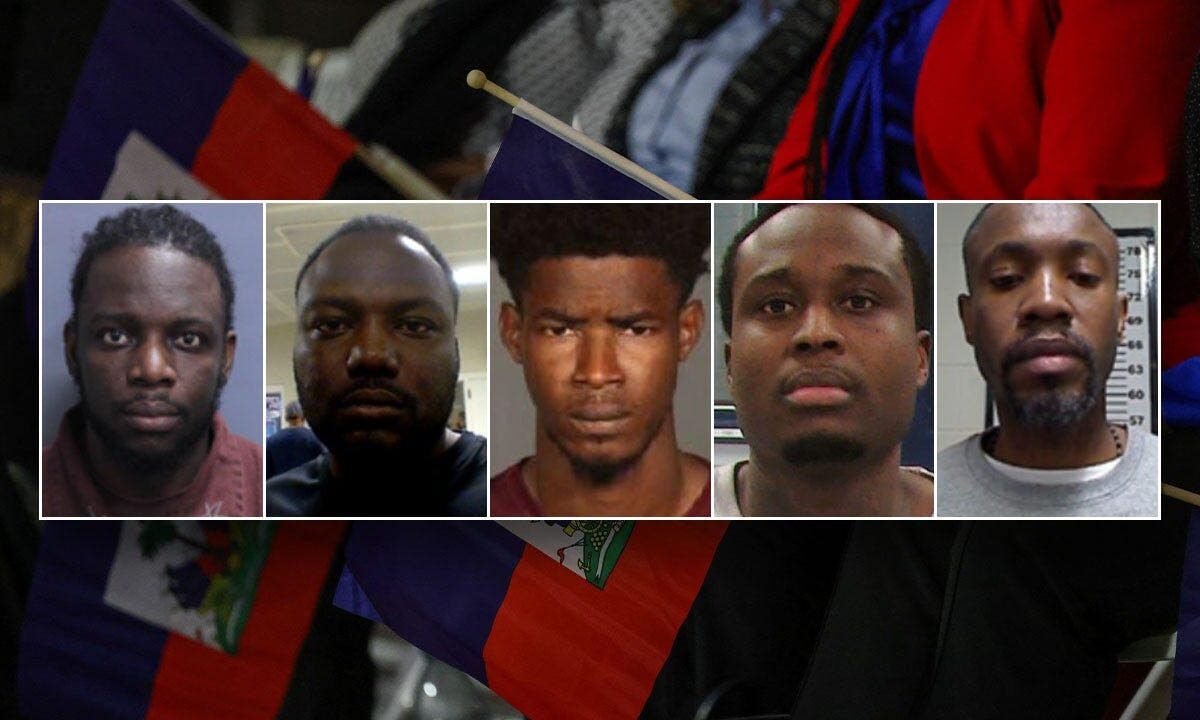
The Department of Homeland Security said a July 16 flight removed more than 100 Haitian immigrants deported after convictions for violent offenses and child sex crimes, the agency announced Monday. DHS characterized the operation as targeting people it identified as having criminal records, including child molestation, armed carjacking, domestic violence and drug trafficking.
What DHS says about the July 16 flight: Haitian immigrants deported
DHS said the July 16 deportation was carried out by Immigration and Customs Enforcement and focused on noncitizens with serious criminal histories. In a public statement, the agency framed the removals as part of an intensified enforcement posture following recent policy and legal changes affecting many Haitians in the United States.
“Last week, ICE deported pedophiles, carjackers, drug traffickers, and perpetrators of fraud to Haiti. Criminal illegal aliens have NO place in American communities. Our message to illegal aliens is clear: LEAVE NOW. If you don’t, we will find you and deport you,” the DHS statement said.
The agency said the operation was consistent with DHS priorities to remove noncitizens who pose a threat to public safety. The announcement listed named individuals and convictions that DHS attributed to people on the flight; those specific attributions are detailed below and are reported as statements from the department.
Who the agency named
DHS and the reporting outlet named several people the agency said were on the July 16 flight and the convictions attributed to them. The following names and offenses are presented as DHS statements and have not been independently adjudicated for this story.
- Styv Charles: conviction for the molestation of a minor.
- Timothe Matel: previously convicted of committing lewd or lascivious acts with a minor.
- Marc James Guerrier Pinard: armed carjacking conviction.
- Markendy Henry: convictions including selling narcotics, carrying a concealed weapon, selling marijuana and heroin, and drug trafficking.
- Fito Almanor: convictions for domestic violence and false imprisonment.
Because these are sensitive criminal allegations tied to named individuals, this report stresses that the listed convictions are described by DHS and have not been independently adjudicated within this article.
Legal and policy context
The removals come after two major developments affecting many Haitians in the United States: the federal end of Temporary Protected Status for many Haitian nationals and a U.S. Supreme Court ruling that narrowed judicial routes used to delay revocations of that status.
In June 2025 the government ended Temporary Protected Status (TPS) for roughly 520,000 Haitians who had been living in the United States under that program. The administration said at the time that the move was intended to restore TPS to its original temporary purpose.
Separately, the Supreme Court recently ruled that Haitians with TPS cannot use federal courts to block the revocation of that status while pursuing challenges. That decision limited a legal pathway some individuals had used to delay or halt removals and is part of the broader legal backdrop for increased enforcement actions.
Reaction, verification and the sensitive nature of allegations
DHS framed the operation as a public-safety enforcement action. Reporting outlets summarized the department’s statement and published the list of named individuals that DHS identified as part of the flight.
Civil‑liberties groups and immigration advocates have long raised concerns about mass deportation operations, the accuracy of criminal-record reviews, and access to legal counsel for people facing removal. Those groups often call for individual case reviews and due-process safeguards. This story does not purport to represent statements from any particular advocacy organization beyond noting this broader context.
News organizations and readers should note that individual criminal histories and convictions cited by DHS are serious matters. This article attributes those claims to the Department of Homeland Security and the reporting outlet and does not independently verify each conviction beyond the agency’s statements.
What this means and next steps
Officials say the operation signals continued and possibly increased enforcement of immigration laws against noncitizens with criminal convictions. ICE will likely continue to prioritize removals it deems consistent with public-safety priorities.
For people who lost TPS protections, immediate options are limited. Some individuals may pursue other forms of immigration relief, administrative appeals where available, or private counsel. Congressional action is another potential path; members of Congress could hold hearings, introduce legislation to restore protections, or change enforcement priorities, though outcomes would depend on the political landscape.
The Supreme Court’s recent decision also means that future legal strategies to block revocations of TPS may be constrained. Affected individuals and advocacy groups could still challenge other elements of policy in different courts or through administrative processes, but the ruling narrows one effective avenue that had been used to delay removals.
Source and attribution
This report summarizes statements from the Department of Homeland Security and coverage by Fox News. The primary reporting on this enforcement action and the list of named individuals appeared in a Fox News story.
Original reporting: Fox News – More than 100 Haitian immigrants with violent offense and sex crime convictions deported: DHS.
Agency statement referenced: Department of Homeland Security (DHS). The convictions and criminal histories named above are reported as DHS statements and have not been independently adjudicated for this story.