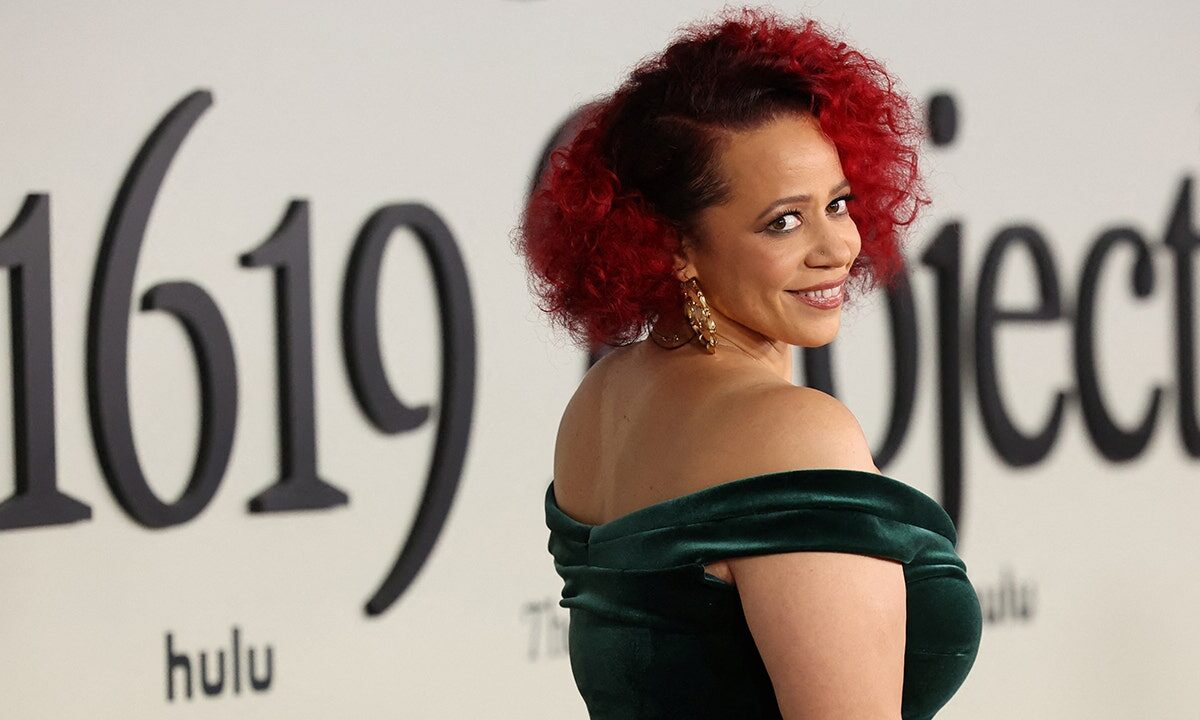
The 1619 Project creator Nikole Hannah-Jones said paying reparations for slavery would be “an admission of the crime,” adding that it would acknowledge “the crime of the entire existence of the United States.” The quote, given during an interview on The Meteor with host Brittany Packnett Cunningham, revived public debate over reparations, monuments and history curricula in classrooms and public life (The Meteor).
What Nikole Hannah-Jones said
In the interview, Hannah-Jones clarified that by “admission of the crime” she was referring to the foundational role slavery played in building U.S. institutions and wealth: “But it’s not an admission of the crime of a handful of bad apples or a few years of bad policy. It is the crime of the entire existence of the United States,” she said on The Meteor (The Meteor).
She also warned that symbolic acts alone — for example, removing statues of enslavers — would not by themselves address structural harms: “You could never knock down all the statues to enslavers, or you have to remove all the monuments on the Mall in Washington,” she told the podcast host, linking debates over commemoration to larger questions about policy and redress (The Meteor).
1619 Project context and reach
The 1619 Project began as a New York Times Magazine initiative to center the consequences of slavery and the contributions of Black Americans in U.S. history. Nikole Hannah-Jones received a 2020 Pulitzer Prize for the project’s lead essay, which helped propel national attention to the effort (The New York Times).
Beyond the magazine, educational partners helped adapt and distribute materials. The Pulitzer Center worked with the project to produce curriculum resources and has described distributing the magazine issue and lesson plans broadly to schools and educators, a factor in how the project reached classrooms nationwide (Pulitzer Center).
Those curricular and media efforts made the 1619 Project a recurring reference point in debates about how K–12 schools teach slavery, race and American history.
Scholarly pushback and disputed claims
The 1619 Project has drawn criticism from several historians who say parts of the project oversimplified complex historical issues. Prominent critiques have focused on specific factual assertions, including claims about the central motivations for the American Revolution; those disagreements have been covered and summarized in The New York Times and other outlets (The New York Times).
Supporters of the project, including Hannah-Jones and collaborators, argue that the value of the work lies in reframing the narrative to foreground how slavery shaped political, economic and social institutions across generations. Critics counter that certain historical claims should be more narrowly sourced or presented as interpretive arguments rather than settled fact; both the original reporting and the subsequent debate have been extensively documented (The New York Times).
Why it matters
Hannah-Jones’s phrasing links symbolic acts, such as monument removal, to policy discussions about reparations and education. How leaders, school boards and lawmakers interpret the phrase “admission of the crime” can shape whether proposals are framed around moral recognition, legal liability or material redress. Those framing choices affect legislative priorities, textbook content, and local decisions about memorials and curricula.
Monuments on the National Mall and elsewhere have become focal points in these disputes because they make public choices about who and what is commemorated. The language Hannah-Jones used — and the 1619 Project’s broader emphasis on slavery’s long-term effects — helps explain why debates over commemoration and curricula are often linked in policy arguments about reparations and education policy (The Meteor).
What comes next
Public discussion is likely to continue on multiple fronts. Some state and local officials have invoked the 1619 Project in debates over restrictions on how race and U.S. history are taught; in other places, educators and advocacy groups have pushed to keep or expand curricular materials that include the project’s perspective. Expect further legislative and school-board activity, continued media coverage, and follow-up reporting that cites both the original project and the critics who challenged particular assertions (Fox News).
Institutions that have engaged with the project — including newsrooms, educational nonprofits and universities where Hannah-Jones has worked or taught — will remain central to how the conversation unfolds. For readers seeking deeper context on the project’s curriculum rollout and educational partnerships, see materials from the Pulitzer Center and archival reporting from The New York Times.
Source attribution
Reporting and direct quotes in this article are drawn from the following primary sources:
- The Meteor — Nikole Hannah-Jones interview
- Fox News — coverage of the interview
- The New York Times — 1619 Project background and subsequent reporting
- Pulitzer Center — information on curriculum partnerships and resources
For readers: this article reports Hannah-Jones’s words and summarizes coverage and scholarly responses from the above sources. It does not add new factual claims beyond those sources; follow the links above for the original reporting and documents.