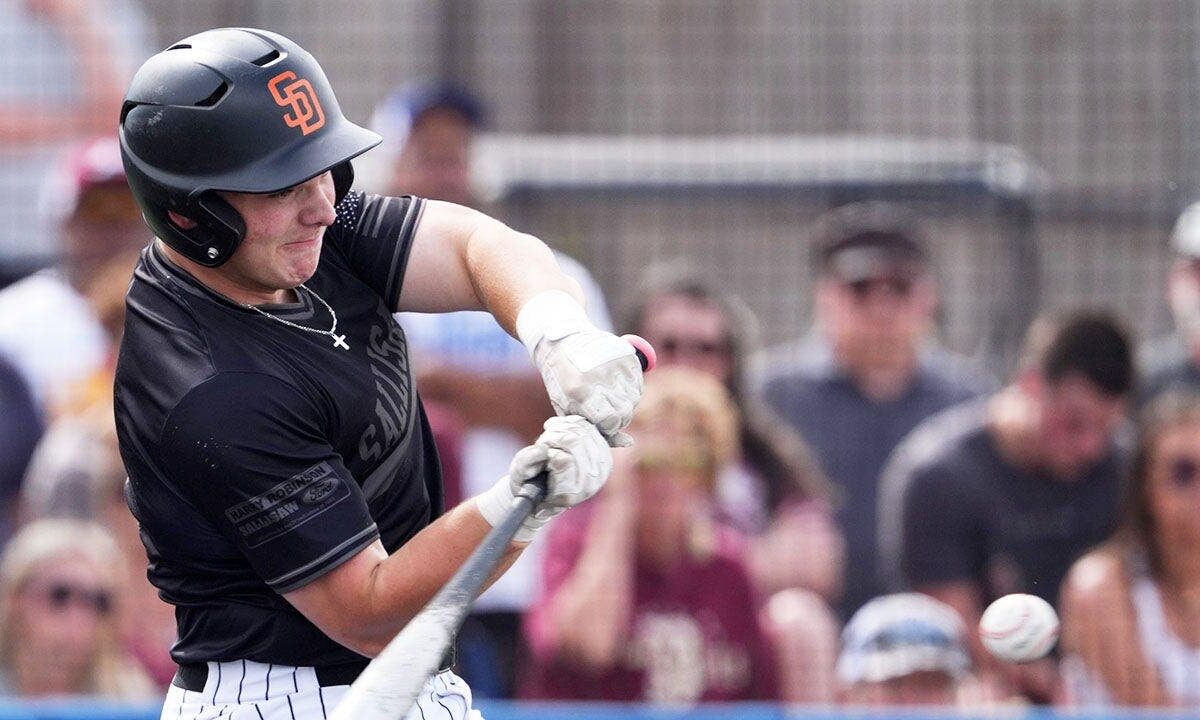
The NFHS Rules Committee approved an expansion of permitted bat drop weights that will allow players to use -4, -5 and -6 drop-weight bats in sanctioned high school play beginning with the 2028 season.
The decision, announced this week by USA Baseball and the National Federation of State High School Associations (NFHS), is intended to give younger and developing players more flexibility with bat weight as they build strength and mechanics. The announcement immediately drew pushback from coaches, parents and fans worried about safety and readiness for higher-level play.
High school baseball bat drop weight change — what changed
The NFHS Rules Committee approved expanding permitted drop weights to include -4, -5 and -6. Until now, high school rules have generally required a -3 drop weight for metal or composite bats meeting the USA BBCOR standard.
Under the new rule, players will legally be allowed to use the lighter drop-weight options beginning with the 2028 high school baseball season. Bat drop weight refers to the difference between a bat’s length in inches and its weight in ounces; a -3 is the current common high-school standard.
Why USA Baseball and NFHS support the change
USA Baseball and NFHS officials framed the change as a development tool aimed at keeping more athletes in the sport while allowing gradual physical and technical progression.
John Gall (USA Baseball) said, “We have seen too many athletes entering high school baseball struggle with the immediate jump to the -3-drop weight and then walk away from the game. This rule change creates flexibility for players to continue building strength, refining mechanics, and developing bat speed over time before making the jump to USA BBCOR.”
Elliot Hopkins (NFHS Director of Sports, Sanctioning, and Student Services) said, “This adoption is aligned with the USA Baseball BBCOR standard and the expanded options are designed to minimize risk while meeting performance expectations.” Both organizations say the change is intended to support long-term development while maintaining BBCOR performance limits.
Parents, coaches and safety concerns
The announcement prompted sharp reactions from parts of the coaching community and from parents who worry lighter bats will change on-field dynamics and could raise injury risks.
Erik Schoenrock, a coach formerly with Southwest Tennessee Community College, voiced concerns about recruiting preparation and safety. “If you’re not using a -3 bat by the time you’re 14 or 15 years old, don’t worry about college baseball recruiting. You’re not getting prepared,” Schoenrock said. He added, “And personally, I think this is ridiculous. It’s just asking for someone to get hurt. Zero player safety thoughts with this new rule.”
Those comments reflect expressed concerns and not established outcomes; NFHS and USA Baseball stress that BBCOR-aligned limits remain part of the implementation to reduce risk.
What it means for player development and recruiting
Proponents argue the change helps younger players build bat speed and mechanics gradually. Coaches who favor flexibility say players who are still developing strength can focus on timing and technique without being physically overmatched by a heavier -3 bat.
Opponents counter that continuing to allow lighter bats could delay the transition to the bat weights used in college and high-level amateur play, potentially slowing the adjustment to the mass and swing mechanics required at the next levels.
Recruiting concerns are central to the debate. Some coaches warn that players who are not swinging a -3 bat by ages 14–15 may be viewed as behind by college evaluators, while NFHS and USA Baseball say the goal is to retain athletes and develop them over time rather than force an early weight transition.
Timeline and next steps for schools and leagues
The rule takes effect with the 2028 implementation window, giving schools, leagues and equipment suppliers time to adapt policies and inventory. State associations and athletic directors will determine adoption details for their seasons and may issue guidance on allowable bat markings and certification.
Coaches and administrators should watch for official rulebook language, state association guidance and any clarifications from NFHS and USA Baseball about bat certification, labeling and enforcement ahead of the 2028 season.
Background and context
BBCOR bats, implemented widely after the 2011 season, are designed to limit the trampoline effect of earlier metal bats and to more closely mimic the performance of wood bats. BBCOR stands for Batted Ball Coefficient of Restitution and governs how much energy transfers from bat to ball on contact.
USA Baseball and NFHS say the new drop-weight options will still meet BBCOR performance expectations while allowing different weight choices for younger or developing players.
Frequently asked questions
When does the new bat drop weight rule take effect?
The expanded drop-weight options (-4, -5, -6) are scheduled to be allowed beginning with the 2028 high school baseball season.
Will lighter drop-weight bats increase injury risk?
Safety concerns have been raised by coaches and parents. NFHS and USA Baseball say the change maintains BBCOR performance standards to minimize risk, but claims about increased injuries are opinions and not proven outcomes in the announcement.
How will this affect college recruiting and prep?
Some coaches warn that players not swinging a -3 bat by ages 14–15 could fall behind in college-ready metrics, while proponents say the change helps keep athletes engaged and develop bat speed and mechanics at an appropriate pace.
Sources: Fox News; USA Baseball; NFHS