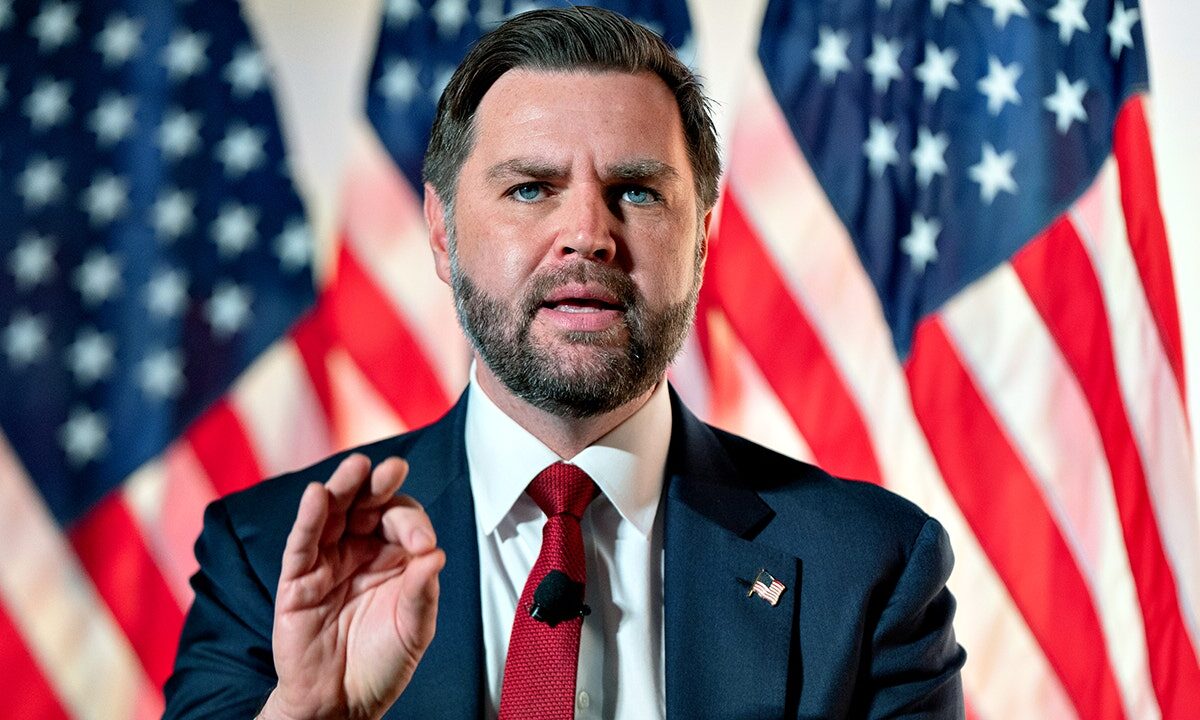
Vice President JD Vance warned on The Joe Rogan Experience that failing to repair long-running economic problems could produce a “socialist president.” The JD Vance warning frames the issue as the result of policy choices — he singled out offshoring, outsourcing and low-wage immigration — and tied those trends to weaker worker leverage and housing strain among younger voters.
JD Vance warning: what he said and why he sounded the alarm
On the podcast, Vance described what he called “40 years of bad policy” that, in his view, left the U.S. with eroded manufacturing capacity and fewer well-paid, stable jobs. He told host Joe Rogan that those economic shifts help explain why many younger Americans are receptive to socialist ideas: “We were left in quite a hole by 40 years of bad policy,” he said, and without major fixes “we are going to end up with a socialist president in this country,” according to a Fox News summary of the interview.
What JD Vance said on The Joe Rogan Experience
Vance framed his remarks largely as an explanatory narrative for political change. He argued that offshoring and outsourcing reduced domestic production and bargaining power for workers, and that large flows of lower-wage labor amplified downward pressure on certain wages and local housing markets. He used anecdotes — conversations with young engineers and examples from San Diego neighborhoods — to illustrate his point, presenting those as symptomatic of broader trends.
Those observations were made as his personal analysis of why some voters, especially younger ones, have moved toward candidates and ideas that promise more systemic economic change. The Fox News story covering the interview provides direct quotes and a summary of his claims.
Vance’s economic argument: offshoring, outsourcing and workers
Vance asserted that decades of policy choices encouraging offshoring and friendly trade and regulatory regimes for multinational firms hollowed out parts of the U.S. economy and reduced worker leverage. He portrayed the result as fewer pathways to stable middle-class careers.
This line of argument overlaps with analyses from policy researchers who have documented manufacturing decline and wage stagnation after the 1980s and 1990s transitions in global trade. Think tanks such as Brookings and labor economists have examined how shifting industrial structure and globalization affected job opportunities and bargaining power; those studies give context to Vance’s claims but do not automatically confirm the causal chain he described between policy choices and political outcomes.
His claims on immigration and housing
Vance said low-wage immigration has been a factor in housing pressure in some markets and suggested that changes in migration patterns have helped stabilize housing costs in places he cited. He argued that reducing the inflow of lower-wage labor would strengthen worker negotiating positions.
Those links are presented as Vance’s interpretation. Independent research shows immigration affects local labor markets and housing demand in complex, region-specific ways; some studies find modest downward pressure on wages for particular groups while others show broader economic gains. Likewise, housing affordability trends reflect supply constraints, zoning, interest rates and local demand as well as migration. The causal assertions tying immigration directly to recent housing stabilization are Vance’s claim and are not independently verified by the podcast itself.
Political stakes and what Republicans should do
Vance framed the political risk plainly: if Republicans do not address what he sees as the material drivers of young voters’ discontent, the party could lose them to candidates promising systemic alternatives — including those described as socialist. He urged the GOP to pursue a sustained policy agenda to rebuild manufacturing, strengthen worker bargaining power, and expand housing affordability as electoral as well as economic priorities.
He also offered cautious optimism that some policy shifts in recent years aim to reverse long-term trends, but emphasized that meaningful change would take years. Those prescriptions are his recommended political responses rather than independently measured fixes.
Limits and context: what is claimed versus verified
Many of the connections Vance draws — from offshoring and immigration to young people’s attraction to socialism — are presented as his analysis and should be read as assertions unless corroborated by independent studies. For balance, public-opinion research from Pew Research Center documents rising favorable views of socialism among younger cohorts, which helps demonstrate the political phenomenon Vance describes even if it does not prove the precise causes he assigns.
Scholars and policy analysts offer multiple, sometimes competing explanations for those political shifts, including economic insecurity, cultural factors and generational change. Readers should treat causal claims reported from the interview as Vance’s viewpoint unless supported by broader empirical evidence.
What comes next
Vance said the GOP’s path is policy-focused: invest in domestic production, change incentives that favor financialized returns over broad wage growth, and expand housing supply and affordability. Whether those steps would produce the political recovery he predicts is an empirical question that requires sustained policy action and independent evaluation.
Sources: Fox News (coverage of the Joe Rogan interview), Brookings Institution (context on manufacturing and labor-market change) and Pew Research Center (opinion polling on attitudes toward socialism). For the Fox News coverage of the interview see the linked source below.
Source: Fox News — Vance warns there will be a ‘socialist president in this country’ if GOP doesn’t fix economy for young people