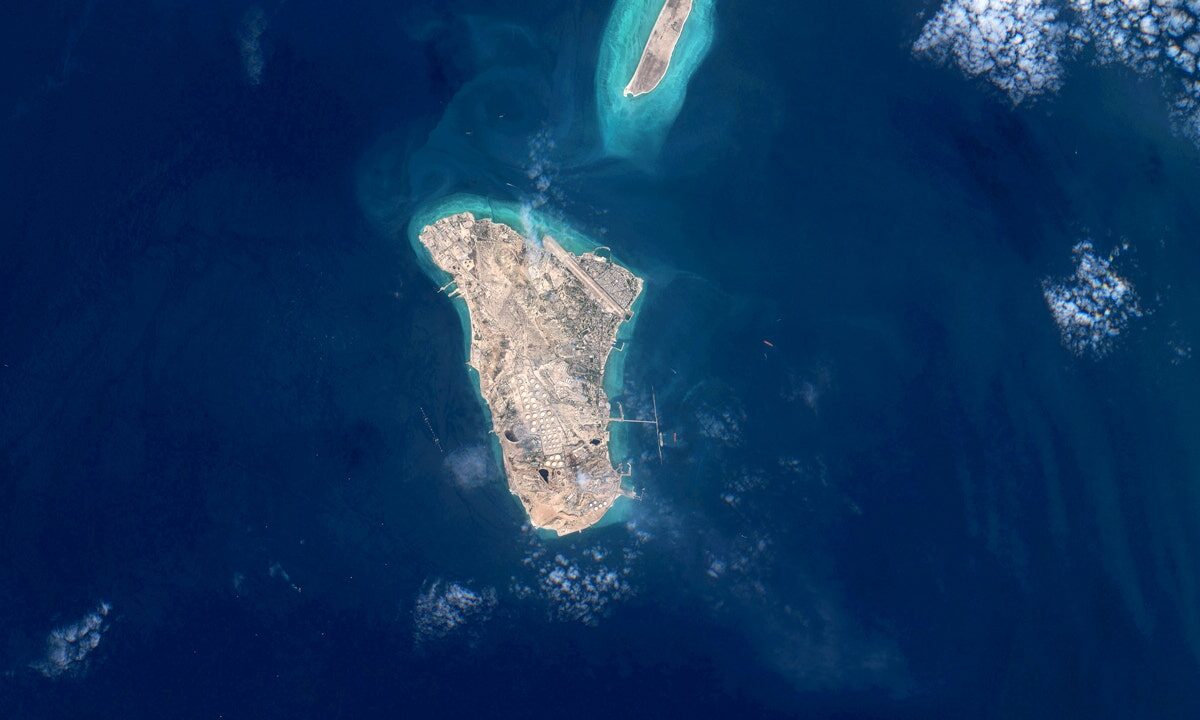
“I can’t say that to you because if I did, it would be foolish,” President Donald Trump told Fox News’ Trey Yingst when asked whether he planned to seize Kharg Island. The remark prompted renewed analysis from former commanders and defense analysts: under favorable conditions, seizing Kharg Island could be fast; occupying and protecting it would be far more difficult and politically fraught.
What Trump said
In an interview with Trey Yingst, Donald Trump declined to rule out a move on Kharg Island, noting a preference in past strikes to avoid damaging oil facilities “because they are a chunk of the world economy.” The comment amplified debate about military options, signaling and the limits of public rhetoric versus formal operational orders.
Why Kharg Island matters
Kharg Island is Iran’s primary oil export hub, home to a deep-water terminal that can load very large crude carriers. Media reports have said the island handles roughly 90% of Iran’s crude exports; that figure is widely cited in reporting but should be checked against primary trade data and energy-agency statistics for confirmation.
Built in the late 1950s and active from 1960, Kharg’s berths, storage and sheltered waters give it outsize economic importance relative to its small land area. Disruption to Kharg could therefore have outsized effects on Tehran’s energy revenues and on market perceptions of supply from the region.
How an assault might unfold
Operationally, planners who study littoral and amphibious operations outline a familiar sequence: establish control of nearby airspace and sea approaches, isolate the objective, insert a landing force, and then secure key facilities and approaches.
View larger map of Kharg Island
Former commanders describe the likely toolkit: U.S. Marines in a Marine Expeditionary Unit (MEU) would lead an amphibious insertion using helicopters and landing craft, supported by Navy strike groups and Air Force strike and surveillance assets. Electronic warfare, maritime interdiction, and precision fires would be used to suppress coastal defenses and fast-attack craft ahead of any landing.
Key operational steps would include:
- Establishing air and sea dominance to limit Iranian reinforcement or strike options;
- Neutralizing coastal air defenses, anti-ship missile batteries and sensors;
- Mounting a rapid amphibious landing to secure piers, storage tanks and pumping stations;
- Deploying mobile defenses and logistics to sustain forces and protect infrastructure after seizure.
“There are a lot of ways to skin this cat,” said Vice Adm. (Ret.) Robert Harward, describing multiple approaches to an assault.
Analysts say a well-planned, uncontested amphibious landing could seize the island within hours. That timeline depends on surprise, accurate intelligence about defensive positions, and the absence of pre-armed or hidden capabilities on the island itself.
Expert reaction
Beyond Harward’s observation, defense analysts and regional specialists emphasize trade-offs: a swift seizure avoids protracted fighting at the point of landing, but once forces are ashore they face persistent threats from the nearby mainland. Many analysts emphasize deterrence, escalation management and logistics as the harder problems than the initial assault.
Observers also note political and legal complications. Even if a seizure were militarily feasible, sustaining an occupation would require a large force protection posture, diplomatic outreach to deter wider escalation, and detailed plans to preserve and operate sensitive oil infrastructure to avoid irrevocable damage.
Risks of seizing and holding Kharg
Tehran has invested in layered denial systems intended to complicate amphibious operations. The main threats include:
- Anti-ship cruise missiles and shore-based rocket systems that can threaten ships and fixed positions;
- Unmanned aerial systems and loitering munitions capable of precision attacks on exposed assets;
- Naval mines and swarms of fast attack craft that can contest sea lines of communication and resupply routes.
Capturing Kharg would not end the risk. Sustaining occupiers would likely require expanded air defenses, continuous counter-drone operations, mine countermeasures, and a robust maritime security screen — all of which raise the chances of wider confrontation if Tehran escalated in response.
Implications and next steps
Policymakers would need to balance military objectives against political, diplomatic and economic fallout. Damaging Kharg’s terminals or pipelines could tighten global oil markets, push up prices and complicate reconstruction and humanitarian planning in any aftermath.
Alternatives that analysts discuss include: tightening maritime interdiction to pressure exports, targeting overland export routes, or securing smaller, more defendable positions that influence shipping lanes without directly occupying Kharg. In any case, accurate on-the-ground intelligence about terminal condition, pipeline integrity and defensive arrays would be essential before planners recommend action.
By the numbers
- Island size: roughly eight square miles.
- Distance to Iran’s Gulf coast: about 16 miles.
- Reported share of Iran exports handled: roughly 90% (reported figure; primary trade data and energy-agency statistics should be consulted for confirmation).
FAQ
Could U.S. forces seize Kharg Island quickly?
Analysts say that under favorable conditions — surprise, accurate intelligence and overwhelming sea/air superiority — an amphibious force could seize Kharg within hours. That estimate does not account for subsequent stabilization, resupply or defense of the island.
How would a seizure affect global oil supplies?
Kharg handles a large share of Iran’s crude exports; damage or prolonged disruption could tighten supplies and increase market volatility. The magnitude would depend on scope, duration and global spare capacity.
What military risks would troops face holding the island?
Holding Kharg would expose forces to missile and drone strikes from the nearby mainland, naval mines, and asymmetric sea attack — requiring expanded air defenses, counter-drone capabilities and sustained maritime protection.
Sources and attribution: Reporting by Fox News Digital — https://www.foxnews.com/world/trump-wont-rule-out-kharg-island-takeover-what-us-assault-could-look-like. Additional context on Iran’s energy exports: U.S. Energy Information Administration country overview for Iran — https://www.eia.gov/international/overview/country/IRN. The reported statistic that Kharg handles roughly 90% of Iran’s crude exports is widely cited in media reporting but should be verified against primary trade and energy-agency data for precise confirmation.