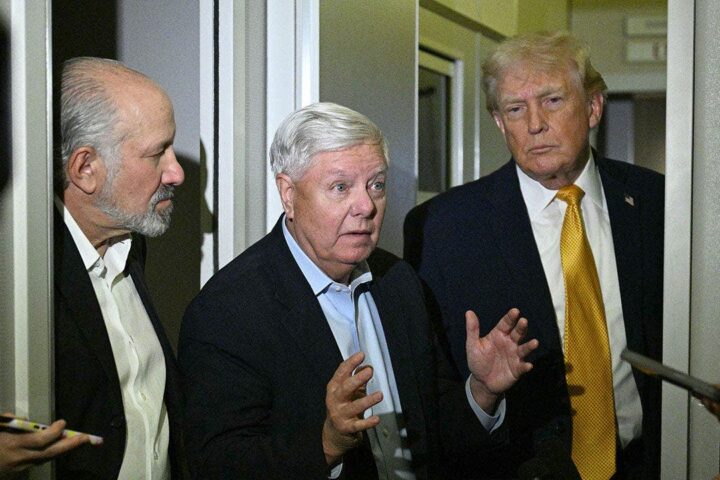
Sen. Lindsey Graham died Saturday at 71, his office said, following what officials described as a “brief and sudden illness.” The announcement came as Graham was actively campaigning for a fifth term; his office released a short statement but did not provide a medical cause.
“Irreplaceable,” Gov. Henry McMaster said in a statement, calling Graham “the fiercest of fighters for South Carolina and America.”
Funeral and memorial arrangements were not immediately announced. Officials said they would release additional details as the family and the senator’s office coordinate next steps.
Lindsey Graham dead at 71
Sen. Lindsey Graham, a Republican senior senator from South Carolina, died after what his office described as a brief and sudden illness. Graham, 71, had been a fixture of Capitol Hill for more than three decades, known for his work on defense, foreign policy and judicial confirmations. The brief office statement confirmed his death but offered no medical specifics; that uncertainty remains central to initial reporting.
Graham had been campaigning for a fifth term in the Senate and continued to cast votes and participate in committee work in recent months. Senate leaders and colleagues issued statements of shock and condolence as the news circulated; Governor Henry McMaster’s statement was among the first public reactions from state officials.
Roots and early career in South Carolina
Born July 9, 1955, in Central, South Carolina, Graham grew up in a small-town setting and became the first in his household to attend college. He studied at the University of South Carolina and later earned a law degree. A defining period of his early life came while he was a student: both parents died within about a year, and Graham assumed responsibility for his younger sister.
After law school he entered the U.S. Air Force Judge Advocate General’s Corps and served as a military lawyer. He remained in the Air Force Reserve for decades, retiring as a colonel after more than 30 years of service. Graham entered state politics in 1992, won a U.S. House seat in 1994 and was elected to the U.S. Senate in 2002 to succeed Sen. Strom Thurmond.
A GOP power broker on Capitol Hill
On Capitol Hill, Lindsey Graham became a prominent figure in multiple policy areas. He served on the Senate Armed Services Committee and the Judiciary Committee and was chairman of the Senate Budget Committee. Over his career he positioned himself as a hawkish voice on defense, a vigorous advocate for a robust U.S. role abroad, and a central actor in the confirmation of federal judges.
Graham played a visible role in confirmation fights, including high-profile Supreme Court and circuit court nominations. He helped shepherd votes that reshaped the federal judiciary and worked closely with colleagues across and within party lines at different points in his career. Early on he formed a notable bipartisan relationship with the late Sen. John McCain and, with Sen. Joe Lieberman, was sometimes described as part of an informal grouping advocating muscular U.S. foreign policy.
His relationship with former President Donald Trump evolved over time: from sharp criticism during the 2016 primary to later cooperation on judicial selections and national security matters. That evolution reflected Graham’s broader posture as both an institutional Republican leader and a pragmatic legislator on matters he considered vital to national defense and the judiciary.
Immediate political consequences and succession
Under state law, the governor of South Carolina will appoint a temporary replacement to fill the Senate seat. Gov. Henry McMaster is expected to move quickly to name an appointee; state officials typically coordinate with party leaders and stakeholders. The appointed senator would serve until the timing of a special election or the next regularly scheduled general election, depending on South Carolina’s vacancy laws and the timing of upcoming ballots.
Because Graham was actively seeking re-election, his death reshapes the immediate politics of the race for his seat. Republicans in South Carolina will need to consider whether the governor names a caretaker appointee or a prospective candidate who intends to run in the special or next general election. In the Senate, Graham’s absence will affect committee rosters and could influence the timing of votes on close measures, including budget and defense items and any pending judicial confirmations where margins are tight.
What comes next and what to watch
Watch for three near-term items: official funeral and memorial plans from Graham’s office and family; the governor’s appointment to the vacant seat and any announced timeline for a special election; and actions by Senate leaders to redistribute committee responsibilities and adjust confirmation calendars. Leadership on both sides will likely meet to determine short-term strategy, particularly if pending nominations or appropriations measures are expected to face narrow margins.
On judicial matters, the temporary vacancy could add uncertainty if Senate Republicans lose a predictable vote on a confirmation. If the governor names a caretaker who pledges not to run, that may preserve the status quo for a limited period; if the appointee is a political contender, the dynamics of the upcoming election may shift quickly.
Key takeaways
- Sen. Lindsey Graham, 71, died after a “brief and sudden illness,” according to his office; officials have not released a medical cause.
- Graham was a senior Republican influential on defense policy and judicial confirmations and chaired the Senate Budget Committee.
- Gov. Henry McMaster will appoint a temporary replacement under state law; the timing of any special election will depend on state procedures and upcoming ballots.
- Funeral arrangements were pending at the time of the announcement; the senator’s office said details would be released when available.
This article is based on the statement from Sen. Graham’s office and reporting from Fox News. Additional reporting and reaction from other outlets were also noted as the story developed; official confirmations and further details are expected from South Carolina authorities and the senator’s staff.
Source: Fox News