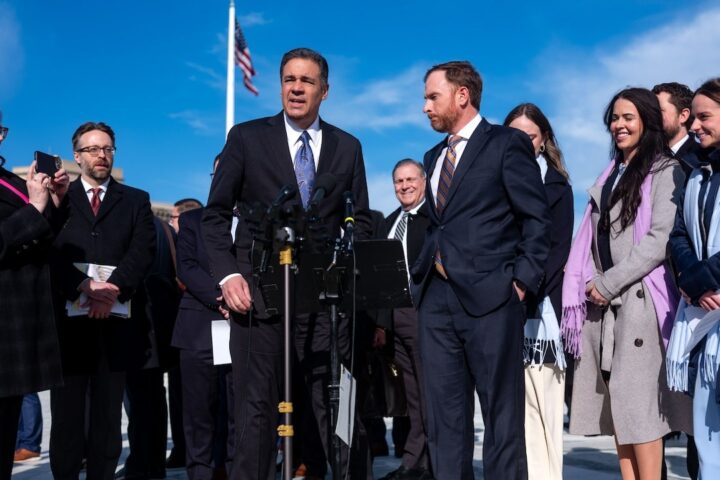
Rep. Roger Williams’ Fox News opinion frames Main Street businesses as central to a post‑pandemic hiring rebound and credits the Working Families Tax Cuts with delivering broad relief. Main Street businesses appears in his lead and is a recurring theme: Williams points to monthly payroll gains, a low unemployment rate and a U.S. Chamber of Commerce finding about small‑business hiring to argue that tax relief and fewer regulations are driving a local comeback.
“The backbone of our economy is roaring back,” Williams wrote, tying the recovery to tax changes he calls the Working Families Tax Cuts. (Rep. Roger Williams, Fox News opinion.)
This analysis summarizes Williams’ main claims, flags large or unverifiable numeric assertions, and points readers to primary sources for independent verification. It also places Williams’ Weatherford, Texas example in broader context and notes other local factors that influence Main Street hiring.
Main Street businesses: hiring and the 250th claim
Williams uses America’s 250th anniversary framing to highlight small shops and local employers. He cites a U.S. Chamber statistic that small firms account for about 78% of hiring (read the Chamber’s note for definitions and methodology: U.S. Chamber of Commerce), and he repeats a much larger, extraordinary claim — that since early last year small businesses have created roughly 4 million jobs per month and “more than three‑quarters” of new job openings.
The 78% figure refers to a long‑run aggregate measure and depends on how the Chamber defines “small business” and “hiring.” That makes the number plausible in context but not self‑validating; readers should consult the Chamber’s original analysis to understand which employer size classes and time windows were used. The 4 million jobs‑per‑month figure is an outlier compared with official monthly payroll gains and should be treated as a claim that requires a clear source before acceptance.
What the numbers actually say
Williams lists specific month‑to‑month labor figures — for example, a May payroll gain of 172,000 and a 4.3% unemployment rate. Those series are published regularly by the Bureau of Labor Statistics; see the BLS monthly employment situation summary for payrolls and unemployment data (BLS Employment Situation). If you want to confirm a named month, check the BLS release for the relevant press release table and the Current Population Survey (CPS) or Current Employment Statistics (CES) series.
Other fiscal claims in the opinion — that the Working Families Tax Cuts “prevented a $5 trillion tax hike” or that “97% of filers” got a tax cut this season — are substantial distributional and budgetary assertions that are not documented in the piece. Independent scoring from the Congressional Budget Office or the Joint Committee on Taxation and IRS filing‑season statistics are the appropriate sources to verify the fiscal cost and the share of filers who saw year‑over‑year changes in tax liability (CBO, JCT, IRS filing‑season stats). Without those scorings or IRS distributional data, these are claims that should be flagged as unverified.
| Claim | What to check | Primary source |
|---|---|---|
| 172,000 payroll gain (May) | Confirm month and seasonal adjustment | BLS Employment Situation |
| 4.3% unemployment | Check CPS unemployment rate for same month | BLS CPS |
| 78% of hiring by small firms | Review Chamber methods and period | U.S. Chamber of Commerce |
| 97% of filers got a tax cut; $5T prevented hike | Verify with IRS and budget scorers | IRS SOI, CBO, JCT |
Who benefits from the Working Families Tax Cuts
Williams credits elements of the Working Families Tax Cuts — changes affecting taxation of tips and overtime and an expanded Child Tax Credit — with helping families and easing payroll burdens for some small employers. Those policy features can change household cash flow and payroll administration in ways that matter to retailers and service firms.
But distributional outcomes are concrete, measurable questions. To determine whether most relief went to households under $100,000 or whether 97% of filers received a cut, consult IRS filing‑season statistics and independent analyses that report year‑over‑year changes in tax liabilities (IRS statistics: filing‑season stats; broader distributional tables: SOI).
Weatherford, Texas and other local Main Street patterns
Williams points to conversations with Weatherford, Texas, constituents as on‑the‑ground evidence that owners are hiring. Local anecdotes are useful to illustrate how policy can feel, but they don’t establish national causation. Main Street hiring varies across communities: some small downtown districts report brisk demand and difficulty finding workers, while others cite weak local demand, credit constraints or supply‑chain issues.
Beyond tax policy, hiring decisions depend on local consumer demand, labor availability and wages, access to capital, and state and local rules. That mix helps explain why Main Street hiring can look strong in some places and less so in others even in the same month.
What comes next and verification steps
To follow up: check the specific BLS monthly release for the payroll and unemployment figures Williams cites (BLS Employment Situation), review the U.S. Chamber memo for the 78% number (U.S. Chamber), and consult IRS filing‑season reports and CBO or JCT scorings for fiscal and distributional claims (IRS, CBO, JCT). Until those checks are completed, treat large budgetary or aggregate job claims as assertions needing confirmation rather than established facts.
FAQ
What are the Working Families Tax Cuts and who benefits?
Williams describes policy changes including expanded Child Tax Credit provisions and tax treatment tweaks for tips and overtime. Precise benefit shares and dollar amounts require IRS distributional tables and budget scorings.
Is it true small businesses accounted for 78% of hiring?
The U.S. Chamber has published a long‑run aggregate share like this. It depends on definitions and the period used — review the Chamber’s note for methodology.
Did 97% of filers actually get a tax cut this season?
That claim appears in the opinion but needs confirmation from IRS filing‑season statistics or independent tax‑policy analyses.
Figure:
Source attribution: This analysis is based on Rep. Roger Williams’ Fox News opinion (Rep. Roger Williams, Fox News) and on primary public data sources for verification: the U.S. Chamber of Commerce (uschamber.com), the Bureau of Labor Statistics (bls.gov), the Internal Revenue Service (irs.gov filing stats and SOI), and budget scorers including the Congressional Budget Office (cbo.gov) and the Joint Committee on Taxation (jct.gov).