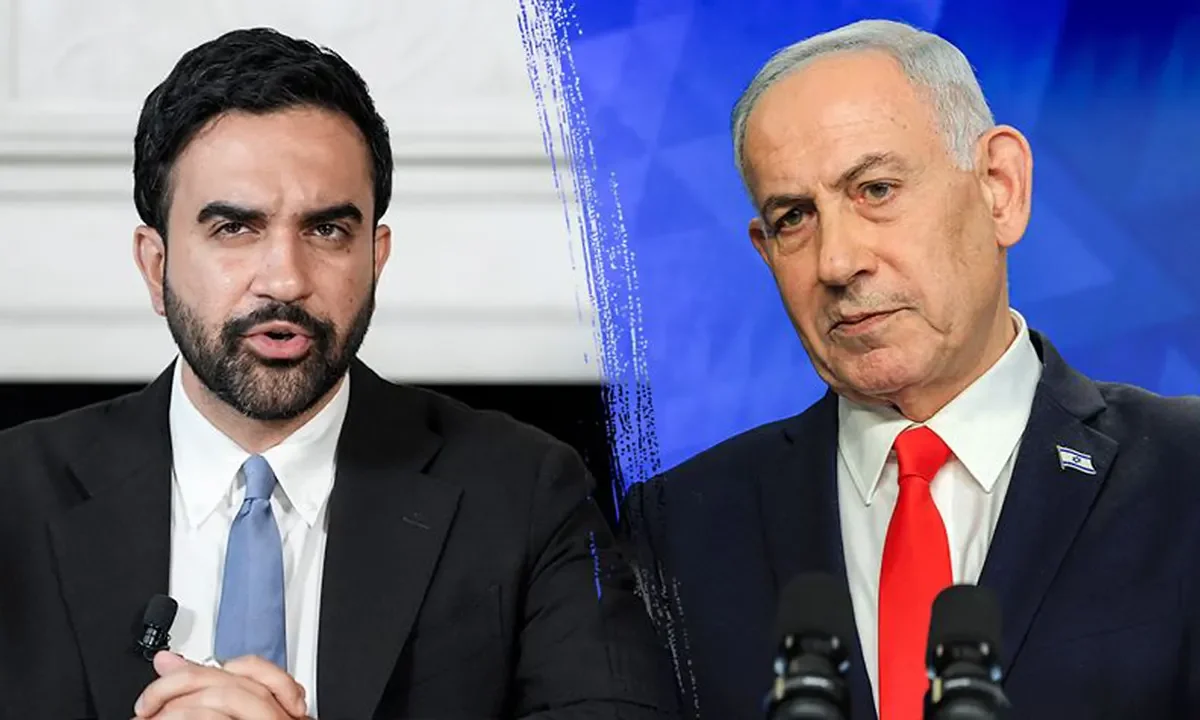
What Mamdani said
Mamdani Netanyahu arrest exploration, Mayor Zohran Mamdani said, is “an active conversation” inside City Hall as his administration weighs whether New York City could lawfully detain Israeli Prime Minister Benjamin Netanyahu if the leader visits for the United Nations General Assembly this month.
In remarks first reported by The New York Times, Mamdani called Mr. Netanyahu a “war criminal” who “belongs in the Hague,” and said the city is consulting with the New York City Law Department about whether local authorities have any legal basis to act. The mayor characterized the discussion as exploratory; city officials have not released a public legal memo outlining a basis for arrest.
Fox News Digital and other outlets sought comment from Mamdani’s office; the mayor’s spokesperson had not immediately provided further detail when asked, according to reporting.
Mamdani Netanyahu arrest exploration: legal barriers
The comments set off immediate debate about what municipal officials could realistically do. The International Criminal Court issued arrest warrants in late 2024 related to alleged war crimes in Gaza — allegations the ICC sets out in its filings; Israel disputes the court’s jurisdiction. Legal experts say that even with an ICC warrant, a city faces steep hurdles in attempting to detain a sitting head of government.
Key obstacles include the U.N. Headquarters Agreement, doctrines of head-of-state or head-of-government immunity, and the fact that the United States is not a party to the Rome Statute that established the ICC. Constitutional and federal-preemption principles also matter: foreign affairs and diplomatic security are generally treated as federal prerogatives, and legal scholars say local action would likely be contested in federal court.
U.S. Ambassador to the United Nations Mike Waltz publicly described the mayor’s remarks as “pure political theater,” saying head-of-state protections and U.S. law limit what city officials can do. That view tracks a widely held interpretation among national security and constitutional lawyers that federal authority would likely preempt any municipal attempt to detain a visiting head of government.
That does not foreclose all legal debate. Some municipal counsel could examine narrow legal theories or enforcement mechanisms, but experts caution those theories would face immediate federal, diplomatic and judicial scrutiny and are unlikely to succeed absent a change in federal posture or new court rulings on immunity.
Diplomatic and security implications for the UN General Assembly
The United Nations General Assembly brings dozens of heads of state and government to New York each year, creating a tightly coordinated period for diplomacy and security planning. Visits are typically managed through coordination among the U.N., the U.S. State Department and local law enforcement to ensure movement, protection and diplomatic courtesies.
Because of those arrangements, specialists say any municipal move to detain a visiting leader would raise immediate diplomatic and security questions. The State Department has previously intervened in matters tied to U.N. engagements to protect diplomatic protocols, and officials could make formal representations to New York City if planning by the mayor’s office threatened to disrupt established processes.
Practically, an attempted arrest during UNGA could prompt disruption to scheduled U.N. meetings, diplomatic fallout and potential security risks in and around U.N. facilities and Manhattan, observers say.
Analysis: what a city can and cannot do
Municipal police enforce local laws and sometimes act at the request of federal authorities. Acting on an ICC arrest warrant — particularly when the U.S. has not accepted ICC jurisdiction — raises atypical legal questions. Legal scholars consulted by reporters say a city attempting to execute such a warrant would almost certainly encounter federal legal challenges and possible intervention from the executive branch.
Within City Hall, the most likely near-term step is a formal opinion from the New York City Law Department evaluating applicable treaties, federal statutes and immunity doctrines. Even if the Law Department identified a novel legal basis, experts caution that federal agencies or courts could block enforcement on separation-of-powers or preemption grounds.
What comes next
Short-term developments to watch include whether the New York City Law Department issues a formal written opinion and whether Mamdani’s office publishes additional details on its legal analysis. Fox News Digital and other outlets have asked the mayor’s office whether he stands by his “war criminal” characterization and whether City Hall would direct the NYPD to act if the Law Department found legal authority; reporters say no firm response had been provided at the time of the initial coverage.
Potential federal responses could include public statements from the State Department or the U.S. mission to the U.N., direct representations to City Hall, or legal steps intended to preserve diplomatic protections. Members of Congress or administration officials could also weigh in publicly or formally if planning threatens to interfere with scheduled diplomatic activity.
Observers should also watch for responses from Israeli officials, who have rejected ICC jurisdiction in this matter, and for any updates from the ICC or the U.N. about how international processes intersect with domestic law enforcement in host countries.
Reactions
Republican and federal officials have largely dismissed the practicality of a municipal arrest of a visiting head of government. Some legal experts say the mayor’s remarks may be primarily symbolic or political, while others note they raise legitimate questions about how local leaders respond to international allegations. The ultimate resolution of those questions is likely to involve federal agencies and, possibly, the courts.
Source attribution and further reading
Reporting on this story has drawn on accounts published by Fox News and The New York Times, as well as public materials from the International Criminal Court and documentation on the U.N. Headquarters Agreement. Readers can consult original reporting and primary sources for more detail:
Fox News: Mamdani says NYC is exploring whether it can arrest Netanyahu
The New York Times: search results for Mamdani coverage
International Criminal Court (ICC) — official site and public documents
U.N. Headquarters Agreement and related materials — United Nations
Additional on-the-record comments and legal analyses may be published as the Law Department or federal agencies respond.