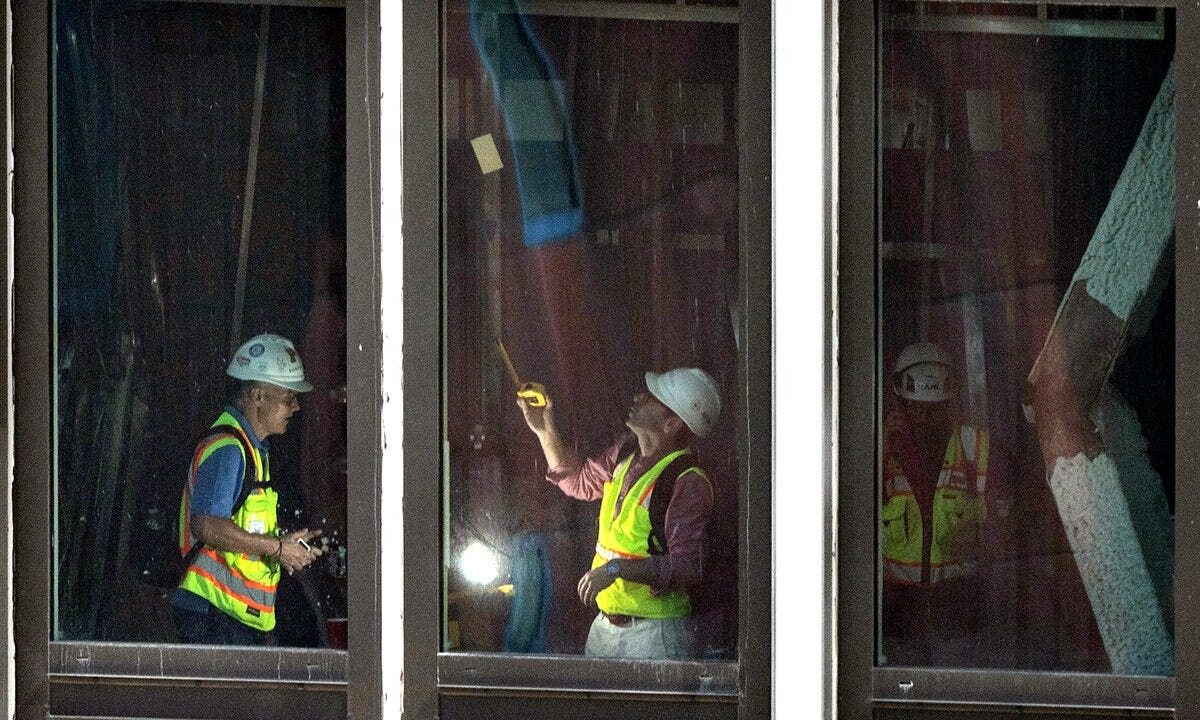
The Manhattan high-rise structural damage discovered this week is now being described by the developer as a localized problem that crews have stabilized. MetroLoft said emergency teams found two buckled support columns and sagging floors on the 21st floor and that the building “is now stable” after overnight shoring, sensor monitoring and inspection by city engineers.
City agencies, the developer and on-site construction teams remain at the property while investigators and independent engineers work to confirm the cause and outline permanent repairs. MetroLoft founder Nathan Berman told reporters the affected area is limited and that there is “a clear plan to fix” the problem.
Manhattan high-rise structural damage: what was found
Emergency responders discovered two buckled support columns inside the 37-story structure and observed sagging floors in roughly a 20-by-20-foot section on the 21st floor. Fire officials initially described the situation as posing a threat of a localized collapse, prompting immediate shoring and evacuation actions.
Crews installed temporary supports and monitoring equipment to detect any additional movement while engineers assess the damaged elements. MetroLoft said city inspectors reviewed the stabilized area and, at present, there is no evidence of progressive failure beyond the shored zone.
Developer assessment and repair plan
MetroLoft and founder Nathan Berman told reporters they believe added weight from the ongoing office-to-residential conversion likely contributed to the buckling in the two columns, calling the incident a “freak accident” tied to an isolated structural weakness. Berman said the affected portion is “very fixable.”
He described a repair plan that includes removing and replacing the damaged columns, restoring floor elevations and installing permanent reinforcements consistent with engineering specifications. MetroLoft said the company will follow a detailed sequence to maintain safety in adjacent areas and to allow continuous monitoring during repairs.
Berman also disputed suggestions that the work lacked proper structural design, saying engineers approved the conversion plans. He pushed back on an industry union official’s allegation that the job lacked adequate structural steel, calling that charge “total nonsense.”
Scope, evacuations and local impact
The discovery prompted the evacuation of construction workers and occupants in the immediate vicinity and precautionary evacuations in nine nearby buildings while crews stabilized the site. MetroLoft said fewer than 30 apartments were affected out of roughly 1,600 units planned for the conversion.
Neighbors and passersby experienced temporary disruption as streets and sidewalks near the building were fenced off for safety. Officials set up monitoring around the perimeter and have arranged temporary accommodations for displaced residents while safety checks continue.
City response and investigation
New York City’s Department of Buildings has been on site since the discovery and coordinated the emergency shoring and sensor monitoring with MetroLoft. Mayor Zohran Mamdani said no additional movement had been detected after shoring and pledged a full investigation into the cause.
The Department of Buildings, along with other city agencies, will review engineering reports, construction records and inspection histories. Officials said the probe will include interviews with engineers and contractors involved in the conversion of the former Pfizer headquarters and a review of permit filings and structural calculations to determine whether code violations, design flaws or construction practices contributed to the buckling.
Timeline to repair and project outlook
The project is a 1.3 million-square-foot office-to-residential conversion MetroLoft says will yield roughly 1,600 apartments. Berman said replacing the damaged columns and correcting the sagging floors should allow the team to keep the work on track for a planned 2027 completion.
Repair crews must sequence permanent work to avoid further disruption to occupied areas and to maintain continuous safety monitoring. That sequencing, together with permit reviews and the timing of the city’s investigation, will determine whether the overall schedule shifts; MetroLoft expressed confidence repairs can be completed without derailing the timetable.
Competing assessments and safety caveats
Accounts differ on the immediate cause. MetroLoft attributes the damage to added conversion weight and an isolated column failure, while a union official alleged the job lacked sufficient structural steel. MetroLoft disputes that allegation.
These competing claims remain unverified and will be subject to independent confirmation as the Department of Buildings and city investigators review evidence. Reporters and officials have noted that Berman’s assessment is the developer’s account and has not yet been independently corroborated by the city’s formal probe.
Fire officials initially described an “extremely dangerous situation” when the damage was first found. The subsequent stabilization measures and continuous monitoring have reduced immediate safety concerns, but the city’s full investigation will be the key arbiter of cause and responsibility.
What comes next
Engineers will finalize temporary shoring designs and submit plans for permanent repairs before crews begin column replacement and floor restoration. Inspectors will continue to monitor movement sensors and visual indicators while engineers map out permanent fixes and sign off on permit changes.
MetroLoft and city regulators said they will release additional technical details as the investigation proceeds. For now, the priority remains stabilizing the structure, protecting neighboring buildings and completing the conversion safely.
Source: Fox News